IN Brief:
- Cotswold Labels confirmed its order at The Print Show 2026.
- The model operates at up to 39.9 metres per minute in CMYK mode and supports optional white toner.
- The company already operates AccurioLabel 190 and AccurioLabel 230 presses.
Cotswold Labels has ordered a Konica Minolta AccurioLabel 400 digital press to expand its short and medium run label production in Gloucestershire, including work for food and beverage customers. The company confirmed the investment at The Print Show 2026, which concluded on 1 October. It is an equipment purchase rather than an installation already in commercial use. No commissioning date, investment value or measured increase in capacity at the site has been disclosed.
Cotswold Labels already runs AccurioLabel 190 and 230 equipment at Cirencester, so adding the 400 model will expand an established digital operation rather than introduce a new printing method. Cotswold Labels supplies labels across several markets, including food, drink and artisan manufacturing, where customers can require varying lengths of run and frequent artwork changes. Managing director Howard Burr confirmed the purchase, with the supplier describing it as a response to demand for greater flexibility and consistent colour across multiple job specifications.
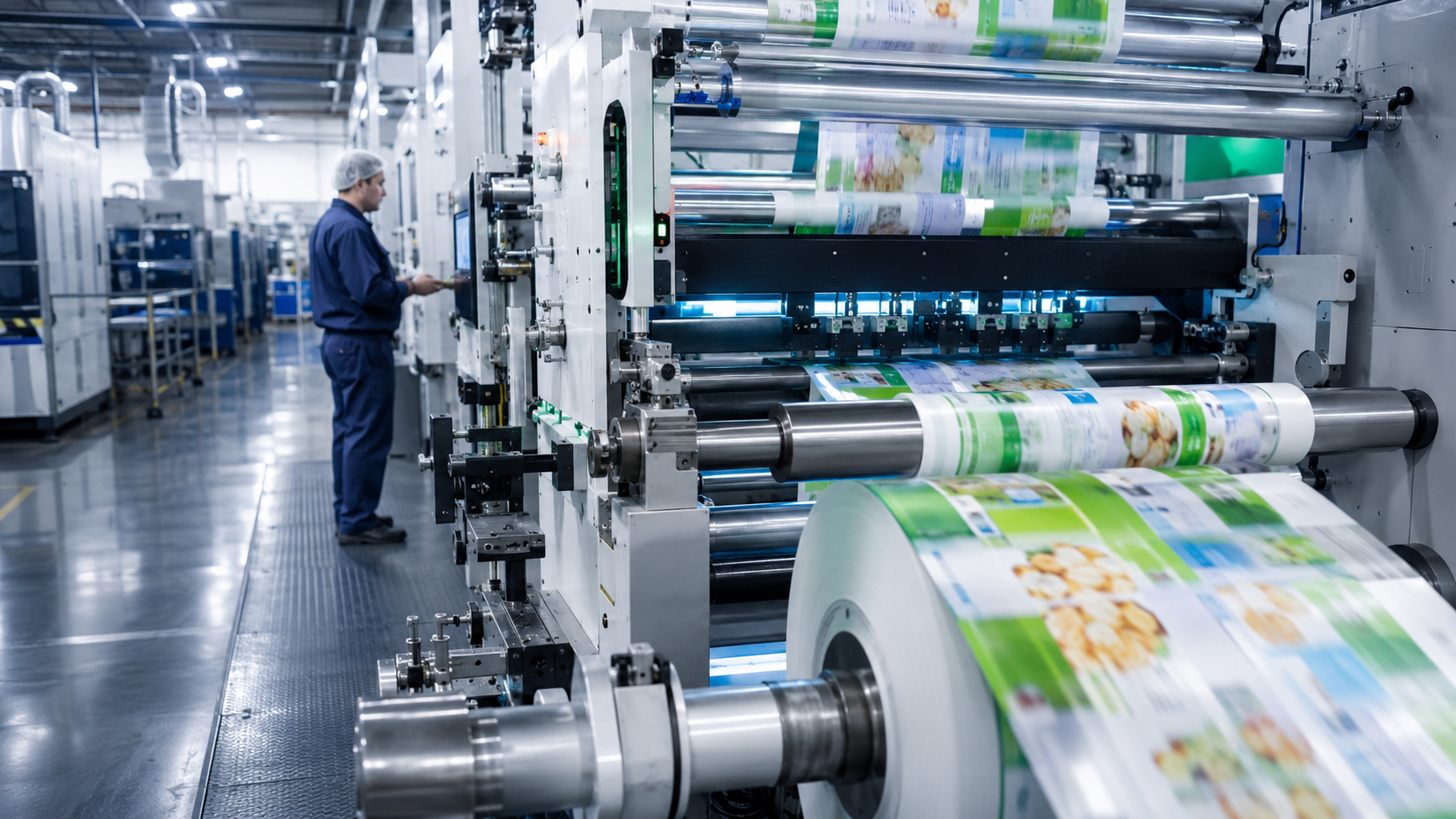
Like the company’s existing digital presses, the AccurioLabel 400 uses electrophotographic dry toner, depositing an image from electronic artwork onto a moving web without printing plates. Prepared digital artwork controls the image deposited onto a moving web, avoiding the physical printing plates required in traditional flexographic or offset production. This can reduce some preparation steps when artwork is revised or an order contains several variants. Production still requires suitable files, qualified media and inspection of the result. Changing from one job to another may therefore involve software setup, substrate handling and subsequent converting operations, even though the print image itself is generated digitally.
Under CMYK operating conditions Konica Minolta rates the 400 model at up to 39.9 metres per minute, although media choice and colour configuration can reduce that speed. Lower speeds are available depending on media and colour settings, so that figure should not be treated as the rate for every production job. The machine processes print data at 1,200 by 2,400 dots per inch, with automatic controls for colour calibration, density and registration. These are specifications of the model; they do not establish how quickly Cotswold Labels will produce finished, inspected labels once the press is installed.
The optional fifth colour station can apply white toner to suitable transparent or coloured stock, allowing areas of opacity or an underlayer for process colours. It allows opaque areas to be printed on selected transparent or coloured substrates and can be used as a base for other inks or as a graphic element. Konica Minolta confirms that white toner is optional, but the precise configuration ordered by Cotswold Labels is not fully established in the available release. The equipment should therefore be described as supporting that feature, rather than as proof that an installed five-colour configuration is already operating at the site.
Those applications depend on the web remaining stable through printing, because paper and film label stocks differ in surface characteristics, thickness and behaviour under tension. The manufacturer specifies web guidance and unwind and rewind equipment intended to maintain stable material travel. The press is designed for a range of commercially available substrates without requiring a separate pre-coating operation as standard. Individual materials nevertheless need to be tested for toner adhesion, colour appearance and compatibility with the customer’s application and subsequent finishing processes.
Alongside print quality, food label orders require accurate ingredients, allergens, quantities and other mandatory information to match the food being packaged. Ingredient lists, allergen declarations, net quantities and other information must match the food product and the applicable rules. A converter handling many versions of a label needs approved artwork and controls that prevent information from one formulation or market being carried into another. Digital printing provides operational flexibility when creating variants, but it does not replace the need for file approval, press inspection and the correct association between label rolls and the customer’s production order.
Where printed rolls are destined for automatic label application, registration and subsequent cutting also need to remain consistent throughout the run. Printed registration has to align with the material and any cutting or embellishment performed later, while roll winding and web dimensions must suit the downstream applicator. Quality monitoring on the press can help maintain the intended colour and registration, but finished label performance depends on converting, adhesive selection and storage conditions as well as the image printed. The supplier has not released measured reductions in spoilage or changeover time for Cotswold Labels.
The confirmed order establishes the machine model and prospective production capability, with installation and measured output still to be reported by Cotswold Labels. After installation and commencement of production, site measurements will establish whether output or turnaround has changed. Until those results are available, the development is best described as a planned capacity and capability addition for label manufacture, rather than a completed productivity improvement or a new food packaging plant.