IN Brief:
- Portuguese printer Grafivedras has installed a Hontec MPX350 configured for wine label production.
- The machine combines flatbed hot stamping, rotary screen printing, embossing, die cutting and slitting.
- Its modular design allows changes to the finishing configuration as production requirements develop.
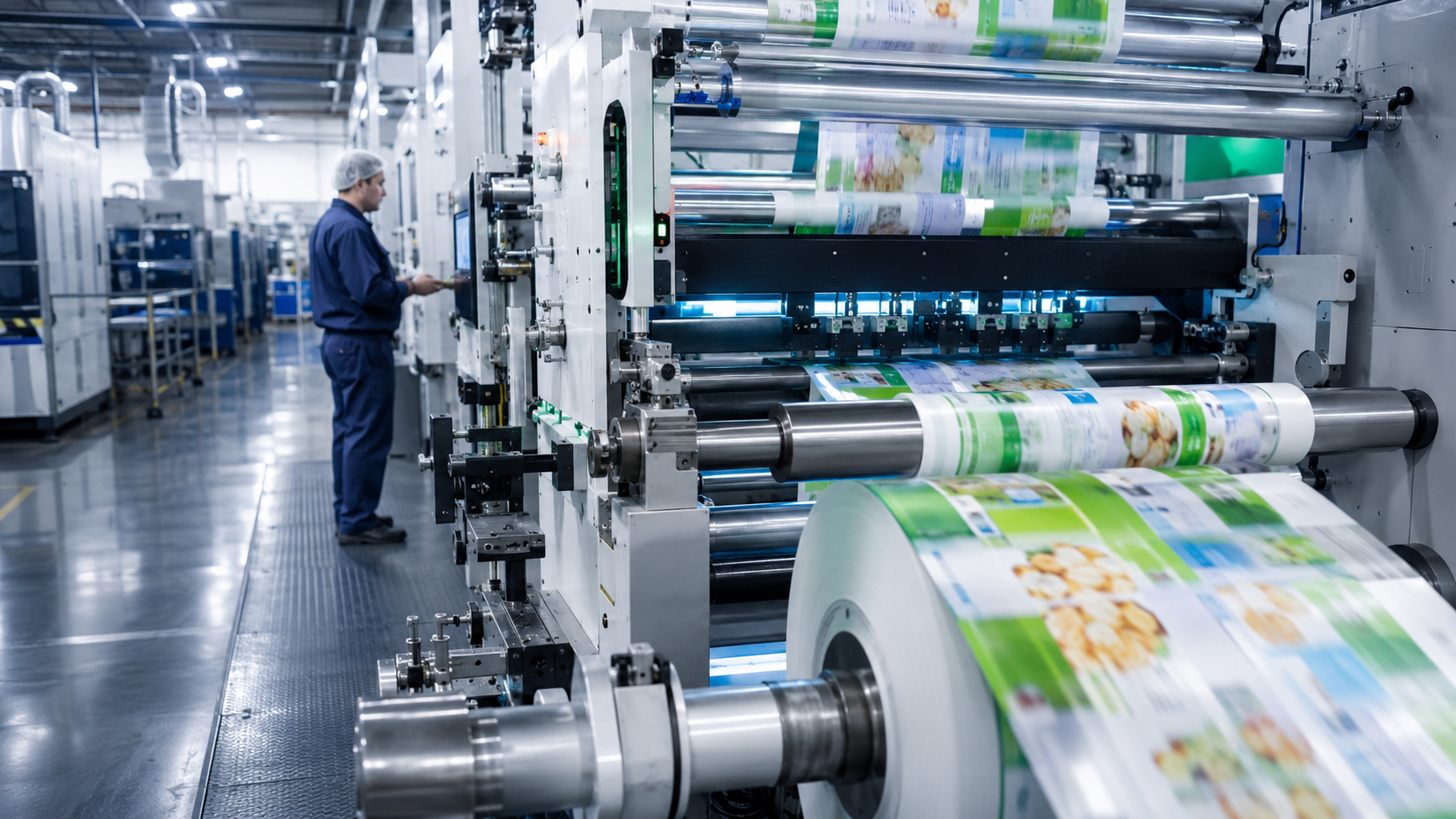
Grafivedras has installed a Hontec MPX350 finishing machine in Portugal for wine label production, combining several decorative and converting processes on a modular platform. The fitted operations include flatbed hot stamping, rotary screen printing, rotary die cutting, flatbed embossing and die cutting, and slitting. It is a completed equipment installation, although the customer and supplier have not released production throughput, investment value or other site performance measurements.
Several decorative operations have to remain in registration on wine labels, where printed details, metallic effects and tactile features may occupy adjoining areas on a relatively small surface. A finishing line brings these operations together after the main artwork has been printed. The web must be transported through individual stations while maintaining its position relative to the design. Small changes in tension, feed length or tool alignment can become visible when an embossed line or a foil detail is intended to sit directly over a printed feature.
Once the web has been positioned, the MPX350’s hot stamping station uses controlled heat and pressure to transfer foil or another decorative material onto selected parts of a label. The deposited material can create a metallic or reflective appearance distinct from the effect of printing an ordinary coloured ink. Transfer conditions must be selected for the substrate, foil and design because excessive pressure or unsuitable temperature can affect adhesion and the appearance of fine details. The flatbed station fitted to the MPX350 provides one of the principal decorative processes used for this type of label.
Where the design requires a raised coating rather than foil, rotary screen printing deposits ink or varnish through a patterned cylindrical screen, with the printing position registered to the existing artwork. It can be used to create selected tactile areas or distinctive surface effects, depending on the coating and the amount applied. The process has to be registered to the existing printed artwork and to other finishing stations. Where a raised coating follows narrow lines, any discrepancy in position may be particularly noticeable. The newly installed system includes this process alongside the foil and embossing stations rather than requiring separate handling between unrelated machines.
The line can then form a physical relief through embossing, which presses the substrate using tooling whose geometry and pressure determine the result. The depth and consistency of the result depend on the paper or film structure, any coatings and the geometry of the dies. Combining embossing with foil or screen varnish increases the number of variables that must remain aligned during production. The intended visual and tactile effect can only be achieved consistently when the web passes through each station in a controlled manner and the chosen substrate withstands the mechanical treatment.
After those decorative passes, die cutting shapes the labels by cutting the face material while preserving the intended backing structure in pressure-sensitive constructions. Grafivedras’s configuration includes rotary and flatbed cutting processes, giving the line alternative ways to accommodate individual jobs. Slitting divides the wider web into narrower reels for subsequent handling and application. These stages are part of the manufacturing sequence and can influence whether a finished label will run correctly through a bottling customer’s applicator.
The chosen finishes also have to withstand conditions after conversion, as wine labels may encounter handling, moisture and condensation during bottling and distribution. A label may be exposed to handling, condensation and other conditions during bottle filling, storage and retail distribution. The substrate, decorative treatment and adhesive need to suit the intended application, while printed declarations and brand details must remain legible. The new machine provides additional decorative options, but the choice of finish cannot be separated from compatibility with the bottle, label application process and expected service conditions.
Hontec’s modular MPX platform allows converters to combine finishing units for particular jobs, and the configuration now fitted at Grafivedras provides the specified foil, coating, embossing and cutting operations. Other modules could be added later if the company required them. That future flexibility is a design characteristic rather than evidence that additional stations have been purchased. Neither machine speed nor changes in labour demand, setup time or rejected labels have been quantified for the Portuguese installation.
Because Grafivedras already provides printing and decorative finishing, the MPX350 consolidates several of those existing processes into a newly installed line for wine labels. Operational results will depend on job length, tooling changes, material selection and the mix of decorative effects requested. The company can now use the stated configuration in production, with subsequent site data needed to establish its effect on capacity and efficiency.