IN Brief:
- Festo's EMMH-AS servo motor and EPRF-BS electric cylinder use 316L stainless steel, with IP69K and CRC4 ratings.
- The motor range covers 195W to 1.52kW, while the electric cylinder offers forces up to 12,500N and repeatability of ±0.02mm.
- Compatible drives, hygienic cabling and engineering software support the integration of programmable electric motion into processing and packaging equipment.
Festo has launched a stainless steel electric motion system for food, beverage and packaging machinery, combining a servo motor and linear actuator designed to withstand demanding hygiene, cleaning and corrosion conditions.
The new range comprises the EMMH-AS servo motor and EPRF-BS electric cylinder, which can operate independently or as an integrated motion system. Both components use 316L stainless steel and hygienic design features, with IP69K ingress protection and Festo’s CRC4 corrosion resistance classification.
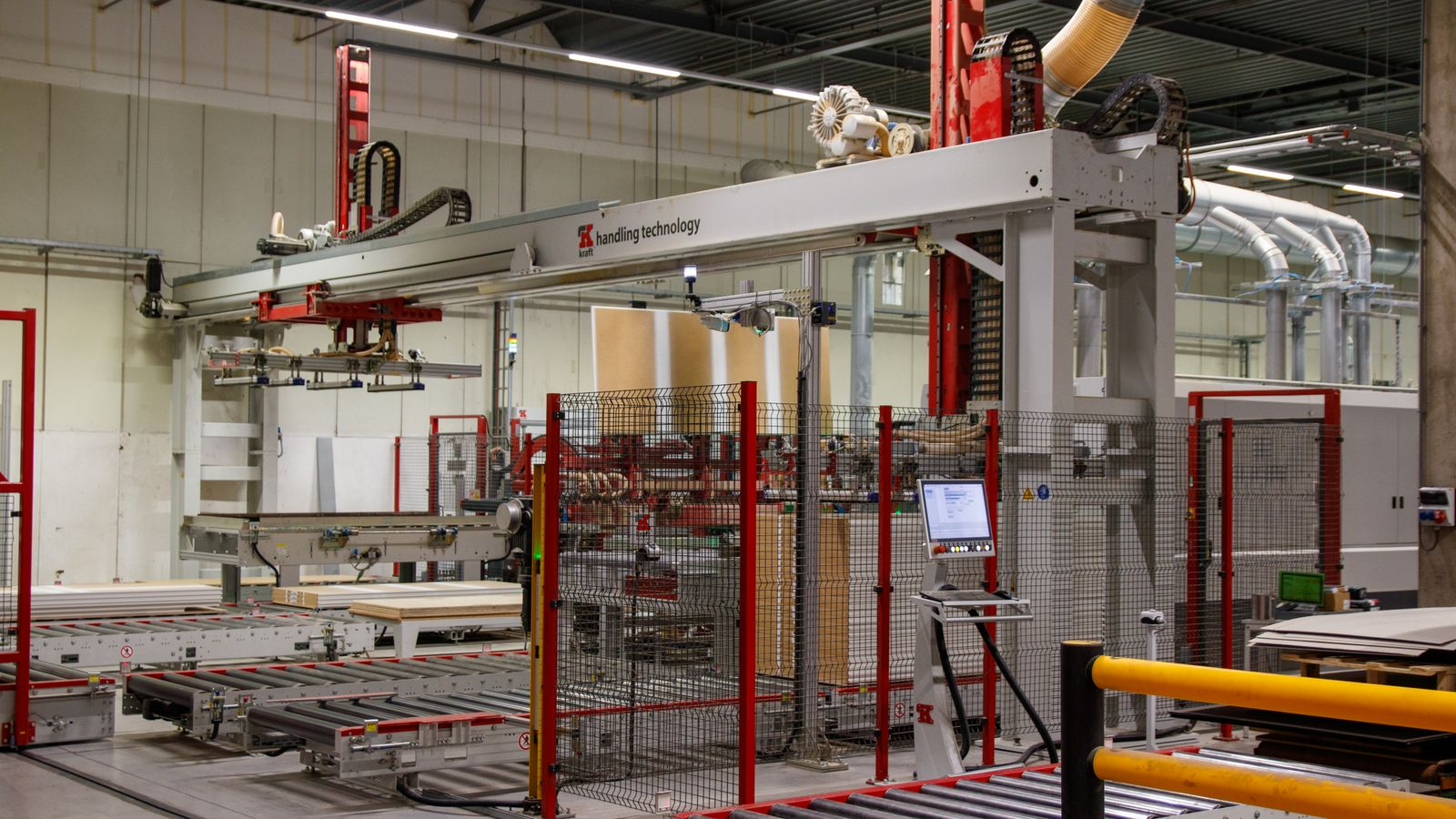
Announced on 13 October 2026, the equipment extends programmable electric motion into areas where conventional automation hardware can be difficult to protect from moisture, cleaning chemicals and repeated washdown procedures. Applications identified by Festo include cutting, filling, dosing, portioning, baking, cooking and product handling.
The components form part of a coordinated system that also includes a compatible controller and hygienic cabling. Selecting these elements together is intended to simplify the mechanical and electrical integration of motion control into machinery operating under demanding environmental conditions.
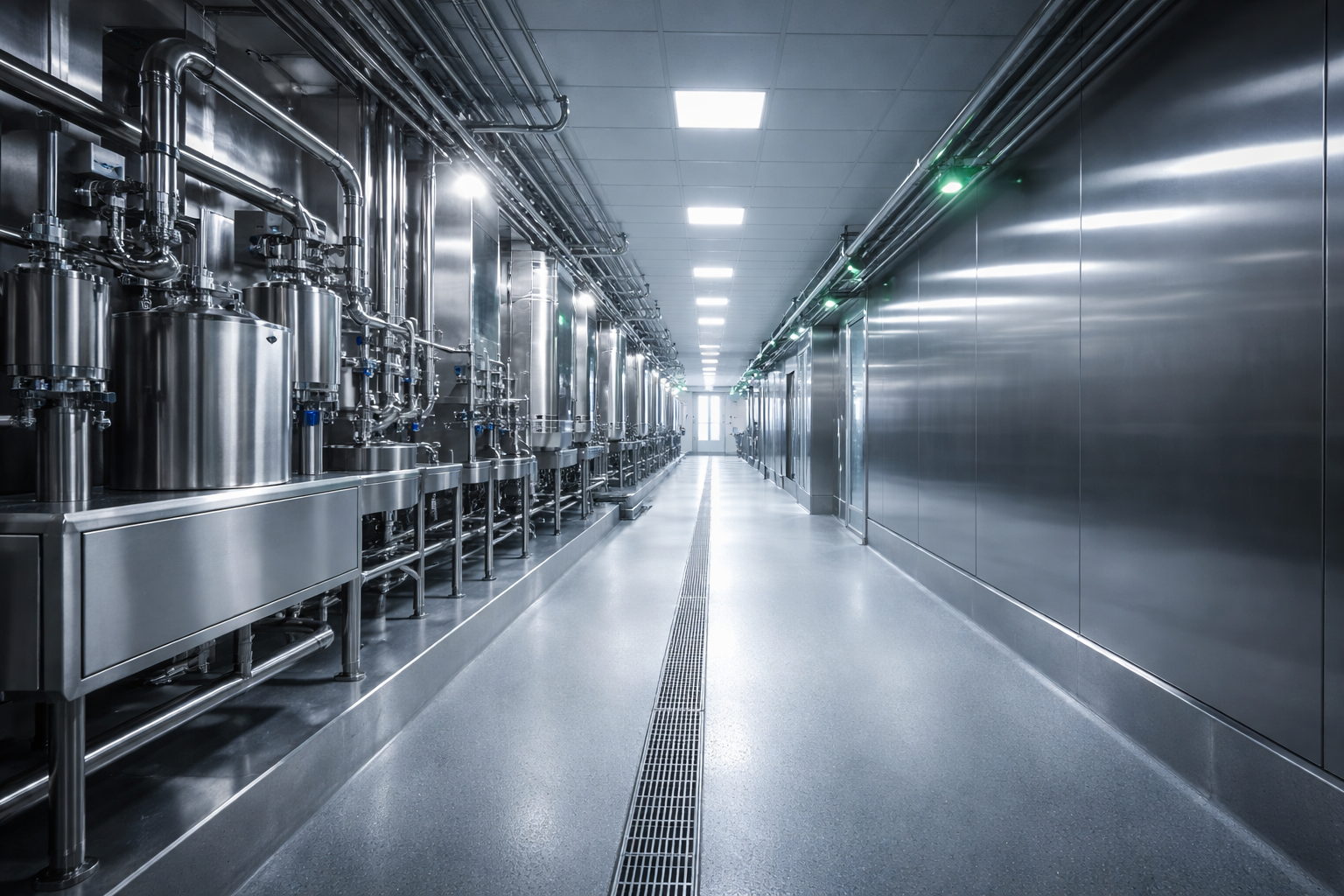
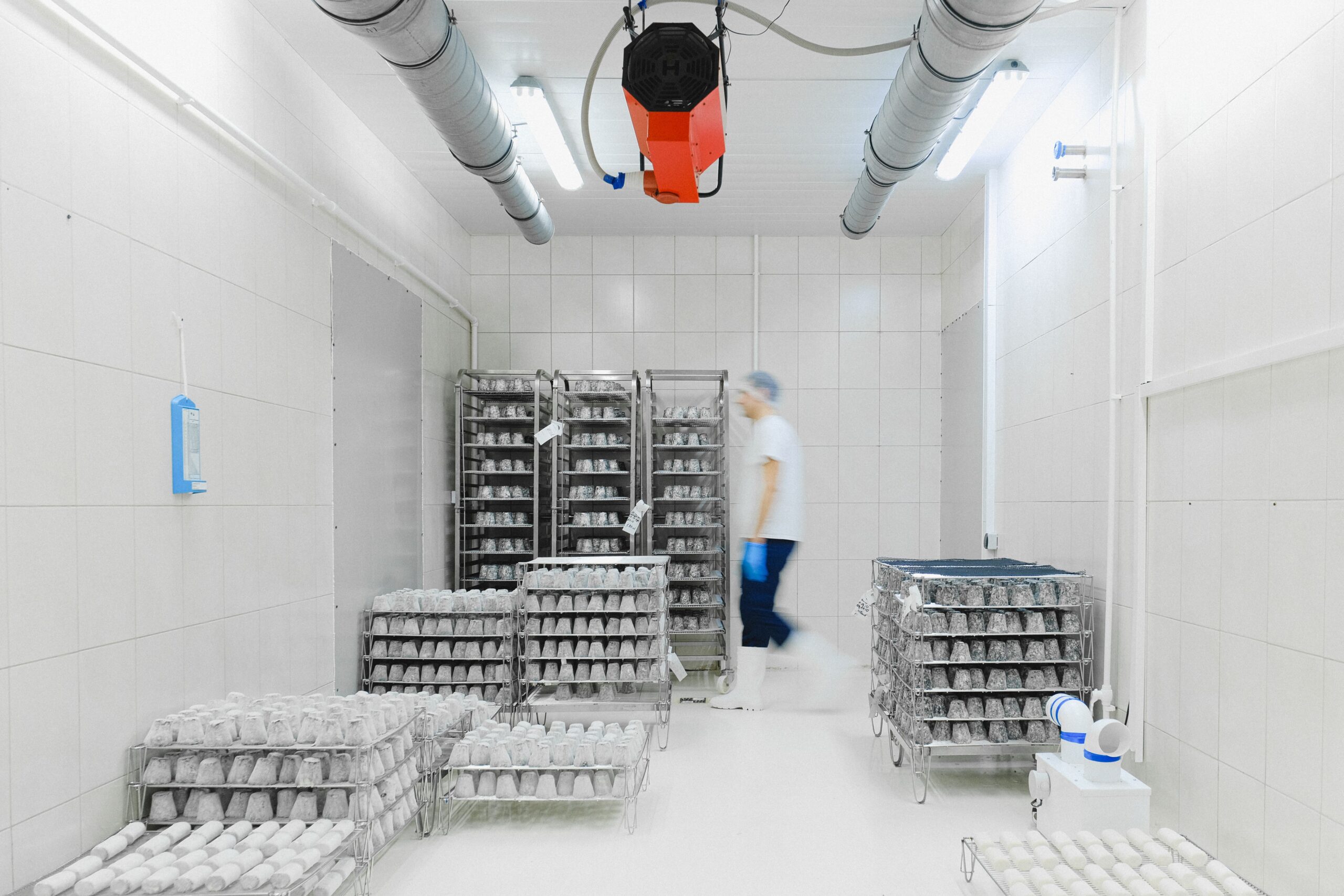
Food processing equipment must tolerate cleaning procedures intended to remove product residues and reduce contamination risks. Exposed surfaces, seals, fixings and cable connections can become points of weakness if their geometry traps material or permits water to enter the equipment.
Festo has designed the new motion components with smooth external surfaces, hygienic seals and NSF H1 registered lubricant suitable for applications where incidental food contact may occur. The material and sealing arrangements are intended to limit corrosion and support cleaning while protecting the internal drive mechanisms.
An IP69K rating indicates protection under specified high-pressure, high-temperature water spray test conditions. It does not establish unlimited resistance to every cleaning chemical or procedure, so equipment selection still requires consideration of the substances, temperatures and exposure periods used at the factory.
The CRC4 classification addresses resistance to highly corrosive operating environments. The effect of an individual cleaning regime nevertheless depends on the complete installation, including fasteners, connected cables, surrounding structures and the continuing condition of seals.
The EMMH-AS servo motor provides controlled rotary movement and is available in four sizes, with power ratings from 195W to 1.52kW. Its compact construction is intended for machinery requiring repeatable positioning and dynamic movement without exposing vulnerable components to the surrounding environment.
Servo motion relies on a feedback-controlled drive system. The controller compares the required movement with information about the motor’s actual position or speed, adjusting electrical output to achieve the commanded motion within the equipment’s operating limits.
This makes servo systems suitable for processes where the movement of a cutter, dosing mechanism or handling device must be coordinated with other machine functions. Repeatability depends on the complete mechanical system, including load, gearing, alignment and the stiffness of the connected equipment.
The EMMH-AS includes a battery-free absolute encoder that supplies position feedback without requiring a separate encoder battery. Absolute position information can reduce the need for some reference procedures after power interruption, although the complete machine may still require checks before production resumes.
An integrated single-cable arrangement incorporates pressure compensation tubing. The arrangement reduces the number of separate connections required and is intended to manage pressure differences that can develop as equipment heats during operation and cools during cleaning.
Pressure changes are relevant because repeated temperature cycles can affect sealed assemblies. If pressure equalisation is inadequate, moisture may be drawn towards vulnerable interfaces, while condensation can develop under certain operating conditions.
An optional holding brake allows the motor to maintain the position of a connected axis when powered movement is not required. Vertical applications can benefit from this capability, but the brake must be assessed within the overall machine design rather than treated as a substitute for independently required safety functions.
Linear movement is provided by the EPRF-BS electric cylinder, which uses a precision ball screw to convert motor rotation into controlled axial travel. Festo specifies repeatability of ±0.02mm, feed forces up to 12,500N and stroke lengths up to 1,000mm across the available configurations.
The cylinder is offered in five sizes with different screw pitches, providing a choice between movement speed, force and positioning characteristics. Six mounting arrangements and axial or parallel motor installation options allow the equipment to accommodate different machine layouts.
A ball screw drive uses recirculating rolling elements to transmit motion between the rotating screw and moving nut. This arrangement can provide accurate linear positioning while reducing sliding friction compared with some conventional screw mechanisms.
Its operating performance depends on the selected pitch, transmitted force, rotational speed and mechanical loading. A cylinder configured for a demanding force requirement may not provide the same travel speed as another configuration intended primarily for rapid positioning.
The EPRF-BS incorporates hygienic venting and a double seal wiper arrangement. These features are intended to reduce condensation within the actuator and protect moving surfaces against contamination entering the drive mechanism.
Seals remain wear components even in equipment designed for demanding environments. Their performance depends on correct installation, alignment, exposure conditions and maintenance, particularly where repeated linear movement takes place near water, food residues or cleaning chemicals.
The coordinated range is supported by Festo’s Electric Motion Sizing and Automation Suite software. These tools assist with selecting compatible axes, motors and drives based on operating loads, movement distances and other application requirements.
Correct sizing is important because excessive loads can reduce accuracy or service life, while unnecessary motor capacity increases equipment cost and may affect energy consumption. The total operating requirement must account for acceleration, movement frequency, dwell periods and any force applied during the process.
Festo’s compatible servo drives support industrial communications including Profinet, EtherCAT, EtherNet/IP and Modbus. These interfaces allow motion equipment to exchange operating commands and diagnostic information with suitably configured automation controllers.
Programmable movement can support repeatable adjustments when production equipment changes between product sizes or packaging formats. Actual changeover performance still depends on tooling, mechanical clearances, cleaning procedures and the verification required before a new product can enter production.
The stainless steel range provides machinery builders with motor, actuator and control components designed around the same environmental requirements. Performance in a food factory will depend on the selected configuration, mechanical integration, cleaning compatibility and maintenance arrangements, with no universal productivity or energy saving established by the launch itself.