IN Brief:
- Economist Enterprise's European assessment examines 14 countries within its 60-country Resilient Food Systems Index.
- Europe scores 81.26 for affordability and 81.16 for sufficiency of supply, but irrigation infrastructure and climate exposure remain concerns.
- The assessment identifies cold chain infrastructure, trade friction and investment constraints among the pressures on long-term food system resilience.
Economist Enterprise has published a European assessment of food system resilience, identifying weaknesses in infrastructure, agricultural productivity and climate preparedness that could disrupt the availability and movement of raw materials used by food processors.
Released on 13 October 2026, the regional analysis examines 14 European countries within the Resilient Food Systems Index, a benchmarking framework covering 60 countries and developed through independent Economist Enterprise research supported by Cargill.
The index uses 71 qualitative and quantitative indicators across four areas: affordability, availability, quality and safety, and climate risk responsiveness. The latest European assessment draws on that established framework to examine regional strengths and the vulnerabilities that could undermine them.
Europe performs strongly across several measures. The region scores 81.26 out of 100 for food affordability, 81.16 for sufficiency of supply and 77.51 for dietary diversity, indicating relatively favourable structural conditions compared with many other regions included in the index.
A further score of 73.79 for open and diversified agricultural trade reflects Europe’s capacity to obtain food and agricultural products through international markets. The report nevertheless identifies cross-border administrative requirements, infrastructure constraints and environmental risks that could weaken this position.
These figures describe structural characteristics of food systems rather than the performance of individual factories. They do not measure unused processing capacity, the reliability of specific cold stores or the volume of finished food that manufacturers could produce during a supply interruption.
Europe accounts for approximately one-fifth of global food exports, linking its agricultural output and food production capabilities to markets beyond the region. Disruption affecting major production areas can consequently influence ingredient availability for processing businesses that depend on international supply chains.
Even within a comparatively well supplied region, food manufacturers require raw materials of the correct specification at the time they are needed. The total quantity of agricultural produce available nationally or across Europe is not necessarily representative of the volume suitable for a particular industrial process.
Milk, cereals, vegetables, meat and other agricultural ingredients must meet requirements covering composition, quality, safety and traceability. A processor may be unable to substitute material from another supplier without establishing that it performs appropriately in the intended production process.
Variations in raw material characteristics can affect manufacturing operations before any shortage becomes visible in headline supply figures. Moisture content, fat concentration, protein composition, size distribution and other properties influence how materials respond to heating, mixing, separation, cutting and drying.
A flour mill, for example, must accommodate variations in grain characteristics while maintaining the specifications required by its customers. A dairy processor has different constraints because fat and protein availability influence the quantities of cream, cheese and other products that can be manufactured from the incoming milk supply.
Processing flexibility can help manage some of these variations through ingredient blending, equipment adjustment and production scheduling. Such flexibility remains bounded by food safety requirements, finished product specifications and the operating limits of installed machinery.
The European assessment identifies climate pressure as an important cause of uncertainty in agricultural production. Only North America has experienced greater year-on-year volatility in agricultural production than Europe within the report’s comparison, while water scarcity continues to constrain parts of the region.
Europe scores 41.53 for irrigation infrastructure against a water quantity risk score of 19.12. These are index indicators rather than direct measures of water available to individual farms or factories, but they point to vulnerabilities in the systems supporting agricultural output.
Changes in crop yield and harvest timing can influence the arrival of ingredients at food processing sites. Seasonal factories may have limited opportunities to recover lost production if suitable raw material is unavailable during the period for which the operation is designed.
Water availability also affects manufacturing directly, although the relationship differs from agricultural irrigation. Food processing facilities require water for activities including cleaning, ingredient preparation, heating and cooling, subject to the quality specifications appropriate to each application.
Production continuity depends on the availability of these services as well as raw ingredients. A factory may have enough material to operate but still face restrictions if essential utilities cannot meet the requirements of its equipment or hygiene controls.
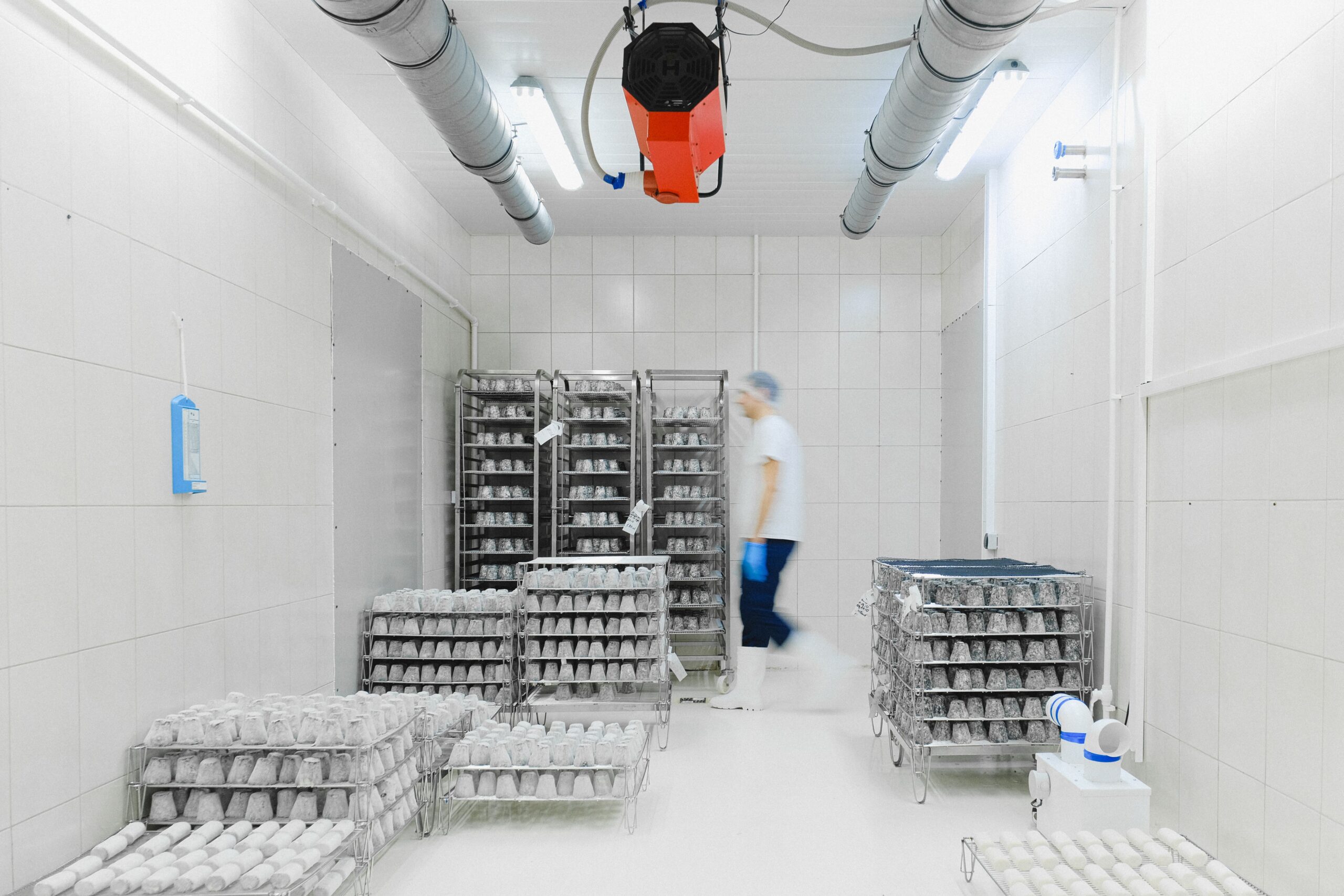
Cold chain infrastructure presents another vulnerability identified by the assessment. Refrigerated transport and storage preserve temperature-sensitive products as they move between farms, processors, warehouses, retailers and other destinations.
The required conditions depend on the product. Chilled meat, dairy products and prepared foods have different storage characteristics from frozen ingredients, and each must be handled according to its approved temperature and shelf-life requirements.
A shortage of refrigerated storage capacity can reduce the flexibility available when incoming deliveries are delayed or finished products cannot be dispatched as planned. Holding additional inventory may help absorb disruption, but it also requires suitable temperature control, reliable electricity and enough physical space.
Cold storage does not remove the underlying shelf-life constraint. Products may remain within specified temperatures while their remaining usable life continues to decline, limiting the time available for processing, distribution or sale.
Trade friction can produce similar scheduling difficulties. The regional assessment highlights non-tariff measures, including differences in certification, inspection and product standards, that can increase the cost and time required to move agricultural and food products across borders.
For ingredients requiring controlled temperatures, administrative delays can interact with storage and transport limitations. Longer journeys or unpredictable clearance periods may increase the amount of time products spend in refrigerated vehicles and intermediate storage facilities.
Manufacturers can respond through supplier diversification, additional storage or revised procurement arrangements, but alternative sources may require new technical approvals and traceability checks. A supplier located in another country may also face different transport, regulatory or seasonal risks.
The index identifies climate risk responsiveness as the weakest of its four pillars globally, with an average score of 56.43 across the 60 countries. The figure indicates limitations in preparedness and adaptation within the framework’s methodology, rather than predicting the probability of a particular processing disruption.
Differences between European countries remain substantial despite the region’s strong overall performance. Portugal ranks first in the global index with a score of 76.83, followed by France at 76.75 and the United Kingdom at 76.34, while no country achieves an overall score of 80.
Investment in agricultural research is another area where Europe’s structural strengths coexist with implementation challenges. The regional analysis records an index score of 50.75 for public agricultural research and development spending, compared with a global average of 31.08, but identifies difficulties in financing the demonstration and scaling of new technologies.
Manufacturing resilience depends partly on whether those technologies can be integrated into practical production and distribution systems. Improved raw material inspection, process control and inventory management may strengthen a factory’s ability to handle variability, while transport capacity and infrastructure investment frequently require coordination beyond the individual business.
The new European assessment identifies vulnerabilities without quantifying a specific deficit in food manufacturing capacity or predicting when the next disruption will occur. Its findings place attention on the infrastructure, operating flexibility and market access arrangements needed to keep food moving through processing and distribution as underlying conditions change.