IN Brief:
- The toolkit combines Sensation consumer-texture research, CLARIA functional starches and NUTRAVA citrus fibre.
- Tate & Lyle reports that one customer dressing formulation contained 10% oil and no egg after reformulation trials.
- Texture, emulsion stability, vegan labelling and nutrition claims require independent validation for each recipe and market.
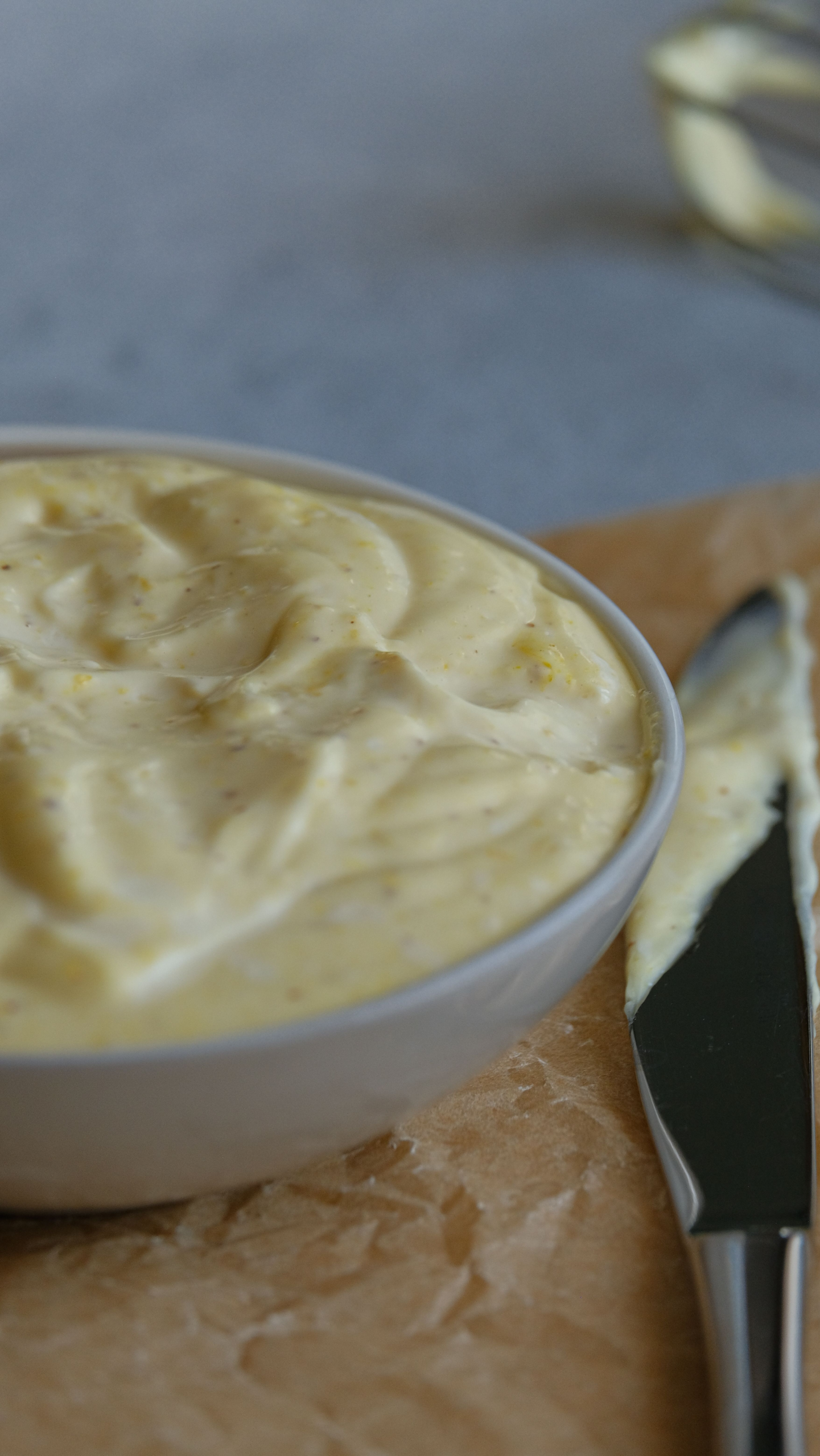
Tate & Lyle has introduced a Clean Label Mayonnaise Solutions Toolkit intended to help customers formulate mayonnaise-type products and dressings with less oil, less egg or no egg while targeting the required texture, flow and shelf-life stability. It combines sensory research and functional ingredients, but Tate & Lyle is not claiming that one recipe achieves the same result across all products, production lines or regulatory markets.
The toolkit brings together Tate & Lyle Sensation, its established sensory-led formulation method, CLARIA functional clean label starches and NUTRAVA citrus fibre. The company is targeting manufacturers that need to change recipe costs, nutritional profiles or ingredient declarations without producing a dressing that separates during handling or feels markedly different when eaten. Its application is tailored to the desired product and processing conditions, not presented as a universal ready-made recipe.
Conventional mayonnaise is an oil-in-water emulsion. Oil droplets are dispersed through an aqueous phase, with egg yolk providing components that help maintain the interface between the two. Reducing oil changes the volume of dispersed material and the way the emulsion resists movement. Removing egg can also remove an important source of emulsification, so replacing both ingredients creates a coupled formulation problem involving structure, stability and sensory perception.
A product that remains thick when left in a container may still behave poorly when pumped, filled or poured. Viscosity describes resistance to flow, but it does not capture every attribute associated with creaminess. Elastic response, the way a dressing breaks down under shear and the speed with which it regains body after mixing can all influence what a consumer experiences. These characteristics also affect line handling, especially when a recipe has to pass through mixing and filling equipment before it reaches the shelf.
Tate & Lyle says its Sensation research in the UK and Germany associated mayonnaise preference with moderate viscosity and stronger elastic structure rather than high viscosity alone. That finding gives formulators a more precise target than simply replacing the thickness lost when oil is removed. The Sensation process maps consumer descriptions of mouthfeel to measurable sensory attributes and then connects those attributes with potential ingredient systems.
CLARIA functional starches provide viscosity and structure within the toolkit, while NUTRAVA citrus fibre contributes water binding and can assist emulsion stability, according to Tate & Lyle. Citrus fibre is made from citrus peel, a by-product of juice processing. The effectiveness of a particular ingredient combination depends on the oil level, droplet size, shear profile, acidity and manufacturing sequence of the finished product. The company’s clean label terminology describes its formulation proposition, not a universally defined legal classification.
One customer-specific project illustrates what Tate & Lyle says it achieved with the toolkit. A regional food manufacturer wanted a vegan-style, egg-free salad dressing with substantially less oil. Initial prototypes did not meet the customer’s texture and creaminess targets. Tate & Lyle reports that a revised formulation using starch and citrus fibre alongside its Sensation approach contained 10% oil and no egg and met that customer’s requested stability, flow and sensory criteria. The supplier also says the design could replace up to three conventional texturisers in that particular application.
Those reported results cannot be applied automatically to mayonnaise products in general. Tate & Lyle has examined systems containing 50%, 30% and 10% oil, each with different formulation constraints. A dressing with 10% oil is not necessarily compositionally equivalent to a conventional mayonnaise, nor does removal of egg alone establish that the product qualifies for vegan labelling or a particular nutritional claim. Processing temperature, acidity, oil droplet distribution and stability requirements will differ between customers.
The company has worked in emulsified sauces previously. Its published case study describes using MERIGEL and STAMIST starches to develop lower-cost mayonnaise and salad cream alternatives, including formulations with different fat levels and egg replacement options. Tate & Lyle introduced Sensation as a broader mouthfeel formulation tool in 2024, while its 2026 annual report describes solution frameworks that can be adapted by regional application teams. The October launch therefore adds a specifically configured mayonnaise toolkit to existing ingredient and sensory capabilities; it is not the first appearance of the underlying technology.
Ingredient declarations, vegan positioning and nutrition claims have to be established for each final product and market. Clean label does not have a single harmonised legal definition, and the permitted declaration of a modified or functional starch depends on the specific ingredient and applicable rules. The reported egg-free example does not independently prove absence of all animal-derived inputs, cross-contact or compliance with vegan certification standards. A fat-reduction claim similarly depends on the finished formulation and its permitted reference product, not simply on a reduction in the oil used.
The commercial calculation extends to manufacturing as well as raw material costs. Lower oil content may reduce one significant input cost, but added ingredients, different mixing requirements and additional process validation can offset part of that saving. The toolkit’s measurable proposition is its attempt to connect sensory targets with a stable, manufacturable emulsion. Its broader success will depend on how reliably those results transfer from development samples to production runs and shelf-life testing across individual customer products.