IN Brief:
- The Food Standards Agency published consolidated food traceability guidance on 14 October 2026.
- Businesses must be able to identify immediate suppliers and business customers, with additional requirements applying to certain products.
- Paper and electronic records are permitted, provided the information is accurate and can be made available promptly.
The Food Standards Agency has published consolidated guidance explaining the traceability obligations applying to food businesses in England, Wales and Northern Ireland. Issued on 14 October 2026, the document sets out the information operators must be able to retrieve about suppliers and business customers, alongside additional rules affecting particular food products and sectors.
The guidance brings existing legal requirements together in a single reference rather than introducing a new universal traceability system. It explains how food businesses should identify where products and ingredients came from, where they were subsequently supplied and which consignments may be affected when a safety incident is detected.
Under General Food Law, businesses must have systems and procedures that allow them to identify their immediate suppliers and the businesses to which they supply food. This is commonly described as the one-step-back, one-step-forward principle. The obligation applies across the food supply chain, although businesses selling directly to final consumers are generally not required to maintain forward traceability records for those individual consumer transactions.
The FSA says records should provide sufficient information to identify suppliers and customers, the products involved, quantities supplied or received and relevant delivery or dispatch dates. Batch, lot and consignment references should also be retained where available, with additional legal requirements applying to certain sectors. Keeping such identifiers is recommended as good practice even when they are not individually prescribed by general traceability legislation.
The distinction between general duties and product-specific rules is important. Certain products of animal origin, live bivalve molluscs, sprouts and seeds, and eggs are subject to additional traceability or identification provisions. Businesses handling these products need to establish which requirements apply to their own operations rather than assuming that the general one-step-back, one-step-forward obligation represents the complete legal position.
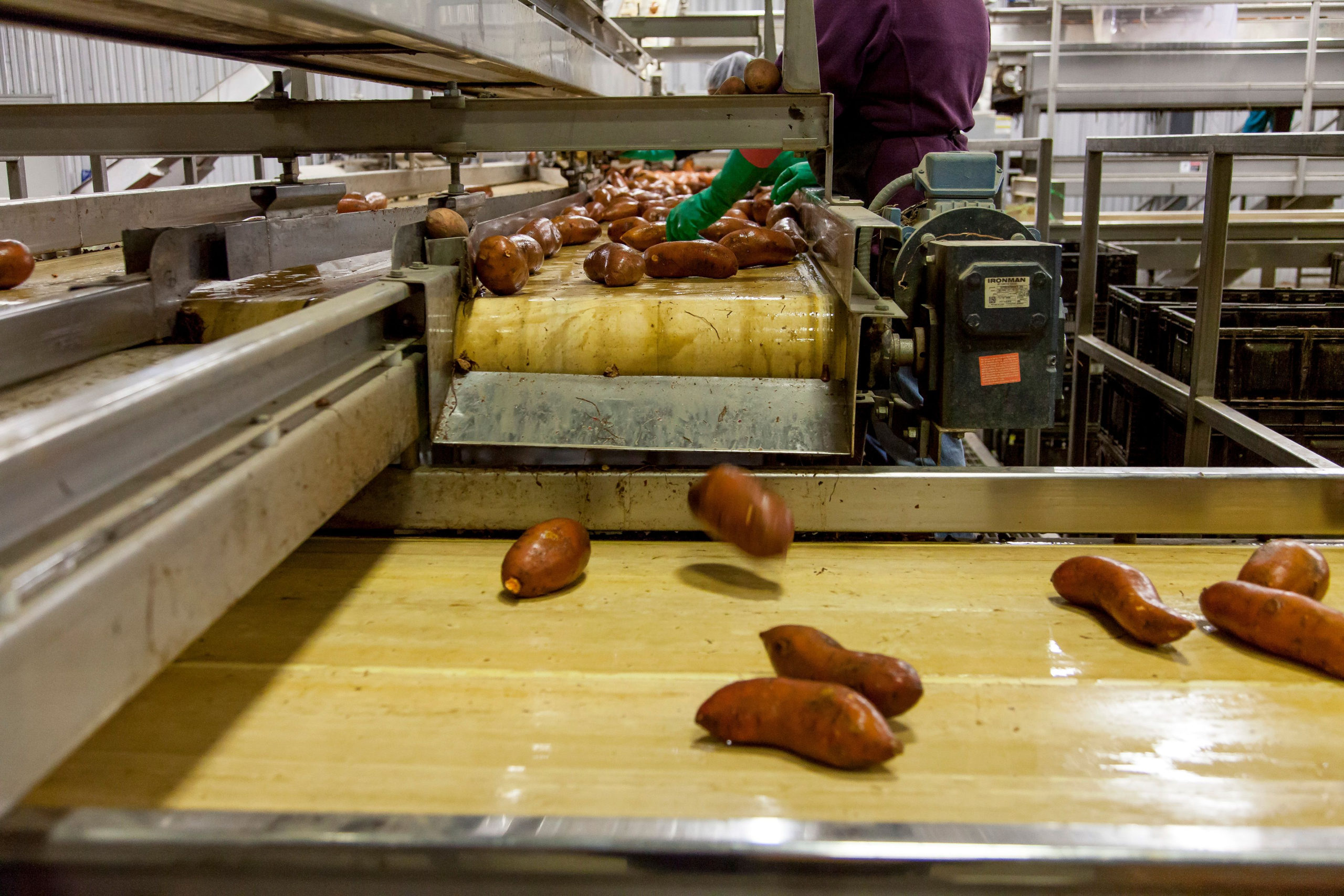
Food manufacturing often involves combining ingredients from several suppliers before distributing finished goods through multiple commercial customers. Incoming ingredients may be divided between production runs, while a finished product can contain materials received on different dates and from different sources. Connecting those movements can require more detailed internal records than the minimum information used to identify immediate trading partners.
A manufacturer receiving a particular ingredient lot, for example, may use it in several recipes or production batches. If a hazard is subsequently associated with that lot, production and stock records can help determine which finished goods may contain the affected ingredient. Accurate links between receipt, storage, production and dispatch information can reduce uncertainty over the distribution of potentially unsafe products.
The FSA does not prescribe a particular software platform for maintaining traceability information. Businesses may use paper records, electronic documents, stock management systems or dedicated traceability software, provided the arrangement allows accurate information to be supplied promptly when requested by an authorised officer.
Electronic systems can help connect transactions and production records, but their value depends on the reliability of the information entered. An incorrect batch reference or an unrecorded material movement can undermine a sophisticated database just as readily as an incomplete paper log. Consistency between physical stock, production records and dispatch documentation remains fundamental to effective traceability.
The guidance also distinguishes the identification of products from the action required when a food safety concern arises. A withdrawal removes affected food from the supply chain, while a recall addresses products that have already reached consumers. Determining the appropriate response requires consideration of the hazard, the products involved and their distribution, supported by the available records.
Traceability can help limit the scope of action when reliable records show that only certain products or batches could have been affected. Where records are incomplete, businesses may face greater uncertainty during an investigation. Accurate traceability therefore supports targeted withdrawals and recalls without removing the operator’s responsibility to assess and manage the original food safety problem.
Records must remain accessible when requested, but general traceability legislation does not establish one universal retention period for every business and product. The appropriate period depends on the nature and expected life of the food, the circumstances in which information may be required and any sector-specific legal provisions. Operators must assess these factors rather than adopting a standard retention period without checking the rules applicable to their products.
The FSA identifies several ways in which effective traceability supports food safety. These include helping businesses and regulators locate affected products, identify relevant movements through the supply chain and act when food may be unsafe. More precise identification can also limit unnecessary product withdrawal and waste when the evidence supports a narrower response.
Manufacturers can test the practical operation of their systems by tracing a selected ingredient or finished product through the records available. Following an incoming lot forwards through production can establish which batches used the material, while tracing a finished batch backwards can identify the recorded sources of its ingredients. Such exercises can reveal missing references, inconsistent product descriptions or gaps between different record systems.
These tests do not replace formal food safety management arrangements. Hazard analysis, supplier approval, process controls, hygiene procedures, allergen management and other relevant measures remain necessary to prevent unsafe food entering the market. Traceability provides information about the movement and identity of products; it does not establish their safety merely because the records are complete.
The guidance reflects the different legal arrangements applicable across the United Kingdom. In England and Wales, relevant assimilated legislation forms part of the food law framework, while Northern Ireland continues to apply specified EU food rules. Food Standards Scotland provides the corresponding guidance for businesses operating in Scotland. Companies with facilities or supply arrangements across these jurisdictions need to use the legal provisions applicable to their activities.
The original FSA publication was updated on 15 October to correct a hyperlink to Regulation 2023/2465 in its section on legislation and sector-specific requirements. That correction did not constitute a new traceability obligation or substantive revision of the underlying requirements.
The consolidated guidance gives businesses a current reference against which to review supplier and customer records, internal product identification and arrangements for responding to safety incidents. Existing paper or digital systems can remain suitable where they provide the required information accurately and promptly, while the additional rules applying to specific food categories continue to determine the level of detail that must be retained.