IN Brief:
- Buyers from Malaysia, Thailand, the Philippines, Vietnam and Mexico toured British dairy facilities.
- AHDB arranged two Meet the Buyer events and meetings with 23 dairy export businesses.
- The £973 million first-half UK dairy export figure predates the mission and is not a value of deals secured.
The Agriculture and Horticulture Development Board (AHDB) has hosted dairy buyers from Malaysia, Thailand, the Philippines, Vietnam and Mexico for visits to British production facilities and meetings with exporters. Reported on 15 October 2026, the inward trade mission brought delegates into contact with 23 British dairy export businesses. AHDB describes the programme as an effort to build commercial relationships; it has reported no contracts, new processing capacity or export volumes secured by the meetings.
Factory visits were combined with two Meet the Buyer events, held in Manchester and London. AHDB says delegates were already active in importing dairy products and were assessing opportunities to source more from Britain. Participating exporters offered products including cheese, butter, yoghurt and ice cream, each with different processing and delivery requirements. The programme enabled direct discussions and plant visits, rather than constituting a completed purchasing programme.
AHDB reports that UK dairy exports were worth £973 million during the first half of 2026, including £79 million shipped to Asia and Oceania. Those are historic market totals, not transactions arising from the October inward visit. The organisation also identifies Mexico as an emerging prospect following the UK’s participation in the Comprehensive and Progressive Agreement for Trans-Pacific Partnership (CPTPP), although tariff arrangements alone do not establish that any plant or product has satisfied a customer’s import requirements.
A visit to a processing facility gives potential customers an opportunity to examine how incoming milk, production equipment and finished-product checks are managed. Importers can discuss production capacity, packaging specifications, batch traceability and site hygiene controls with the business that would supply them. These observations can inform commercial qualification, but they are not a substitute for country-specific import approvals, product testing or an agreed purchasing contract.
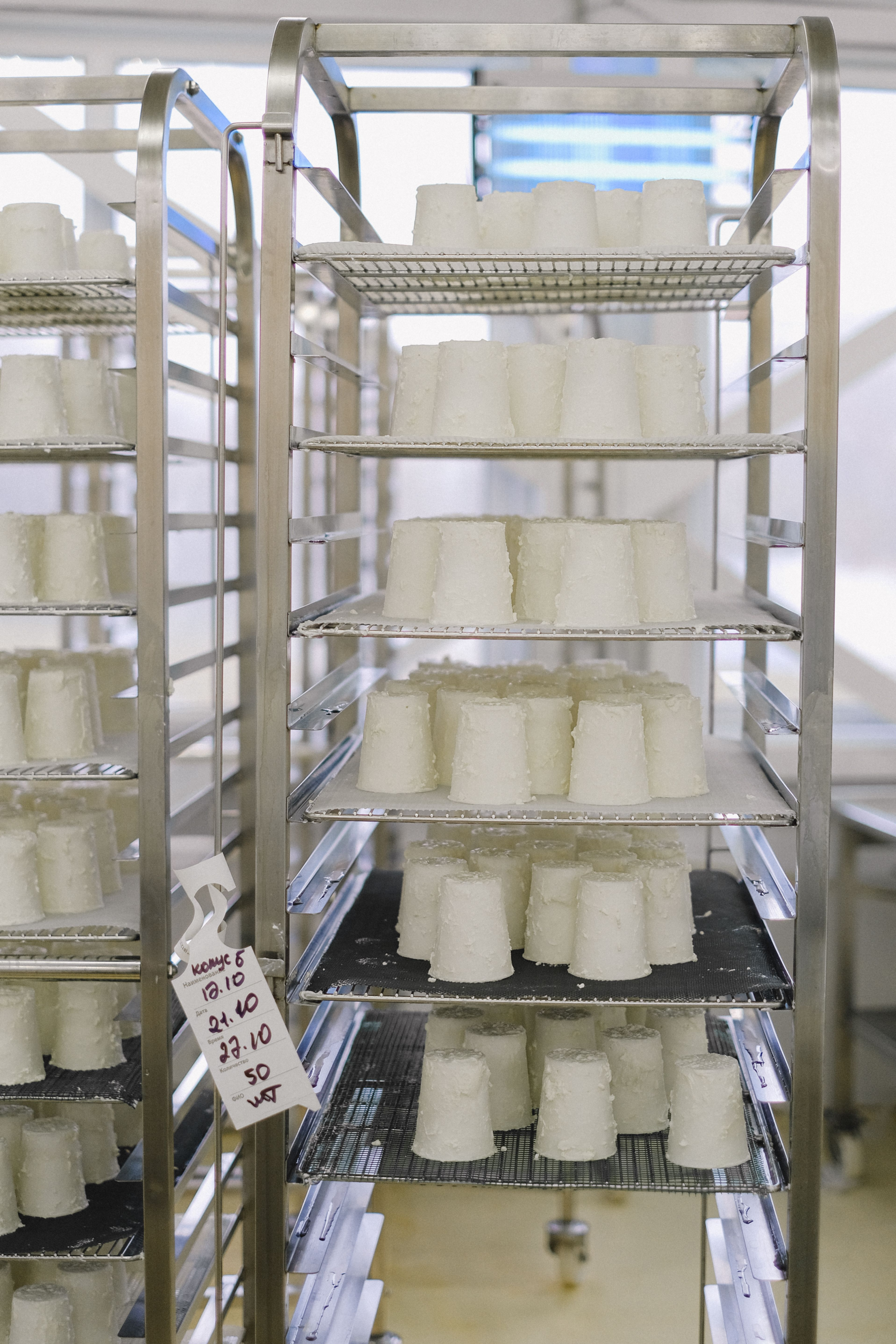
Dairy manufacturing involves different processes for products that may initially share the same raw material. Cheese production requires controlled acidification and curd handling, followed by maturation or other product-specific steps. Butter production depends on cream separation and churning or related continuous processing systems. Yoghurt relies on controlled heat treatment and fermentation, while ice cream combines formulation, freezing and often the management of incorporated air. Different technologies create different equipment, storage and shelf-life considerations for export orders.
Temperature control is central to many of those decisions. Chilled milk products have defined handling requirements and may face distribution chains involving road transport, container handling and longer transit times than domestic deliveries. Product life has to be considered from the point of manufacture rather than only once a shipment leaves the port. Frozen dairy products create another set of temperature and packaging constraints, while suitable hard cheeses and certain shelf-stable ingredients can have quite different logistics profiles.
A dairy processor seeking a new export market must verify eligibility for its specific product and destination. Import conditions may cover establishment approval, health certificates, composition, labelling and cold-chain documentation. Trade preferences under CPTPP are relevant to tariffs and market access, but they do not waive food-safety controls or logistics requirements. Producers must also agree volumes, specifications and delivery terms with their prospective customers before production can be treated as contracted.
AHDB says the first consignment of British cheese was shipped to Mexico earlier in October under improved market access associated with the CPTPP. That is an existing trade development, not a sale attributed to this inward mission. Mexico’s longer-term opportunity depends on repeat buying, eligible products and commercially workable distribution, rather than merely the fact that delegates visited factories in Britain.
Shropshire cheesemaker Belton Farm was among the participating businesses. Its international sales director, Dan Rush, described the importance of exports to the company and said it received milk from 65 farms within approximately 20 miles of its site. These details illustrate how a local milk catchment can supply manufacturing destined for international customers; AHDB did not report that the October meetings had added farms, contracts or production lines at Belton Farm.
Trade missions also allow importers to assess continuity of supply. Milk production varies seasonally and responds to farm economics and weather, so processors have to balance raw-material availability with domestic and export orders. A buyer considering a recurring programme may ask about delivery schedules, product consistency and capacity during periods of peak demand. None of those operational questions can be settled through a tasting alone, making plant visits a useful preliminary stage in commercial qualification.
AHDB also planned to support dairy and red meat exporters at SIAL Paris from 17 to 21 October, followed by participation at Food and Hotel China in November, with six export businesses on the UK pavilion. These events form a wider market-development programme and should not be presented as orders won. Any investment, capacity change or contract secured following the October inward mission would require a separate announcement and verification.
The confirmed October activity consists of factory visits, two buyer events and meetings between international delegates and 23 British dairy exporters. AHDB’s export figures and first shipment to Mexico describe the existing market context, not results of the mission. Its commercial impact can only be established when the businesses report subsequent agreements, repeat orders or measurable export shipments.