IN Brief:
- MTS Giesenberg has installed two Flikweert Vision DIVIDER Select optical sorters at its operation in Willcox, Arizona.
- Cameras, image recognition and individual ejector fingers remove stones, clods and severely defective potatoes after intake.
- The supplier reports maintaining existing capacity with eight fewer people required on the sorting line.
Flikweert Vision has supplied two DIVIDER Select optical sorting systems to MTS Giesenberg’s potato operation in Willcox, Arizona, allowing the business to separate stones, soil clods and severe crop defects immediately after receiving. The installation places automated inspection at the beginning of the handling process, before potatoes move into storage. According to the Dutch equipment supplier, the site is maintaining its previous sorting capacity while requiring eight fewer people on the sorting line. That figure describes a change in staffing requirement rather than a confirmed reduction in employment.
MTS Giesenberg is a Dutch family business operating in Groningen and Arizona. Jos Giesenberg has managed the Arizona operation since 2015, growing small creamer potatoes under dry climatic conditions where irrigation is essential. The operation handles potatoes from approximately 18mm in size. At that scale, a marketable potato may have much the same apparent dimensions as a stone or compact clod of soil. Separating unwanted objects by a simple size screen is therefore insufficient, particularly when product and foreign material move together through the reception system.
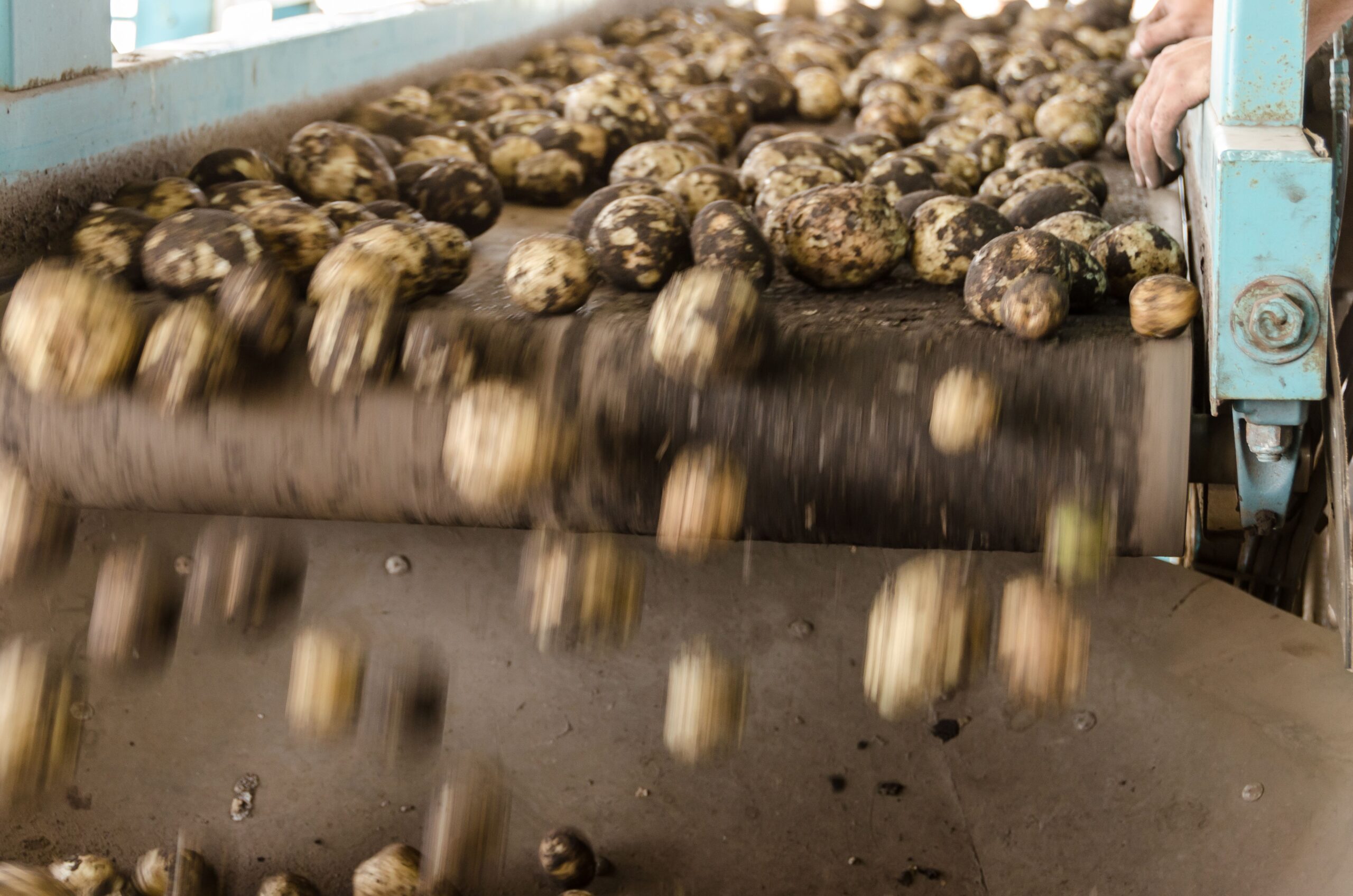
The two DIVIDER Select units sit directly after the receiving hopper. As objects travel on a moving belt, industrial cameras capture images of the material while it remains supported in a stable position. Image recognition software distinguishes potatoes from clods, stones and other foreign objects, as well as identifying potatoes with extreme defects. A series of individually actuated ejection fingers then diverts selected objects away from the accepted product stream. The inspection and rejection functions are coordinated with belt movement so that each decision is applied to the relevant object.
The first pass removes foreign material and the most obvious defects while leaving commercial grading to later equipment. Potatoes retained after pre-sorting may still need to be separated by size, colour, shape or the customer’s specification. Dividing inspection in this way allows the storage and grading stages to receive a cleaner stream without treating the intake sorter as a substitute for the controls applied to the finished crop.
Removing stones and soil clods immediately after reception changes the material carried into store. Foreign objects take up space in boxes or bulk handling systems and must otherwise be separated during later movements of the crop. Giesenberg reports a cleaner flow into storage, where fewer unwanted objects pass through subsequent conveying stages. The available site evidence concerns the cleanliness of this material flow and the labour used for sorting; it does not quantify changes in storage losses.
Flikweert Vision describes the DIVIDER Select as a flexible pre-sorter for potatoes and onions, with a stated maximum equipment capacity of up to 120 tonnes per hour and a drop height of 35cm. Those figures are product specifications, not measured throughput at the Arizona site. Actual operating rate depends on the composition of the intake, loading conditions and the configuration of the surrounding equipment. Keeping the crop supported during camera inspection is particularly important for small potatoes, where changing object position or overlapping material can make reliable classification more difficult.
Each ejection finger can be actuated separately, allowing the system to divert a detected stone or defective potato without rejecting a broad section of the belt. That selectivity is useful when creamer potatoes and clods are similar in size and arrive in a closely spaced stream. Camera classification and ejection timing must remain aligned as belt speed and crop condition change. Recognition settings determine how the machine balances removal of foreign objects with retention of sound potatoes, while the downstream grading line provides further inspection.
Manual separation had become difficult to staff at the Arizona operation. The optical sorters take over much of the repetitive recognition and rejection work at the receiving line, leaving the remaining labour requirement linked to intake supervision and subsequent handling. Flikweert Vision attributes the site’s reported staffing improvement to this change in the sorting process. The result will depend on the original line layout, crop condition and integration of the machines with the receiving conveyors at any other site.
The DIVIDER Select was introduced in 2026 for pre-storage sorting and is offered in stand-alone, flexible and integrated configurations. The Arizona installation uses two units in the crop reception sequence, so material that reaches the storage boxes has already passed through a camera-guided foreign-object removal step. That placement gives later handling equipment a more consistent feed while retaining separate opportunities to grade and inspect potatoes before sale or processing.
Jos Giesenberg expects image-guided sorting to take on further duties as equipment develops. At Willcox, performance will be measured in the consistency of separation across changes in harvest conditions, soil load and crop size, alongside the time required to keep the reception line operating. Reliable removal of foreign objects at intake lets the business move potatoes into storage with less manual intervention and fewer unwanted materials to handle again.