IN Brief:
- Fooditive is seeking US manufacturing partners for its 5-KDF bulk sweetener.
- The company tested bioconversion using a 75-cubic-metre fermentation system and fruit-processing side streams.
- The FDA response to GRN 1326 remains pending, alongside unresolved US nutrition-labelling questions.
Fooditive is negotiating manufacturing partnerships for its 5-keto-D-fructose sweetener after testing production in a 75-cubic-metre fermentation system in Italy. The Rotterdam-based ingredients developer is seeking established suppliers to manufacture and commercialise the rare sugar in the United States, while its submission to the US Food and Drug Administration remains under review.
The ingredient, known as 5-KDF, is a water-soluble monosaccharide that Fooditive intends to market as a lower-calorie alternative to sucrose. Unlike high-intensity sweeteners, which deliver sweetness in small quantities but little bulk, 5-KDF is being developed to contribute both sweetness and physical substance to a formulation. Those characteristics determine whether a manufacturer can replace part of the sugar in baked goods, confectionery or frozen desserts without having to reconstruct the entire ingredient system.
Fooditive says 5-KDF has approximately 70% of the sweetness of sucrose and supplies around 1.5 kcal per gram, compared with approximately 4 kcal per gram for conventional sugar. Its potential manufacturing applications therefore extend beyond sweetness alone. In a baked product, for example, sugar influences solids content, water availability and the behaviour of other ingredients during mixing and heating. Lower-calorie bulk sweeteners must be assessed for those effects rather than selected solely on the strength of a sweetness comparison.
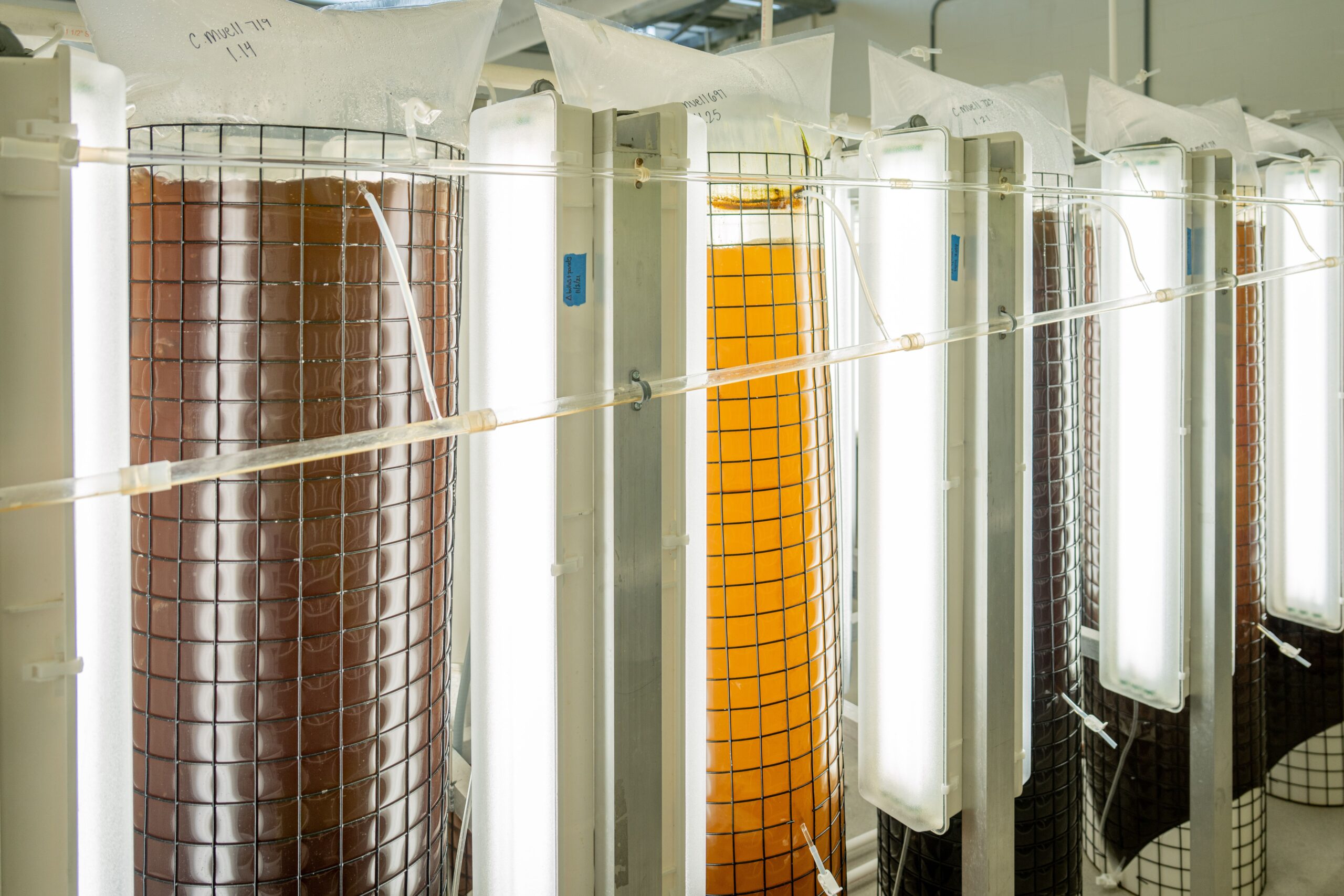
The proposed manufacturing route uses fructose as its substrate and a non-genetically modified strain of Gluconobacter oxydans for bioconversion. Fooditive's regulatory filing describes the microorganism as a processing aid, removed during downstream purification to non-detectable levels. The resulting sweetener can be supplied as crystalline material or syrup. Fooditive has also developed its process around fructose-containing side streams from apple and pear processing, providing a potential route for converting fruit residues into a higher-value food ingredient.
Fooditive's manufacturing trials have tested both the conversion process and the use of variable feedstocks. Apple and pear side streams differ with the source fruit, handling and processing method, while industrial customers require a stable ingredient specification across batches. Fooditive says it ran the process for almost three months in a 75-cubic-metre fermentation system at an Italian contract manufacturer. Its next proposed scale is 200 cubic metres. Reaching the intended throughput with consistent purity will be an important part of transferring the technology to a commercial ingredient producer.
The next stage is being structured around licensing rather than Fooditive financing and operating its own network of factories. Founder and chief executive Moayad Abushokhedim has described discussions with a large ingredients supplier already active in the sweeteners market, with that partner expected to handle manufacturing and market access and Fooditive retaining responsibility for technology development and support. The company is considering separate agreements by application, potentially involving two or three US manufacturing partners, rather than placing all uses under a single exclusive licence.
That approach would place the conversion technology inside manufacturing and commercial systems already equipped to manage ingredient production, distribution and food-company qualification. Existing sweetener suppliers can also bring application laboratories and customer relationships to the formulation work, although each commercial arrangement will depend on technical transfer, production economics and the customer's required specifications. The agreements remain under discussion; a signed manufacturing partnership or established US supply chain has not yet been confirmed.
Fooditive's US safety assessment remains at the notification stage. The company obtained a self-affirmed generally recognised as safe determination in 2024 and submitted GRAS notice GRN 1326 to the US Food and Drug Administration on 29 January 2026. The FDA register continues to list its response as pending. The notice specifies use as a sweetener and bulking agent in named food categories, excluding infant formula, infant foods and products regulated by the US Department of Agriculture. A commercial agreement would have to account for the outcome of that review and the uses actually covered.
Nutrition labelling adds a separate commercial consideration. US rules on declared added sugars and permitted sugar-content claims are not determined by the GRAS safety notification, and Fooditive has not established that 5-KDF will receive the treatment applied to some other lower-calorie sugars. Formulation teams must therefore assess the final product's label alongside the ingredient's sweetness, solids contribution, processing behaviour and cost. Fooditive is considering the consumer-facing name Ketose, although its final presentation remains undecided.
Meanwhile, Fooditive is exploring an operation in upstate New York, where apple-processing residues could provide a local fructose-containing feedstock. The developer was selected as a finalist in the 2026 Grow-NY competition and has discussed work with Cornell University. Founder and chief executive Moayad Abushokhedim hopes to conduct three or four application trials over the coming year to test performance in finished products. Further manufacturing scale-up, customer trials and the FDA response remain the next identifiable steps before broader US commercial supply.