IN Brief:
- Lean + Wild has opened a wild venison processing facility at Radwinter in Essex.
- The company plans fixed seasonal carcase processing fees to give deer managers more predictable handling costs.
- The new operation adds in-house capacity, although throughput, capital expenditure and individual site approvals have not been disclosed.
Lean + Wild has opened a venison processing facility in Radwinter, Essex, giving the British game producer additional capacity and greater direct control over its supply chain. The company says the investment will support more consistent production and a fixed-fee arrangement for deer managers supplying carcases during the season. It has not disclosed the capital cost, annual throughput or number of new jobs at the site.
Wild deer enter the commercial meat chain after harvesting in the field, rather than through the routine transport and slaughter arrangements used for farmed cattle or sheep. Carcases then require appropriate handling, inspection, cooling and onward movement before meat can be cut and packed. Additional processing capacity gives Lean + Wild more control over when incoming supplies are accepted and converted into saleable cuts, according to the company’s explanation of the investment.
Lean + Wild links the move to unusually volatile wild venison prices. The company cites market data indicating an increase of more than 85% between September 2025 and the latest prices reported in July 2026. The figure describes the movement cited by the business; individual grades, supply arrangements and purchase prices may differ. The variation makes it harder to estimate the revenue available from harvested deer before a processing route has been secured.
Fixed carcase processing fees are intended to make one element of that calculation more predictable for deer managers throughout the season. The charge relates to processing, rather than a guaranteed purchase price for the meat, so realised returns will still depend on the carcase, the applicable commercial arrangement and demand for the finished cuts. The business has not published the fee schedule or terms applying to different species or weights.
Iain Burke-Hamilton, founder of Lean + Wild, said: “The wild venison industry has incredible potential, but fluctuating prices and limited processing capacity have made it difficult for many new customers to plan with confidence.” He linked the new facility to a more resilient supply chain, from people managing wild deer populations to customers buying the resulting products.
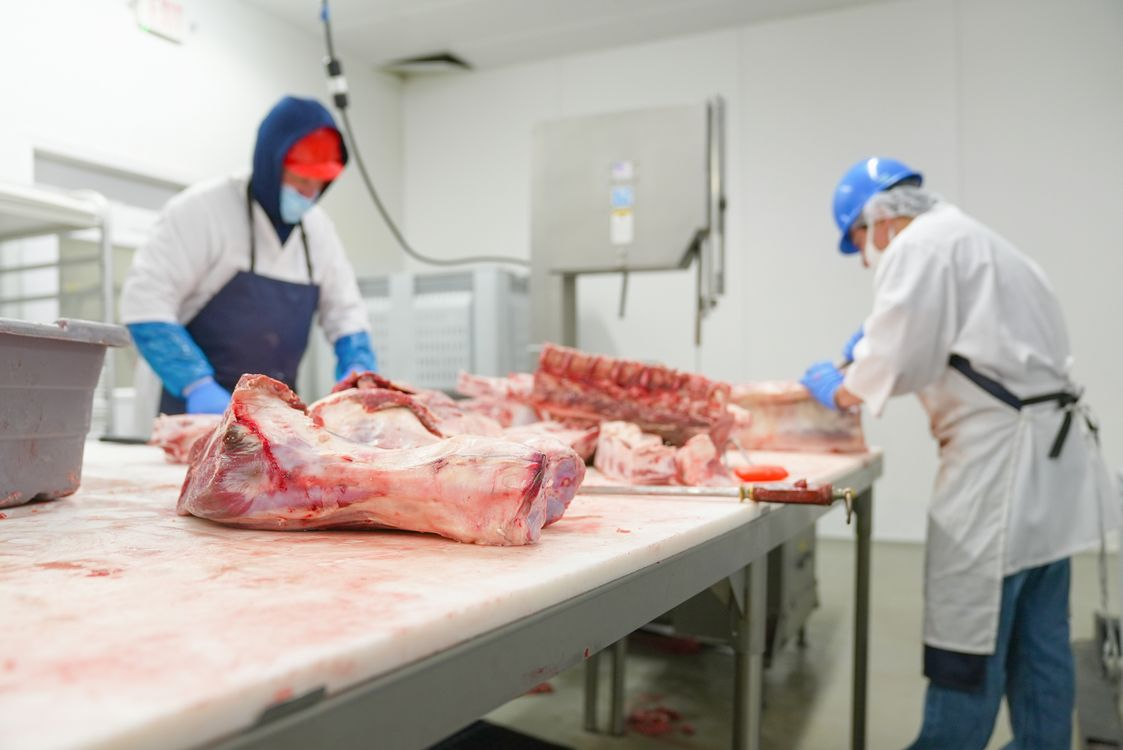
Commercial wild game processing involves controls at intake, during dressing and cutting, and throughout chilled storage and dispatch. Records of origin and inspection, hygienic handling, temperature management and segregation of animal by-products all influence whether meat can enter the food chain. The relevant workflow also depends on the activities for which an establishment is approved; Lean + Wild has not published the equipment list or process layout for Radwinter.
Food Standards Agency guidance distinguishes small direct supplies of wild game from wider commercial operations that generally require an approved game handling establishment. Approval and official controls address the handling and inspection of game, while a separate cutting activity may bring further requirements. The Radwinter announcement establishes that a processing facility has opened, although an individual approval number and its precise authorised activities have not been verified for this report.
Controlling a processing site changes the scheduling of intake, labour and cold-room use. A surge in available carcases must be matched with appropriate processing capacity and temperature-controlled holding space, while outgoing orders require the right cut mix and packaging. Those constraints can limit the amount of wild game brought to market at a given time, particularly when seasonal supply rises faster than cutting and distribution capacity.
Lean + Wild already sells products including steaks, diced venison, burgers, meatballs and other prepared cuts. Its website describes a model based on wild-harvested British deer and frozen distribution to customers. With the facility in operation, the company plans to serve retail, foodservice and consumer channels, but has not broken down expected volumes by route or identified contracts dependent on the investment.
Carcases vary by species, size and condition, so a plant preparing whole muscle venison cuts and products such as burgers must decide how to allocate different parts of each animal. Trimming, portion sizes and packaging specifications affect the yield available for each customer order. Direct control may help a producer standardise those decisions and record the movement of products, without eliminating variation in the incoming raw material.
Lean + Wild expects the Radwinter operation to support consistency and efficiency as it develops retail and foodservice sales. It has not published the annual processing capacity, capital cost, refrigeration specification or before-and-after performance data. Those measures will determine how much additional volume the site can actually handle and whether its seasonal fixed-fee model remains workable when incoming supply changes.
The investment establishes a new in-house processing route for British wild venison and gives deer managers a proposed fixed-fee alternative during the season. Production volumes, customer commitments and commercial terms have yet to be disclosed. Its capacity and handling arrangements will ultimately determine how reliably harvested game reaches retail, foodservice and direct customers through the annual fluctuations in availability.