
IN Brief:
- The MPMA has called for changes to packaging waste fees, deposit returns, steel imports and industrial energy policy.
- It argues that per-container EPR costs can favour competing formats, while official disposal fees are calculated per tonne.
- The association wants wider support for domestic metal packaging production and the retention of recycled aluminium.
The Metal Packaging Manufacturers Association (MPMA) has called for changes to UK packaging waste, trade and industrial energy policies, warning that their combined effects could weaken domestic production of metal food and beverage containers. The association published a manifesto on 4 November arguing that government measures should take greater account of food security and the commercial position of manufacturers supplying cans and closures.
The MPMA represents companies producing steel and aluminium food and beverage cans, closures and other containers. It attributes more than £4 billion of economic contribution and over 4,000 skilled UK jobs to the sector. The manifesto links that manufacturing base to domestic food supply, recycling infrastructure and the equipment and skills required to make containers at industrial scale.
Packaging extended producer responsibility requires qualifying companies to contribute towards household packaging waste management costs. The MPMA argues that the resulting charge can be higher for an individual steel food can than for certain plastic or fibre-based composite alternatives, encouraging material substitution. Its comparison is on a per-container basis, where the weight of an individual pack as well as its material and recyclability affects the final cost.
PackUK’s published illustrative fees are expressed per tonne, with separate recyclability ratings. Its 2026 schedule gives a green-rated rate of £260 per tonne for steel, £415 for plastic and £475 for fibre-based composites, although actual fees depend on each pack’s classification and the final confirmed rates. The MPMA’s concern is consequently about the total charge associated with a particular pack, not a claim that steel carries the highest published rate per tonne.
The association wants EPR fees reviewed to take fuller account of metal recycling and objects to a proposed glass discount if it causes higher charges for other materials. It also supports a variable-rate deposit under the deposit return scheme, alongside measures that would help retain collected aluminium can scrap within the UK canmaking supply chain. Such proposals would affect decisions about both packaging material and the recovery of metal after use.
Imported packaging steel is another concern. The MPMA is urging the government not to make further reductions to tariff-free quotas and to support demand for steel and recycled metals produced in Britain. It also wants the UK Carbon Border Adjustment Mechanism extended to imported goods containing filled steel or aluminium packaging, arguing that domestic canmaking costs should be considered alongside the treatment of finished imports.
Industrial energy costs enter the manifesto through a request to expand the British Industrial Competitiveness Scheme across the metal packaging supply chain, including gas support. The MPMA also wants the Climate Change Levy and Climate Change Agreements maintained beyond 2033, together with grants or discounts that could support electrification. Eligibility for those measures would influence the operating costs of metal forming, coating and conversion facilities.
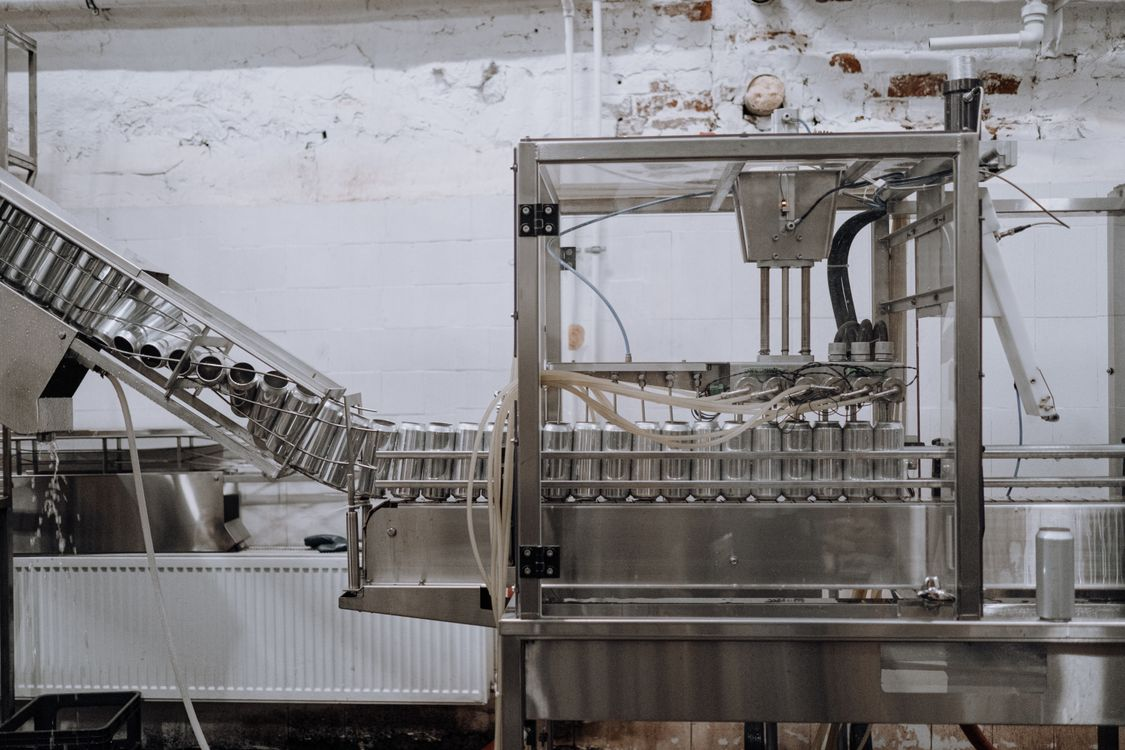
Canmaking investment involves specialised tooling, container-forming machinery, coating lines and inspection equipment. Changes to material costs, energy bills and packaging fees can affect the economics of a new line or a decision to upgrade existing equipment. The MPMA argues that policy costs must be assessed together because a change to a disposal fee does not automatically cancel out the effect of an import duty or industrial electricity charge.
Food cans must meet dimensional and sealing requirements through forming and seaming operations, with internal coatings chosen for the foods and processes involved. Filled products may undergo thermal treatment, and suitable sealed canned foods can then be stored without refrigeration for long periods. Those manufacturing requirements make a shift between steel, aluminium, plastics and fibre-based formats more complex than a simple comparison of recycling performance or container price.
Jason Galley, the MPMA’s director and chief executive, said the manifesto seeks policy that recognises metal packaging’s contribution to food security, public health and economic resilience. He warned that the combined measures could encourage packaging and food production to move abroad. The warning is the association’s assessment of future risks, while the proposed policy changes have not been adopted.
Under PackUK’s recyclability assessment methodology, packaging rated amber pays the applicable base fee, green-rated packaging receives a discount and red-rated packaging attracts a surcharge. For the 2026 illustrative fees, the red rate is set 20% above amber, while the green discount is estimated at about 9%. Producer reporting, pack weight and the final classification determine the charge rather than the material category alone.
Emergency food supply provides another part of the MPMA’s case. Shelf-stable canned goods can be held and distributed without a continuous chilled chain, allowing supplies to remain usable when refrigeration is disrupted. The association argues that a domestic food can manufacturing base supports that resilience, although this proposal is separate from the statutory objectives and cost calculations of the packaging waste and trade schemes.
The MPMA has requested government engagement on packaging fees, deposit returns, steel imports, carbon adjustments and industrial energy support. Each proposal would require a decision under the relevant policy framework; the 4 November manifesto itself makes no change to those rules. Manufacturers are therefore continuing to operate under existing charges and eligibility conditions while the association seeks revisions that it believes would protect domestic canmaking investment.