IN Brief:
- Marit van Egmond joins Royal A-ware as CEO alongside existing CEO and chairman Jan Anker.
- The appointment follows continued investment in dairy production and international expansion, with 2025 revenue reaching €4.4bn.
- Antonio Rodriguez will concentrate on Southern European development, while Klaas de Jong is scheduled to retire in January 2027.
Royal A-ware has appointed Marit van Egmond as chief executive officer and a member of its group executive board, adding experienced food retail leadership as the Dutch dairy producer expands its international manufacturing and commercial activities.
Van Egmond took up the position on 18 November and will serve alongside Jan Anker, who remains chief executive and chairman of the board. She succeeds Antonio Rodriguez in the CEO position, while Rodriguez will continue with Royal A-ware and concentrate on the development of its Southern European operations.
The appointment creates a joint leadership arrangement within the family-owned business rather than replacing its existing chairman. Van Egmond’s responsibilities will be exercised through the group executive board, which oversees an organisation operating across dairy production, product processing, packaging, and commercial distribution.
Van Egmond previously spent more than 25 years with Ahold Delhaize, including over six years as chief executive of Albert Heijn. Her experience includes fresh food retailing, consumer product development, and the management of commercial supply chains involving manufacturers, suppliers, and distribution operations.
She has also been involved with the Dutch Top Sector Agri & Food initiative for approximately ten years. Her background as a food technologist adds direct familiarity with the production and product development considerations that influence the relationship between dairy processors and their customers.
Van Egmond joined Royal A-ware’s supervisory board in February 2026 and will now step down from that position to take up her executive responsibilities. The company plans to recruit a replacement supervisory board member, maintaining the separation between executive management and its formal oversight structure.
Jan Anker said: “With Marit as CEO, we are welcoming an experienced executive who knows both our industry and Royal A-ware well.”
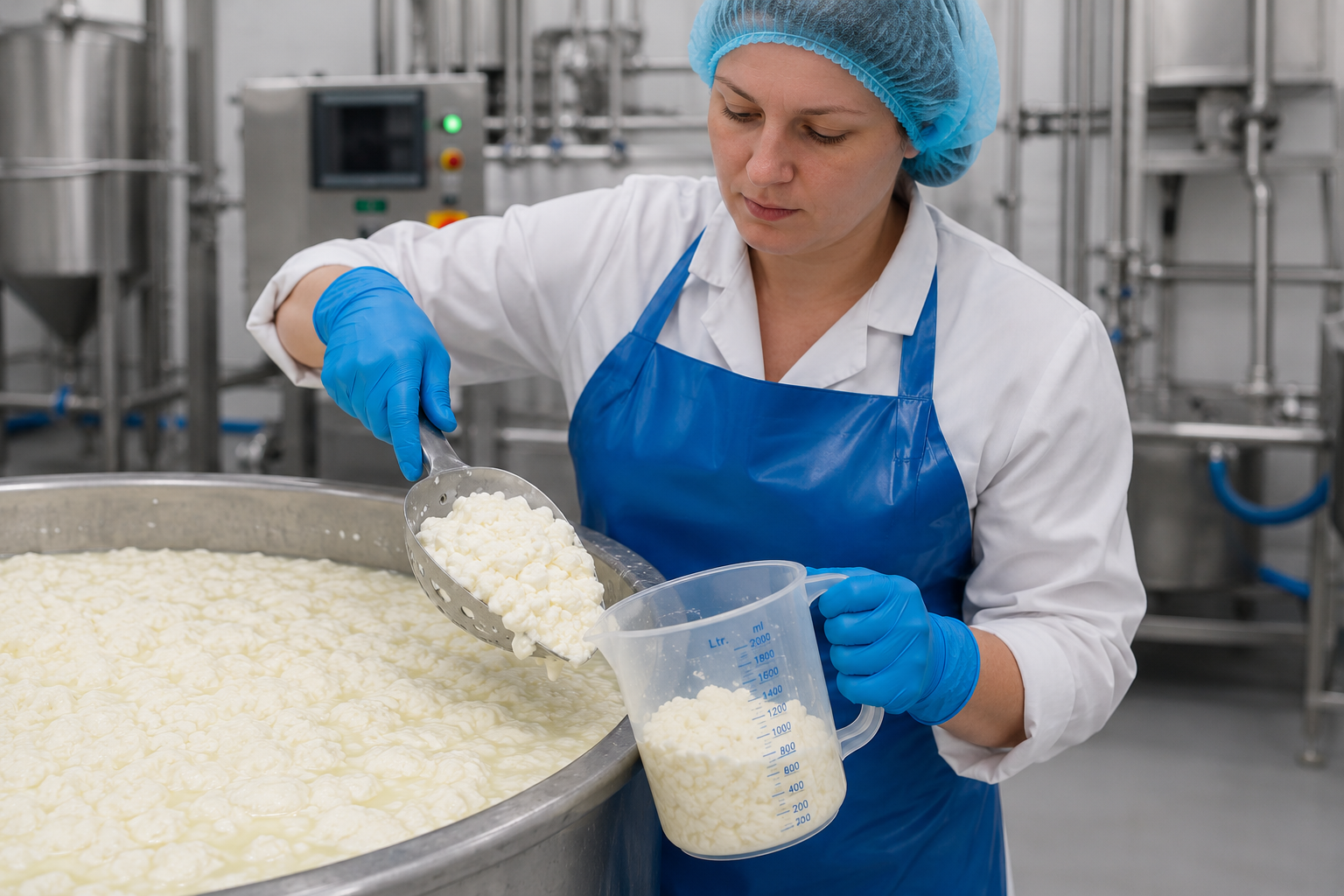
Royal A-ware’s manufacturing network produces cheese, fresh and long-life dairy products, cream, milk powder, and other foods. Its activities extend beyond primary milk processing to include cheese maturation, cutting, grating, slicing, and packaging according to customer specifications.
The company operates 59 locations worldwide and employs more than 5,300 people. Its production and commercial network supplies customers across Europe and international markets, supported by relationships with dairy farmers and specialist processing operations.
Milk processing at this scale requires production planning across several product categories with different technical requirements. Fresh milk, long-life dairy products, cheese, cream, and milk powder depend on distinct combinations of thermal processing, separation, concentration, fermentation, drying, and packaging.
Those differences influence the allocation of raw milk and the way manufacturing assets are used. A factory designed for liquid milk processing cannot necessarily accommodate additional cheese or milk powder production without substantial investment in equipment, utilities, and the systems required to manage the resulting products.
Royal A-ware’s 2025 results provide context for its expansion. Revenue increased 16% to €4.4 billion from €3.8 billion in 2024, with growth partly reflecting higher dairy prices and the acquisition of Belgium’s Dairy Food Group. Net profit reached €43.8 million, lower than in the preceding year.
The company attributed pressure on profitability to challenging market conditions and restructuring costs. Higher revenue therefore did not translate directly into stronger earnings, illustrating the effect of raw material prices, manufacturing costs, and integration expenditure on dairy processing businesses.
Investment continued during 2025, including construction of a mozzarella factory in Spain and the integration of the Belgian Dairy Food Group. Royal A-ware also pursued measures intended to reduce energy use and improve efficiency across its production and supply operations.
The acquisition of Dairy Food Group added businesses involved in milk collection, dairy processing, and the production of finished foods. Integrating such operations requires coordination between incoming milk supplies, production planning, quality systems, logistics, and commercial relationships, particularly where facilities operate in different markets.
Royal A-ware strengthened its Southern European position again in February 2026 through the acquisition of speciality dairy distributor GDV. A further agreement announced in July proposed bringing Spanish cheese producer and distributor Grupo TGT together with Royal A-ware, subject to the relevant regulatory approvals.
Grupo TGT operates an established cheese business across Spain and Portugal. Its distribution network would complement Royal A-ware’s manufacturing capabilities, although the proposed combination must be distinguished from a transaction already completed and fully integrated into the group’s operations.
Another July agreement concerned Amalthea, a producer of goat’s cheese and other dairy products. Royal A-ware agreed to acquire a 35% stake from Ausnutria, with the companies also planning joint investment in the development of Amalthea’s cheese factory.
The arrangement is intended to expand activity in speciality cheese while allowing the partners to make use of different components of goat’s milk. Such operations depend on coordinating cheese production with the processing of whey and other dairy streams, although the companies have not disclosed detailed production targets for the proposed expansion.
Royal A-ware’s business model also places considerable emphasis on responding to customer requirements. Product weight, portion format, packaging, maturation characteristics, and shelf life all influence the processing stages required before dairy products can be distributed to retailers, foodservice operators, and industrial buyers.
Van Egmond’s previous experience in food retail brings additional knowledge of those downstream requirements into executive management. The appointment has not, however, been accompanied by a new factory investment decision, production restructuring, or quantified manufacturing efficiency target.
The revised board will comprise Jan Anker, Marit van Egmond, Floris Günther, Antonio Rodriguez, and Klaas de Jong. De Jong is scheduled to retire on 1 January 2027, creating a further planned change to the leadership team.
Royal A-ware expects to continue its existing strategy of expanding international commercial activities, improving internal logistics, and investing in production capacity. The latest appointment strengthens the executive structure responsible for those activities, with Southern Europe remaining a prominent area of development.