IN Brief:
- Kerry and the World Food Programme have launched a three-year initiative addressing food safety, preservation, and waste across humanitarian distribution networks.
- The programme builds on ten years of cooperation, including dairy supply chain development in Honduras and Burundi.
- Initial activities will focus on the Middle East and Africa, with specific implementation arrangements and performance targets still to be disclosed.
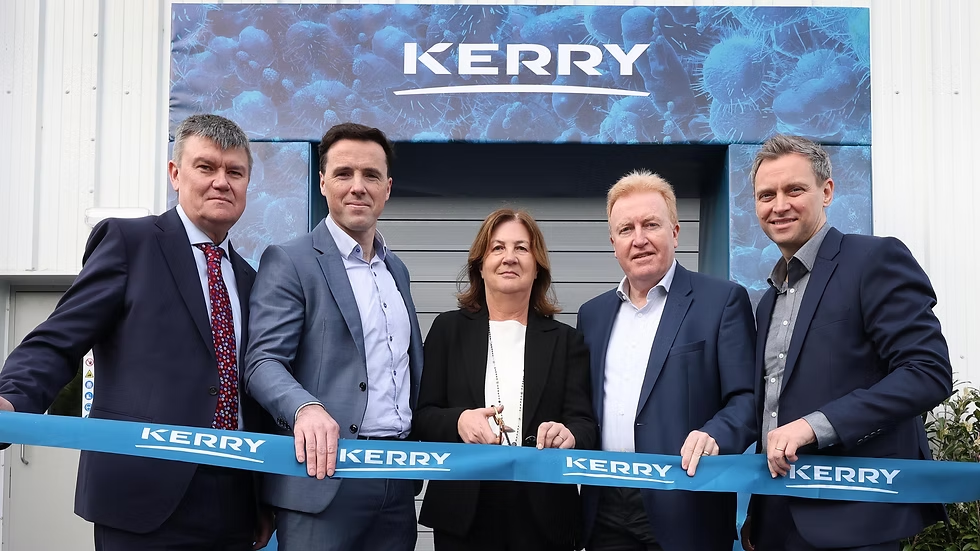
Kerry and the United Nations World Food Programme (WFP) have established a three-year collaboration to strengthen food safety, improve product preservation, and reduce waste across humanitarian food distribution networks. The initiative will initially focus on supply chains operating in the Middle East and Africa.
The programme extends a partnership between the organisations that has operated for ten years, previously concentrating on nutrition and local food production projects in Honduras and Burundi. Its latest phase will apply Kerry’s food protection and preservation expertise to challenges encountered as food supplies move through WFP’s procurement, storage, transport, and distribution operations.
Both organisations intend to improve the quality of food reaching recipients while reducing the quantity lost or discarded before consumption. Kerry has not specified which technologies or product categories will be included in the initial work, and the partners have yet to disclose numerical targets for the expected reduction in waste.
WFP operates across more than 120 countries and territories, supporting food assistance programmes that depend on extensive international and local supply chains. Supplies may pass through ports, distribution centres, warehouses, transport operators, and local delivery points before reaching the communities for which they are intended.
Maintaining product quality across these stages requires controls appropriate to the characteristics of the food being handled. Dry staples, fortified foods, dairy products, and other processed commodities can have different storage requirements, with their stability influenced by formulation, packaging, environmental conditions, and the time spent in distribution.
Temperature fluctuations, moisture exposure, mechanical damage, and contamination can all affect food during storage and transport. Their consequences vary according to product type, making it necessary to distinguish between deterioration that affects quality and hazards that could render the food unsafe for consumption.
Food safety controls address biological, chemical, and physical hazards, while preservation technologies can also help manage changes in product characteristics during storage. Effective protection requires consideration of the complete product system, including ingredients, processing conditions, packaging, and the environment encountered after manufacture.
Moisture is a particular concern for dry products because it can affect microbial stability, texture, and other quality characteristics. Packaging that prevents inappropriate moisture transfer can help maintain product condition, although the barrier properties required depend on the formulation and the expected distribution environment.
Oxidation presents a different challenge for products containing susceptible fats or other ingredients. Exposure to oxygen can contribute to flavour deterioration and changes in product quality, creating a need to consider formulation, packaging integrity, and storage conditions together.
Microbiological risks are similarly dependent on the product and its history. Thermal treatment, water activity, acidity, and other processing variables can influence the potential for microbial growth, but their effects must be assessed under conditions relevant to the food being handled.
Kerry’s expertise in food protection and preservation provides a technical basis for examining these issues. The company develops ingredients and systems used to maintain food quality and extend product shelf life, with work spanning formulation and the control of deterioration in different product categories.
Dr Alexandra Boelrijk, Vice President for Research and Innovation in Food Protection at Kerry, said: “It is a privilege for the teams at Kerry to share their knowledge and expertise with WFP on topics that can positively impact so many lives in some of the most vulnerable parts of the world.”
The collaboration will seek to apply that knowledge to WFP’s existing distribution operations. The partners have not indicated whether individual activities will involve product testing, changes to specifications, revised handling procedures, training, or the introduction of specific preservation technologies.
Any intervention will need to account for the food supplied and the conditions it encounters. Extending the stability of one product through formulation or packaging changes does not establish that the same approach will work for another, particularly where the ingredients, processing method, and storage environment differ.
Distribution networks also face practical constraints that cannot be addressed through formulation alone. Packaging damage, unsuitable storage conditions, and interruptions to temperature control can undermine product protection even when the food has been manufactured to the required specification.
The partnership’s earlier projects provide experience of working across these different stages of the food supply chain. Project Leche in Honduras and Project Amata in Burundi were developed to strengthen local food value chains, connecting agricultural production and processing with the provision of nutritious food.
Project Amata has supported dairy production and the distribution of milk through school meals programmes in Burundi. According to WFP figures included in the latest announcement, cooperation between the organisations has helped bring fresh milk to more than 7,500 children across nearly 200 schools.
That work involved strengthening the relationship between local dairy suppliers, production capabilities, and the organisations distributing finished products. Earlier project activities included support for farmers and milk supply development, addressing the practical challenge of making nutritious food available through reliable local systems.
The latest collaboration extends the scope beyond individual dairy value chains to examine food safety and preservation across wider humanitarian distribution networks. Its initial concentration on the Middle East and Africa provides a defined geographical starting point, although individual countries and operational sites have not been identified.
Virginia Villar Arribas, Director of Private Sector Partnerships at WFP, welcomed the continued cooperation and highlighted the value of Kerry’s previous contribution to dairy programmes. The new initiative was formally launched in Rome by Villar Arribas and Catherine Keogh, Kerry’s Chief Corporate Affairs Officer.
Reducing product losses could improve the use of resources already committed to food production, processing, packaging, and transport. However, the benefits will depend on interventions that can be implemented within existing distribution arrangements and demonstrated to improve product condition or reduce rejection and disposal.
Performance assessment will therefore require suitable measures of food safety and quality, supported by information about the quantities affected and the conditions in which products are handled. The partnership has not yet published a methodology for measuring the programme’s eventual results.
The three-year initiative establishes a framework for technical cooperation rather than a completed manufacturing or distribution upgrade. Further operational details will determine which food products receive support, how Kerry’s preservation expertise is applied, and whether the interventions deliver measurable improvements across WFP’s supply chains.