IN Brief:
- The AP500 is designed for powdered and granular ingredients, with gross weighing directly into 25kg open-mouth sacks.
- APM quotes four to six sacks a minute, 0.5%–1% filling accuracy, and application-dependent throughput up to 6,000kg/h.
- The machine can start as a standalone system and connect to the AP600 bag placer and downstream closing and palletising equipment.
APM, part of the Autopack Group, has introduced the AP500 gross weighing and filling machine for food ingredient producers, combining auger-controlled feeding with electronic load-cell measurement directly into open-mouth sacks.
The equipment is designed and manufactured in the UK for powders, granules, pellets, and flakes. APM has specified operation with 25kg sacks, a nominal filling rate of four to six sacks a minute, and claimed accuracy within 0.5% to 1% of the target weight, depending on the material and application.
The new product was formally detailed on 18 November, following an earlier appearance at the PPMA Show in 2026. Its principal commercial proposition is a system that can begin with manual bag presentation and subsequently connect to automated bag placement, closing, and palletising without replacing the core weighing machine.
Gross weighing means the product is measured while entering the final sack, rather than being accumulated in a separate weighing vessel and then transferred. A load cell monitors the weight of the container and its contents as filling proceeds, allowing the control system to respond to the measured quantity.
That arrangement reduces the number of transfers between weighing and packaging. It does not eliminate errors associated with material still travelling through the auger when the feed stops, variations in bag tare weight, or disturbances in the weighing mechanism during production.
The AP500 uses a swing-drive auger to control the product flow. A rotating screw moves ingredient through the filling mechanism, with its speed and operation adjusted to deliver material towards the target weight. The response of the system varies with bulk density, particle shape, cohesiveness, and the tendency of material to compact or bridge.
Flour and other fine powders can behave quite differently from free-flowing granules. Some materials release dust as they move through the filling head, while others may bridge at the hopper outlet or require careful feed control to limit overfilling. The supplier positions the AP500 for several ingredient types, but has not published an independently verified performance result for each one.
APM separately gives a maximum application-dependent throughput of 6,000kg per hour. There is a numerical distinction between this figure and its advertised bag rate: four 25kg sacks a minute equate to six tonnes an hour, while six would equate to nine tonnes an hour if maintained continuously.
The available specification does not explain how the two maximum figures are reconciled. They should therefore be treated as figures quoted under potentially different operating conditions, not a promise that the machine can sustain both its highest stated bag rate and its separately reported maximum hourly tonnage in the same application.
Its stated accuracy range equates to approximately 125–250g of a 25kg target weight. Whether that performance is achievable throughout a shift depends on material flow, the weighing arrangement, control settings, and the manner in which filled sacks are handled. No customer production dataset has been published to establish long-term averages or rejects.
At entry level, the machine can operate with an operator presenting sacks manually for filling. This reduces the initial number of automated handling components but leaves bag positioning and other aspects of the process dependent on operator availability and the physical layout of the packing station.
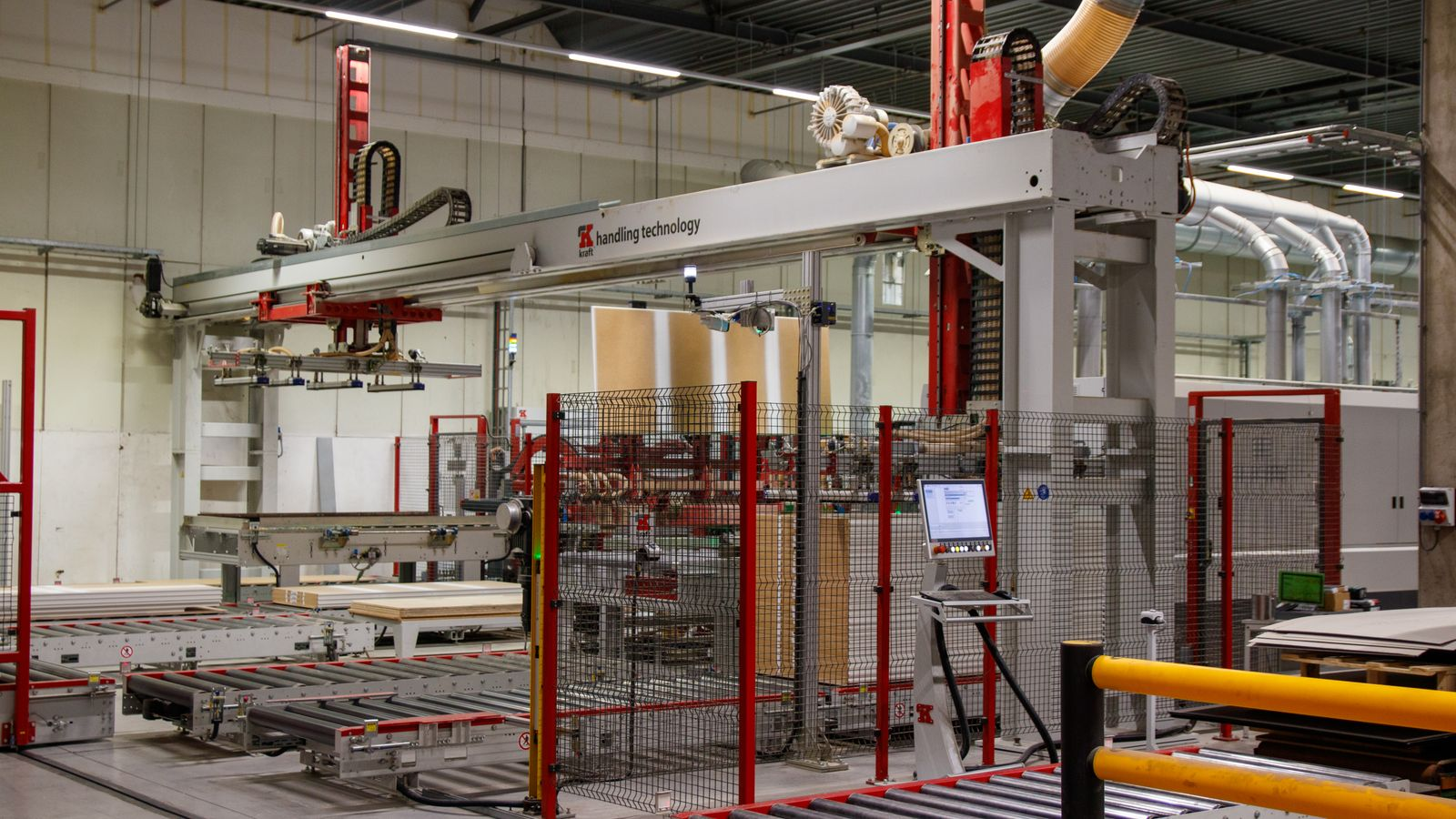
For higher levels of automation, APM says the AP500 can be paired with its AP600 automatic open-mouth bag placer. Empty sacks can then be supplied through a mechanised handling sequence, allowing filling to be coordinated with the machine rather than relying entirely on manual presentation.
The broader production line can also incorporate downstream sealing and palletising. Linking those operations changes the system’s potential labour requirements and establishes a more continuous route from bulk ingredient feed to finished sacks ready for storage or dispatch.
Line integration does, however, introduce additional points that can limit overall output. The bag placer must feed the correct type of sack reliably, the closing equipment must keep pace with the filling rate, and palletising must clear completed bags without allowing them to accumulate at the discharge.
Open-mouth sacks also need to be matched to the selected closing method. A heat-sealed liner, sewn closure, or other bag specification can require different equipment, and the necessary integrity depends on the material being packed and its storage requirements. APM has not stated a single closing arrangement as mandatory for the AP500.
Food ingredient production adds requirements for cleanability and the control of cross-contamination. Equipment used for different recipes may need cleaning between runs, particularly where materials contain allergens or ingredients that must be kept separate. Residual powder within an auger, hopper, or filling head can affect the next product handled.
APM describes the design as hygienic and easy to clean, with stainless-steel options. Those features are relevant to equipment specification but do not amount to independently verified compliance with a named sanitary design standard. Suitability remains dependent on the installed configuration and the plant’s actual cleaning procedure.
Powder containment is another application-specific consideration. Fine combustible ingredients can create dust hazards during transfer and filling, while fugitive dust also contributes to housekeeping requirements and product loss. The company has not provided an ATEX equipment classification for the AP500, so any installation in a classified area would require a separate suitability assessment.
APM has more than 20 years’ experience in packing equipment and became part of the Hereford-based Autopack Group in 2025. The wider organisation supplies machinery covering weighing, handling, inspection, and end-of-line operations, creating options for integrating the AP500 into a broader production layout.
No named customer installation, order total, or comparative operating cost has been disclosed for the new machine. Demonstrating its economic return will require plant-level data on bag volumes, material behaviour, staffing, downtime, product losses, and the reliability of connected equipment.
The November introduction establishes a defined specification and an upgrade route from a semi-automatic sack filler to a more integrated packing line. The next test will be how consistently those capabilities can be delivered with the different powders and granular ingredients used by commercial food manufacturers.