IN Brief:
- Barry Callebaut will establish its third Indonesian chocolate factory at the Suryacipta Industrial Estate in Karawang.
- The development brings the group's cumulative Indonesian investment over 15 years to more than US$150m.
- The factory will be developed in phases as regional demand and customer manufacturing requirements evolve.
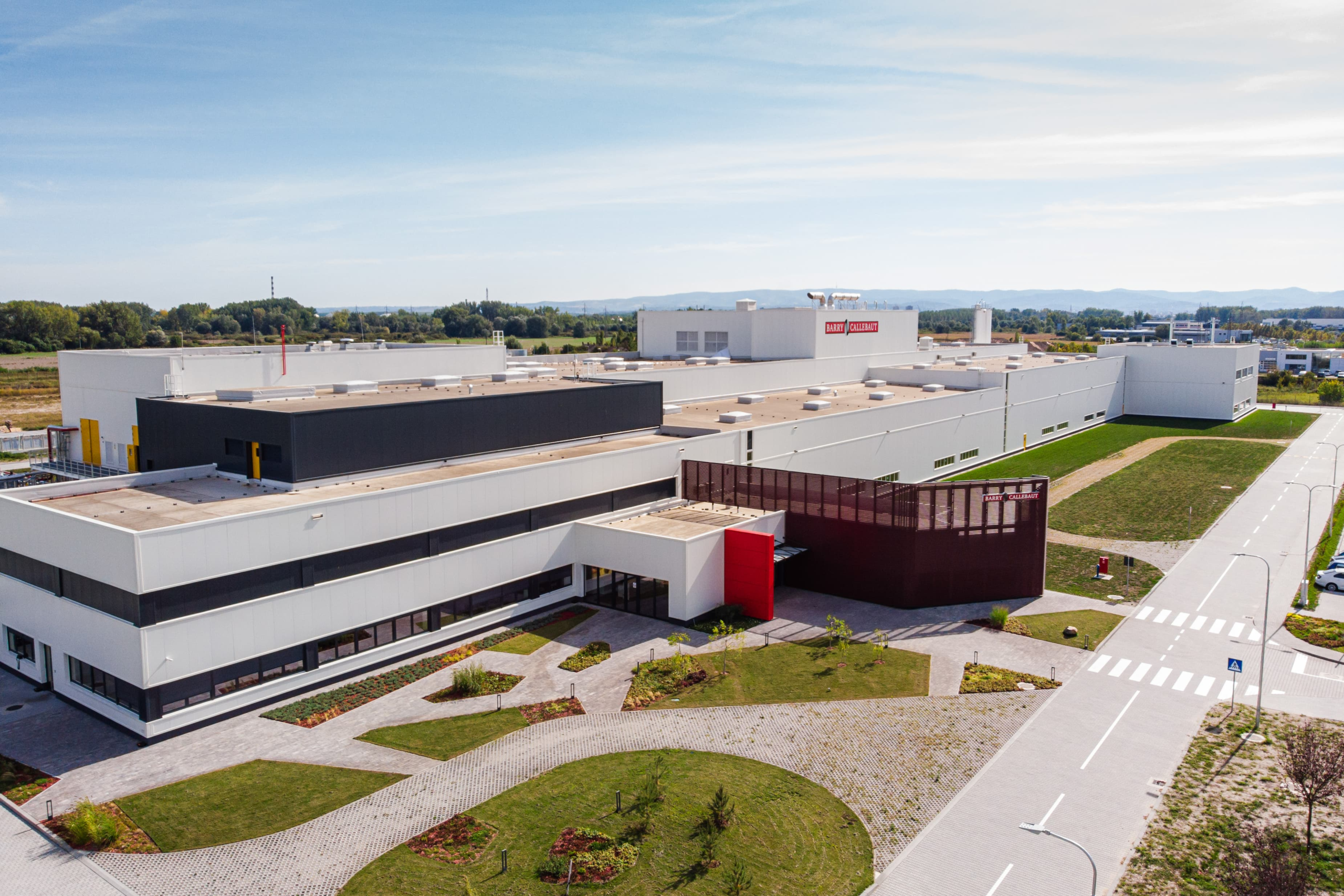
Swiss chocolate and cocoa ingredients manufacturer Barry Callebaut has confirmed plans to establish a new chocolate factory in Karawang, West Java, expanding its Indonesian manufacturing network to four facilities. Commercial production at the greenfield site is targeted for March 2029, with development progressing in phases according to customer requirements and regional market conditions.
The factory will be located within the Suryacipta Industrial Estate, approximately 80km east of Jakarta. It will complement the group’s existing chocolate manufacturing facilities in Gresik, East Java, and Rancaekek-Sumedang, West Java, alongside its cocoa processing operation in Bandung.
The project brings Barry Callebaut’s cumulative Indonesian investment over the past 15 years to more than US$150 million. The company has not disclosed the standalone capital expenditure associated with Karawang or the annual production capacity of the proposed factory.
Barry Callebaut’s board approved the development earlier this year as part of its Focus for Growth strategy, identifying Indonesia as one of the group’s priority emerging markets. The investment is intended to increase local manufacturing capacity and provide a platform for supplying customers across Southeast Asia.
The project accompanies a wider reorganisation of Barry Callebaut’s manufacturing network. While the group is expanding capacity in selected growth markets, its full-year results also identified proposed closures of facilities in Hendersonville, United States, and Chester, United Kingdom, during the second quarter of its 2027 financial year.
These investments and consolidation projects reflect different conditions across the markets in which the group operates. Its Asia Pacific, Middle East, and Africa region was the strongest contributor to chocolate volume performance during the 2025–26 financial year, while North American volumes declined by 6.1% amid supply disruption and weaker market conditions.
Establishing additional chocolate manufacturing capacity in West Java will extend a regional production network that already connects cocoa sourcing, ingredient processing, formulation development, and industrial chocolate manufacture. The new facility will increase the group’s ability to supply chocolate from Indonesia rather than depending exclusively on its existing factories to accommodate additional demand.
Cocoa processing and chocolate manufacturing represent different stages of that network. Cocoa beans undergo cleaning, roasting, and grinding to produce cocoa liquor, which can subsequently be separated into cocoa butter and cocoa solids. These ingredients are used across several food manufacturing applications, with chocolate production accounting for a substantial proportion of their industrial use.
Chocolate manufacturing combines cocoa ingredients with sugar and other formulation components before refining and conching establish the required particle size, flavour, and flow characteristics. The resulting chocolate may then be supplied in solid or liquid form, depending on the requirements of downstream manufacturers and the available storage and distribution infrastructure.
Liquid chocolate supply requires temperature-controlled storage and transport to maintain suitable flow properties before the material enters the customer’s production system. Locating chocolate manufacturing capacity closer to industrial customers can reduce the distances involved in these movements and improve the coordination of ingredient deliveries with factory production schedules.
Manufacturing flexibility also influences the range of customers that an individual factory can serve. Chocolate intended for biscuit enrobing, confectionery moulding, or frozen dessert production can require different fat compositions, viscosity profiles, and setting characteristics. Equipment configuration and formulation capabilities consequently determine how readily production can be allocated between different applications.
The phased development of Karawang will allow Barry Callebaut to adjust its manufacturing footprint as regional customer requirements evolve. Subsequent expansion will depend on the infrastructure incorporated into the site and the extent to which additional equipment and production lines can be integrated without disrupting established operations.
The investment comes as Asian cocoa processing volumes recover. Figures from the Cocoa Association of Asia put regional grindings at 233,767 tonnes during the third quarter of 2026, approximately 29% higher than during the corresponding period a year earlier.
The increase measures the volume of cocoa beans entering processing operations rather than consumer purchases of finished chocolate. Higher grindings may reflect recovering demand for intermediate cocoa ingredients, inventory replenishment, or changes in the regional allocation of processing activity.
Barry Callebaut’s expansion in Indonesia follows separate investment in its Indian manufacturing network, including the enlarged chocolate specialities operation at Baramati. That facility focuses on baked and soft inclusions for applications including confectionery, bakery products, ice cream, and desserts, extending the group’s capabilities beyond conventional industrial chocolate supply.
With Karawang scheduled to enter commercial production by March 2029, Barry Callebaut has established a timetable for the next expansion of its Southeast Asian chocolate manufacturing network. The scale and configuration of subsequent development phases will be determined as the company establishes the customer volumes and production requirements needed to support further investment.