IN Brief:
- Branston's potato donations since 2017 represent approximately 3.46 million meal equivalents.
- The partnership has supplied produce to 6,554 charities and community organisations through Felix's national redistribution network.
- Direct deliveries using Branston's vehicles have saved Felix more than £30,000 in transport costs.
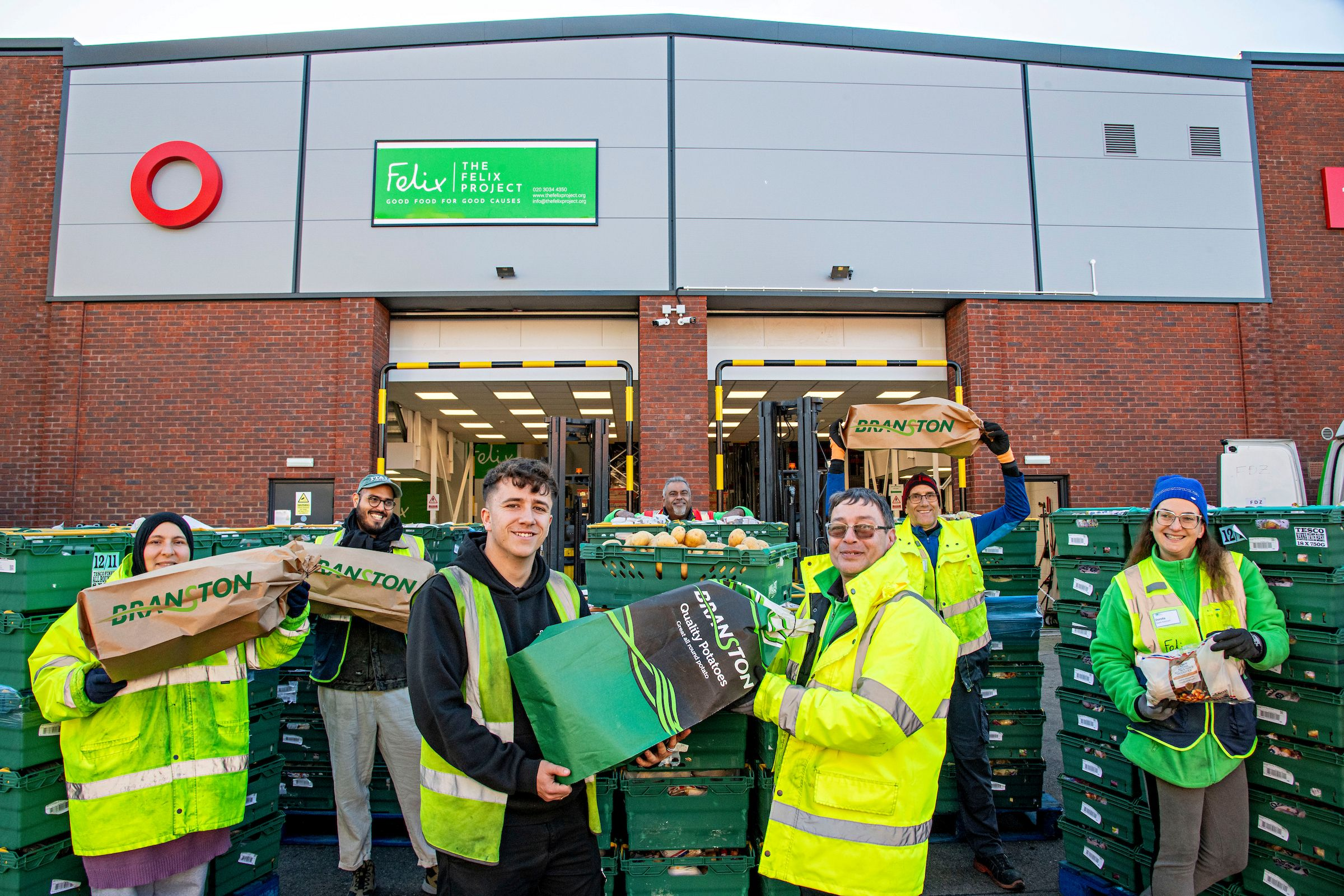
British potato supplier Branston has donated 1,453 tonnes of potatoes through its partnership with food redistribution charity Felix since 2017, equivalent to approximately 3.46 million meals. Direct deliveries using the company’s own vehicles have also saved the redistribution organisation more than £30,000 in transport expenditure.
Branston’s donations passed the equivalent of two million meals in December 2024, with subsequent contributions reaching a further milestone within two years. Its potatoes have been distributed to 6,554 charities and community organisations, including schools, community cafés, food pantries, homelessness charities, and lunch clubs.
Felix was established in early 2026 through the merger of FareShare and The Felix Project. Its network of 36 warehouses connects food suppliers with community organisations, allowing donated produce to be distributed across multiple destinations according to local requirements and available storage capacity.
Jason Kelly, chief operating officer at Branston, said: “Potatoes are an important staple food, providing a filling source of nutrition for people and families. We’re incredibly proud that our partnership with Felix has enabled us to provide millions of meals to people across the country who may otherwise go without.”
Alongside its regular produce donations, Branston transports potatoes directly from its Lincoln operation to Felix distribution facilities. The arrangements have supported four London depots and warehouses in Manchester and Knowsley, reducing the need for the charity to commission separate collection movements from the supplier.
Branston handles approximately 375,000 tonnes of potatoes annually across its fresh, seed, and prepared product operations. Its fresh potato factory washes and grades incoming produce, while its prepared ingredients business supplies peeled potatoes in bulk containers according to individual customer specifications.
Grading provides a means of allocating agricultural produce according to size, appearance, condition, and suitability for particular commercial applications. Potatoes that fall outside a customer’s specifications may remain suitable for human consumption, although defects affecting food safety or the condition of the produce must be distinguished from purely commercial criteria.
Redistribution provides an additional outlet for edible material where alternative commercial applications are unavailable. Its effectiveness depends partly on the ability of suppliers and receiving organisations to coordinate volumes and delivery schedules before the produce deteriorates.
Storage and handling requirements are particularly relevant to potatoes. Exposure to light, unsuitable temperatures, and physical damage can affect their condition, while repeated transfers between vehicles and warehouses introduce further opportunities for damage. Direct deliveries can reduce the number of handling stages involved in moving produce to a redistribution depot.
Charlotte Hill OBE, chief executive of Felix, said: “The potatoes delivered directly from Branston’s site in Lincoln have saved Felix more than £30,000 in transport costs – no small feat and a fantastic example of Branston going the extra mile to support us.”
The transport contribution addresses one of the economic constraints associated with food redistribution. Donated produce may be available without an ingredient purchasing cost, but collection, storage, handling, and onward distribution still require vehicles, warehouse capacity, and personnel.
In England, the government’s food and drink waste hierarchy prioritises prevention, followed by redistribution of suitable surplus food for human consumption. Animal feed, biomaterial production, anaerobic digestion, and other treatment or recovery routes follow further down the hierarchy.
Food businesses must maintain appropriate safety and traceability arrangements when transferring products for redistribution. Information about product condition, handling requirements, and any relevant restrictions remains important when produce passes through several organisations before reaching its final destination.
Figures published by WRAP show that UK redistribution organisations received approximately 210,000 tonnes of surplus food in 2024, equivalent to around 500 million meals. The recovered food had an estimated value of £870 million, with retail accounting for approximately 46% of redistributed tonnage and manufacturing contributing a further 28%.
Redistribution from manufacturing operations can involve larger individual consignments than collections from retail premises, placing different demands on transport and regional storage infrastructure. Regular supplier relationships allow receiving organisations to prepare for deliveries and distribute incoming products across their networks rather than relying on individual community organisations to accommodate commercial quantities independently.
Felix has also worked with manufacturers to develop additional outlets for surplus produce, including a trial converting more than eight tonnes of fruit into bottled smoothies. That project required access to manufacturing capacity, while Branston’s partnership focuses on distributing potatoes in their existing form alongside logistical support.
The potatoes supplied by Branston represent cumulative donations over nine years rather than an annual manufacturing waste reduction figure. By continuing to deliver produce directly from Lincoln, the company is contributing both food and transport resources to Felix’s redistribution operations, allowing the charity to allocate more of its own funding to subsequent distribution and community support.