IN Brief:
- The board has approved a €95m investment at Felinfach in Ceredigion.
- The project includes a 5,100m² building, processing equipment, and supporting utilities.
- Arla expects to complete the expansion in the third quarter of 2029.
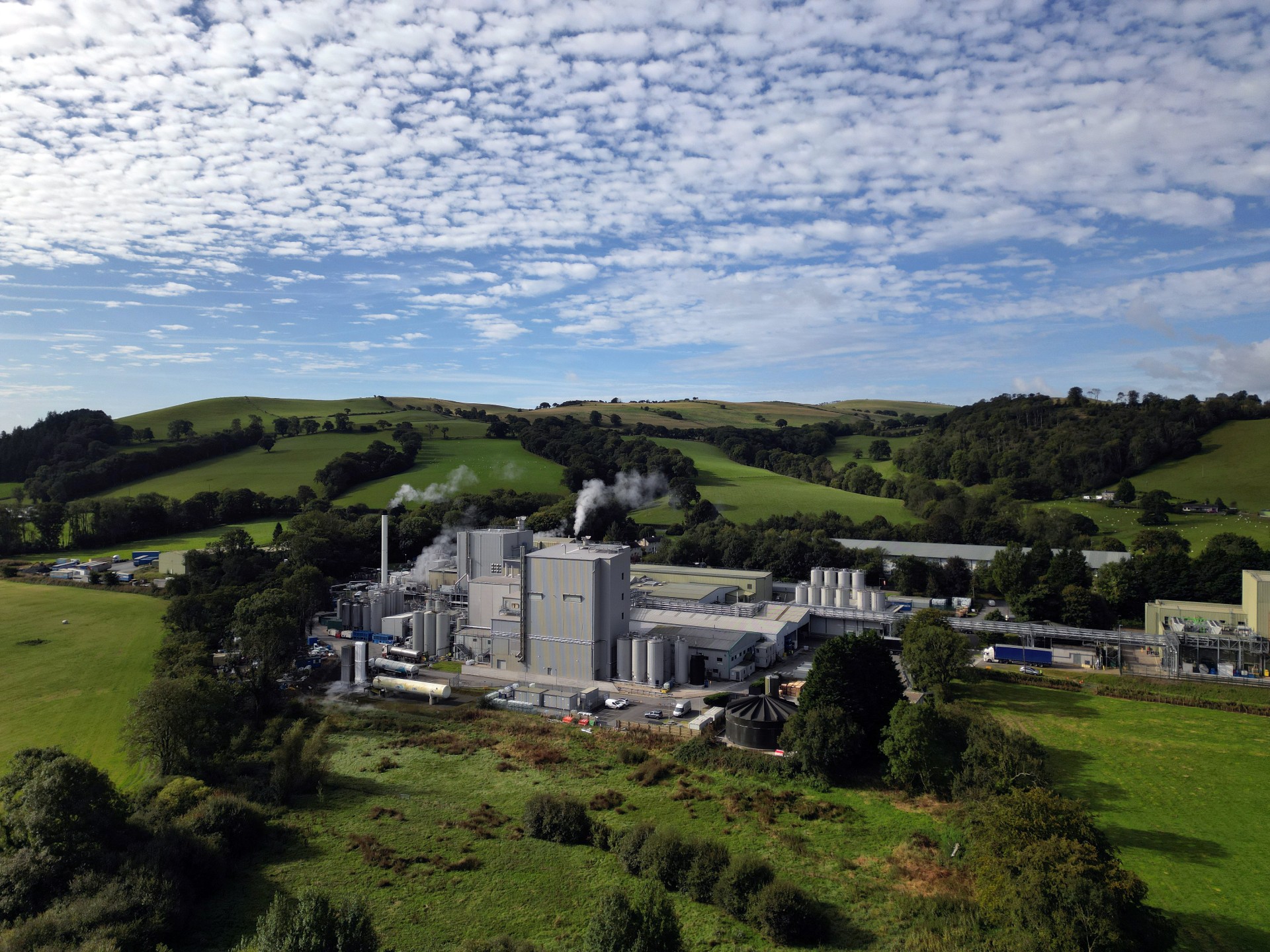
Arla Foods Ingredients has secured board approval for a €95m investment at its Felinfach site in Ceredigion, Wales, where new processing infrastructure will increase the production of premium whey proteins and enable more existing whey streams to enter the human food market.
The project, equivalent to approximately £80m, includes construction of a 5,100m² production building and installation of processing equipment and supporting utilities. The building will accommodate potential future expansion beyond the scope of the current investment, which is scheduled for completion in the third quarter of 2029.
Arla acquired the site through its purchase of Volac's Whey Nutrition business in 2024. The investment builds on the dairy protein manufacturing capabilities acquired through that transaction, with additional production of whey protein isolate, including ingredients for clear protein drinks.
“We see strong demand for dairy protein, and meeting that demand requires both innovation and investment. With this project, we can bring the two together: expanding our premium whey protein portfolio while creating more value from the whey already available to us,” said Luis Cubel, Managing Director of Arla Foods Ingredients.
The project is intended to increase the value generated from existing supplies of whey rather than relying entirely on growth in the volume of raw material delivered to the site. Some streams currently used in animal feed will undergo additional processing to produce ingredients suitable for protein powders and drinks.
Whey is the liquid separated from curd during cheese production. Most of its mass is water, but it also contains protein, lactose, and dissolved minerals. The concentrations and functional properties of these constituents vary with the milk and cheese manufacturing process, influencing the subsequent treatment required to produce a consistent protein ingredient.
Membrane filtration is an established route for recovering whey proteins. Ultrafiltration retains proteins within a concentrated liquid stream while smaller dissolved compounds and water can pass through the membrane. Further purification using diafiltration can increase the proportion of protein in the dry matter by washing out additional lactose and minerals.
Producing isolates requires particular attention to purity and product functionality. A high protein concentration alone does not establish whether an ingredient will remain soluble under the acidity and thermal conditions used in the customer's manufacturing process. Protein aggregation, for example, can lead to sediment or turbidity in beverages that are intended to remain clear.
The formulations used in clear protein drinks often differ substantially from conventional milk-based products. An ingredient must be selected in conjunction with the drink's acidity, mineral composition, flavour system, and heat treatment. The requirements of powdered products can differ again because the powder must disperse and dissolve when mixed with water.
Those downstream characteristics influence the specifications that ingredient manufacturers must achieve in their own processing operations. The composition of the incoming whey, the conditions used during separation, and subsequent concentration and drying affect the physical and functional properties of the finished material.
Converting existing feed streams into ingredients for people also introduces stringent requirements for raw material traceability and hygienic control. Suitability for food applications must be established across the production chain, including handling and storage before processing. Additional separation capacity cannot by itself establish that every stream currently directed towards animal feed meets the necessary food safety requirements.
The new utilities will support equipment whose operating costs depend partly on the volume of liquid handled. Pumps, refrigeration systems, membrane processes, and cleaning operations require electricity, water, and potentially thermal energy. Removing water efficiently before drying can be particularly important because evaporating large quantities of moisture requires energy.
Cleaning and maintenance also influence available processing capacity. Accumulation of material on filtration membranes can reduce the rate at which liquid passes through them, requiring cleaning under conditions appropriate to the equipment and product. Production scheduling must accommodate these interruptions while maintaining hygiene and consistent ingredient quality.
Higher protein recovery also changes the composition of the remaining whey streams, which can contain lactose, minerals, and other compounds suitable for separate applications or requiring treatment. The economics of the overall site depend partly on how effectively these remaining materials can be used alongside the premium protein ingredients.
Arla has not disclosed the additional annual tonnage of whey protein the project will deliver or the detailed equipment configuration. With the Felinfach expansion due to be completed in 2029, the company will have a larger manufacturing platform for producing premium ingredients from whey already available through its established supply relationships.