
IN Brief:
- Qitaf has expanded production and sorting operations supporting its Medjool date and ingredient business.
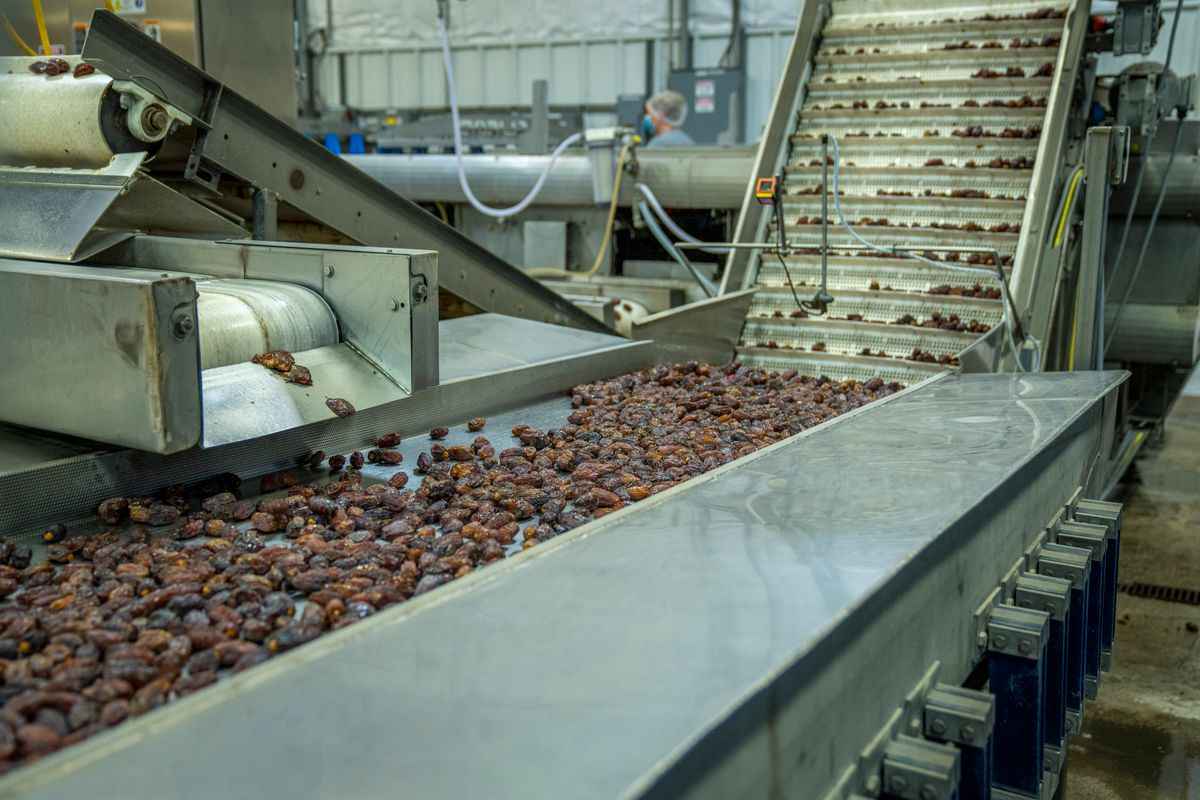
- Optical sorting and grading support bulk supply to bakeries, confectioners and other food processors.
- Temperature-controlled storage down to −18°C supports year-round ingredient availability.
Palestinian ingredient supplier Qitaf has expanded its date processing and sorting operations, targeting food manufacturers requiring consistent bulk supplies of Medjool dates and processed date ingredients. The company has also opened central offices at Al-Nasariyya, Nablus, as it develops its business supplying bakeries, confectioners and other processors.
Qitaf outlined its upgraded facilities in Al-Jiftlik and Nablus in an interview published on 24 November, identifying optical sorting, bulk quality control and temperature-controlled storage as elements of its supply operations. The ingredient range includes whole dates, pitted fruit and date paste, with storage temperatures reaching −18°C to support availability throughout the year.
The processing requirements of industrial customers differ from those of businesses purchasing fruit for direct retail sale. Dates destined for individual snack portions may need to meet narrow dimensional tolerances, while fruit intended for conversion into paste may be assessed more heavily against its composition, moisture content and processing characteristics. Separating incoming material into suitable grades can help match the characteristics of each batch to its eventual use.
Optical sorting offers processors a means of assessing individual fruits against defined criteria without relying entirely on manual examination. Depending on the sensing equipment, such systems can use images or other measurements to classify fruit by appearance, dimensions and selected material characteristics. The inspection results are used to direct products towards different processing or packing streams.
Fruit presentation influences the reliability of automated sorting. Products must pass through the inspection zone in an arrangement that provides adequate visibility of the relevant surfaces. Overlapping fruit, inconsistent orientation and changes in illumination can affect the information available to the classification system. A grading line must also be configured to avoid damaging products as they are transferred between conveyors and sorting points.
The criteria used to allocate fruit to different grades should reflect the intended customer specification. Cosmetic variations may be acceptable in fruit destined for further size reduction, while contamination or unacceptable deterioration requires different treatment. Establishing those distinctions allows processors to recover usable material without treating every deviation from retail appearance requirements as a reason for rejection.
Pitting creates a separate quality control requirement. The edible material must be separated from the seed while managing the risk of residual pit fragments, particularly where the resulting fruit will undergo subsequent milling or paste production. The geometry and condition of pitted fruit also affect the equipment used to transfer and portion it before inclusion in manufactured foods.
Date paste is used in products such as fillings, confectionery and snack formulations, where it can contribute sweetness, texture and binding characteristics. Its behaviour within a production line depends on the distribution of moisture and fibrous material, the extent of size reduction and the temperature at which it is handled. Variations in those properties influence the pressure and mechanical work required to move the paste through pumping, mixing and depositing systems.
For customers producing portioned snack bars or filled bakery products, a consistent ingredient specification is important because changes in material flow can affect both portion accuracy and product appearance. Manufacturers may need to establish an appropriate range for viscosity or other physical characteristics alongside more conventional ingredient composition and quality requirements. Matching deliveries against that range can reduce the need to adjust processing settings between batches.
Temperature-controlled storage connects seasonal agricultural production with the more continuous requirements of industrial food manufacture. Qitaf’s storage infrastructure includes temperatures down to −18°C, allowing material to be held for subsequent supply outside the immediate harvesting period. The appropriate handling conditions will vary according to whether the customer is receiving whole fruit, pitted dates or paste.
Frozen or chilled ingredient materials may require controlled conditioning before entering equipment designed for a particular product temperature and consistency. Manufacturers need to coordinate the timing of that preparation with production schedules, while maintaining appropriate hygiene controls and avoiding unnecessary temperature fluctuations. Ingredient packaging must also protect material during storage and handling.
Traceability across harvest batches, sorting streams and storage locations is important when a supplier combines seasonal procurement with regular industrial deliveries. Batch identification allows customers to connect the material used in a finished product with its origin and relevant processing records. It also helps suppliers manage stock rotation and maintain consistency across orders drawn from different production periods.
The company has not disclosed the capital cost, rated throughput or commissioning date of its expanded sorting infrastructure. The development brings greater attention to the grading and ingredient preparation capabilities needed to supply date products into industrial food manufacturing, with the scale of the expansion still to be established through further company information.