IN Brief:
- Amcor's newly launched UniPak Luma is a scalable round polypropylene packaging platform for dairy, chilled, ambient-filled, and dry-food applications.
- The company describes Luma as recycle-ready where suitable polypropylene collection and recycling infrastructure is available.
- The platform follows Amcor's lighter 1kg UniPak dairy pot, which retained filling-line compatibility while reducing material use.
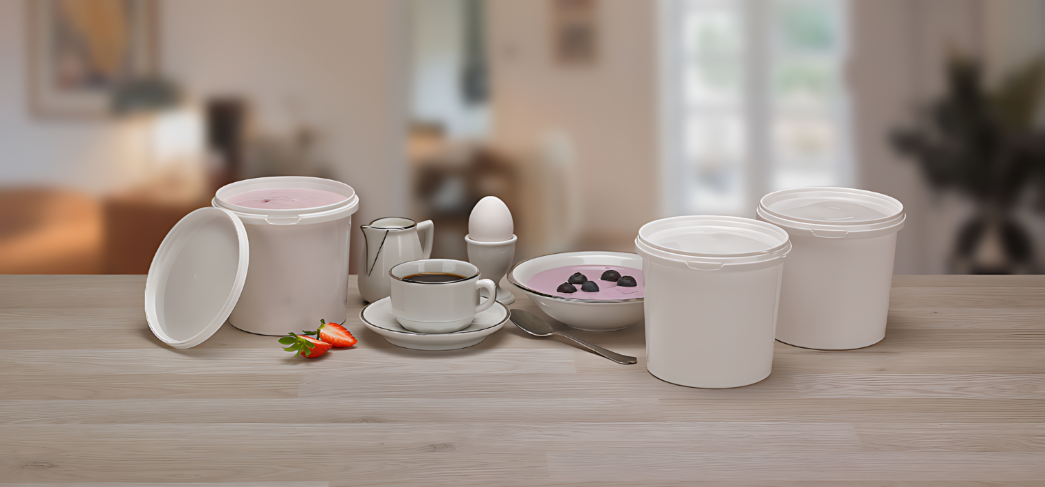
Amcor is extending its UniPak rigid food-packaging range with the newly launched Luma platform, a lightweight polypropylene container system targeting dairy, chilled, ambient-filled, and dry-food applications.
The company will present UniPak Luma at Empack Stockholm on 30 September and 1 October, but the product development provides the stronger manufacturing story. Amcor describes Luma as a scalable round-container platform rather than a single fixed pack, following the lightweight 1kg UniPak dairy pot introduced earlier in 2026.
The new container is made entirely from polypropylene and is described by Amcor as recycle-ready. The company qualifies that claim by stating that recycling depends on suitable infrastructure being available in the market where the pack is used.
That distinction matters because a mono-material structure can make a container technically easier to sort and reprocess without guaranteeing that it will actually be collected or recycled. Local collection systems, sorting capability, end markets, labels, seals, and other components remain part of the real end-of-life outcome.
Roland Lingman, key account director at Amcor, said: “Our UniPak solutions are pitched to the dairy sector, one that’s continuing to grow particularly in larger yogurt formats.”
Dairy provides a demanding test for lightweight rigid packaging because high production volumes magnify relatively small material savings while filling and distribution impose tight dimensional requirements. Removing polymer is commercially useful only while the container remains sufficiently stiff and consistent to move through denesting, filling, lidding, conveying, case packing, palletisation, transport, and retail handling.
Amcor has not yet published detailed specifications for Luma covering individual capacities, wall thicknesses, closure systems, line speeds, or pack weights. That makes it premature to attach the quantified lightweighting claims from its earlier 1kg UniPak directly to the new platform.
The preceding 1kg design nevertheless provides relevant engineering context for the direction of travel. Launched in March, that pot and lid have a combined standard-material weight of 31.6g, with Amcor claiming up to a 9% reduction in carbon emissions against the previous container at anticipated production volumes.
The earlier pack remained entirely polypropylene and was designed to preserve line compatibility despite the material reduction. Amcor also highlighted top-load performance, a liquid-tight compression-moulded lid, improved tamper evidence, shared lid diameters across formats, and dimensions intended to improve pallet utilisation.
Those details demonstrate why lightweighting cannot be assessed simply by comparing grams of polymer. Removing material may reduce pack cost and environmental burden, but any saving can disappear quickly if a redesigned container jams filling equipment, deforms during lidding, increases damage rates, or reduces the number of saleable packs arriving at customers.
UniPak Luma is being positioned across a broader set of applications. Cold-filled dairy, ambient-filled foods, chilled products, and dry goods impose different temperature, sealing, barrier, shelf-life, and mechanical requirements on the same underlying pack architecture.
A scalable platform can help converters and manufacturers reduce development complexity where several capacities or products share common features. Tooling, lids, decoration, material specifications, and filling-line interfaces can potentially be standardised instead of treating every new size as a completely separate packaging project.
The limits emerge where individual foods impose different performance demands. Cultured dairy may require different closure and barrier behaviour from a dry confectionery product, while chilled prepared foods can place different demands on sealing, distribution, and temperature resistance.
That means actual filling-line trials will be more informative than the exhibition display. Dimensional consistency, denesting, rim stability, filling accuracy, seal performance, top load, and pack handling all have to remain within an acceptable operating window once containers are running at commercial speed.
Amcor’s wider food and beverage portfolio covers bottles, jars, tubs, containers, thermoformed trays, and cups, including formats for dairy, beverages, sauces, snacks, and ready meals. The Luma launch sits within that broader effort to offer common packaging technologies across different product and filling requirements.
Food producers are also having to assess those decisions against changing recycling requirements. A polypropylene mono-material design can simplify one part of the calculation, but manufacturers still need to consider labels, inks, adhesives, seals, decoration, residual food, and local waste infrastructure when making end-of-life claims.
Amcor’s “recycle-ready” wording is therefore more defensible than treating the container as universally recycled. The design can be compatible with recycling systems without controlling whether those systems exist or whether consumers place the pack into them correctly.
The Stockholm event will give Amcor’s Nordic team an opportunity to discuss those trade-offs with processors and packaging buyers, but Luma’s commercial significance will be determined after the exhibition. Published specifications remain limited, and the company has not identified a production customer or disclosed operating data for the new platform.
The earlier 1kg UniPak demonstrated that the company is designing material reduction around filling-line and logistics performance rather than pack weight in isolation. Luma now broadens the platform approach across more food applications.
Its next useful milestones will therefore be less promotional: commercial capacities, pack weights, line-trial results, customer deployments, and evidence that the same lightweight architecture can retain acceptable performance across the different production environments Amcor is targeting.