IN Brief:
- Food Nutrition Partners has supported development and production of the TEKS protein bar range.
- The three-flavour launch uses triple-layered bars with 21g of protein and 4.6g of fibre.
- Sports nutrition brands are leaning on specialist co-manufacturers for formulation, texture control, and speed to market.
Food Nutrition Partners has supported the development and production of TEKS, a new protein bar range fronted by five-time world record football freestyler Ben Nuttall.
The three-flavour range includes salted caramel, cookies and cream, and chocolate brownie. Each bar is built around a triple-layered format with 21g of protein and 4.6g of fibre, combining a smooth dough-style core with crunchy protein crisps and a liquid layer.
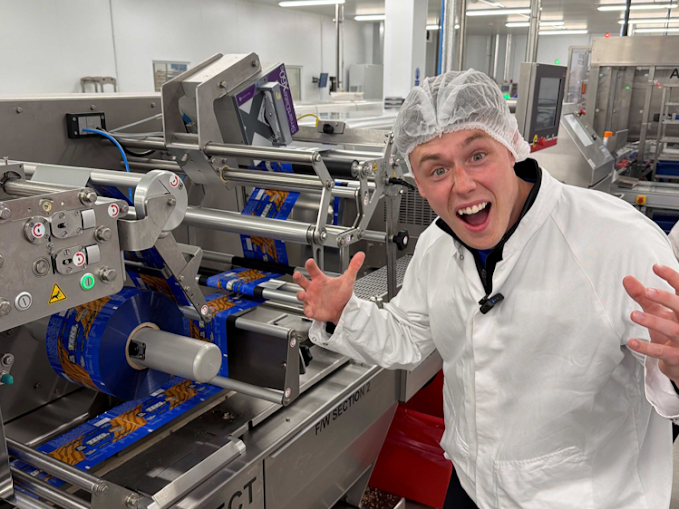
Food Nutrition Partners developed the range at its Northamptonshire production facility, working with the TEKS team on flavour, texture, nutritional profile, production efficiency, and launch timing. The brief centred on a low-sugar, high-fibre, high-protein bar that could stand apart from standard sports nutrition formats while remaining suitable for scaled production.
“From the outset, Ben had a clear vision for what he wanted TEKS to be – a protein bar that genuinely tasted great while still delivering on quality and nutrition,” said Chris Kent, business development manager at Food Nutrition Partners. “Together we’ve been able to showcase not only our manufacturing capabilities at scale, but also our ability to collaborate with brands to bring innovative, market-ready products to life quickly and effectively.”
Sports nutrition has moved well beyond basic protein delivery. Bars are now judged on texture, chew, coating stability, sugar profile, fibre source, sweetness system, shelf-life performance, allergen control, and pack quality. A high protein number alone is no longer enough when mainstream consumers expect snack-style eating quality and cleaner nutritional positioning.
Formulation work on lighter, softer protein bars has become a stronger focus across the category, with ingredient suppliers developing systems that reduce the dense or hard texture often associated with high-protein products. TEKS follows that same direction from a brand and manufacturing perspective, using a layered format to make sensory performance central to the product proposition.
High-protein bars create difficult manufacturing conditions. Protein systems can firm during storage, fibres can influence water activity and mouthfeel, syrups and binders affect extrusion performance, and inclusions can create variation during forming and cutting. Liquid layers add differentiation but also increase the need for precise deposition, cooling, and packing control.
“We wanted to make something that people would want to eat daily, helping them to achieve their best performance through high-quality nutrition,” said Ben Nuttall, founder of TEKS. “Flavour, texture and ingredients are key for this, so we needed to find the right partner to help us create a product that will cut through the market.”
Influencer-backed food brands can move quickly because they arrive with built-in audience reach, but manufacturing still determines whether a concept can become a repeatable product. Technical development, ingredient sourcing, nutritional validation, allergen management, packaging artwork, shelf-life testing, and fulfilment planning all have to be compressed without weakening quality control.
“We were looking for a trusted manufacturing partner that could deliver both quality and scale, and Food Nutrition Partners was the ideal choice,” said Ben Maughan, CEO at TEKS. “Every meeting and factory visit has felt like a collaboration, helping us to bring this fast-paced launch to market at just the right time.”
The launch strengthens the role of specialist co-manufacturers in sports nutrition and functional snacks. Brands want faster development cycles, more distinctive textures, and stronger nutrition profiles without necessarily building their own factories. Manufacturers with bar-forming, extrusion, quality, and regulatory capability under one roof are increasingly positioned at the centre of that innovation pipeline.