IN Brief:
- Suberinno Suberin is refined from Nordic forest-industry birch-bark side streams.
- Innomost says the material can contribute moisture, grease and oxygen barrier performance in coating formulations.
- Production is established in Kokkola, with a larger industrial plant targeted within two to three years.
Innomost is moving its birch-bark-derived Suberinno Suberin material further into fibre-based packaging, positioning the biobased polymer as a functional ingredient for coatings that need moisture, grease and oxygen barrier performance. The Finnish company is producing the material in Kokkola and plans an industrial-scale plant within two to three years as customer validation work expands.
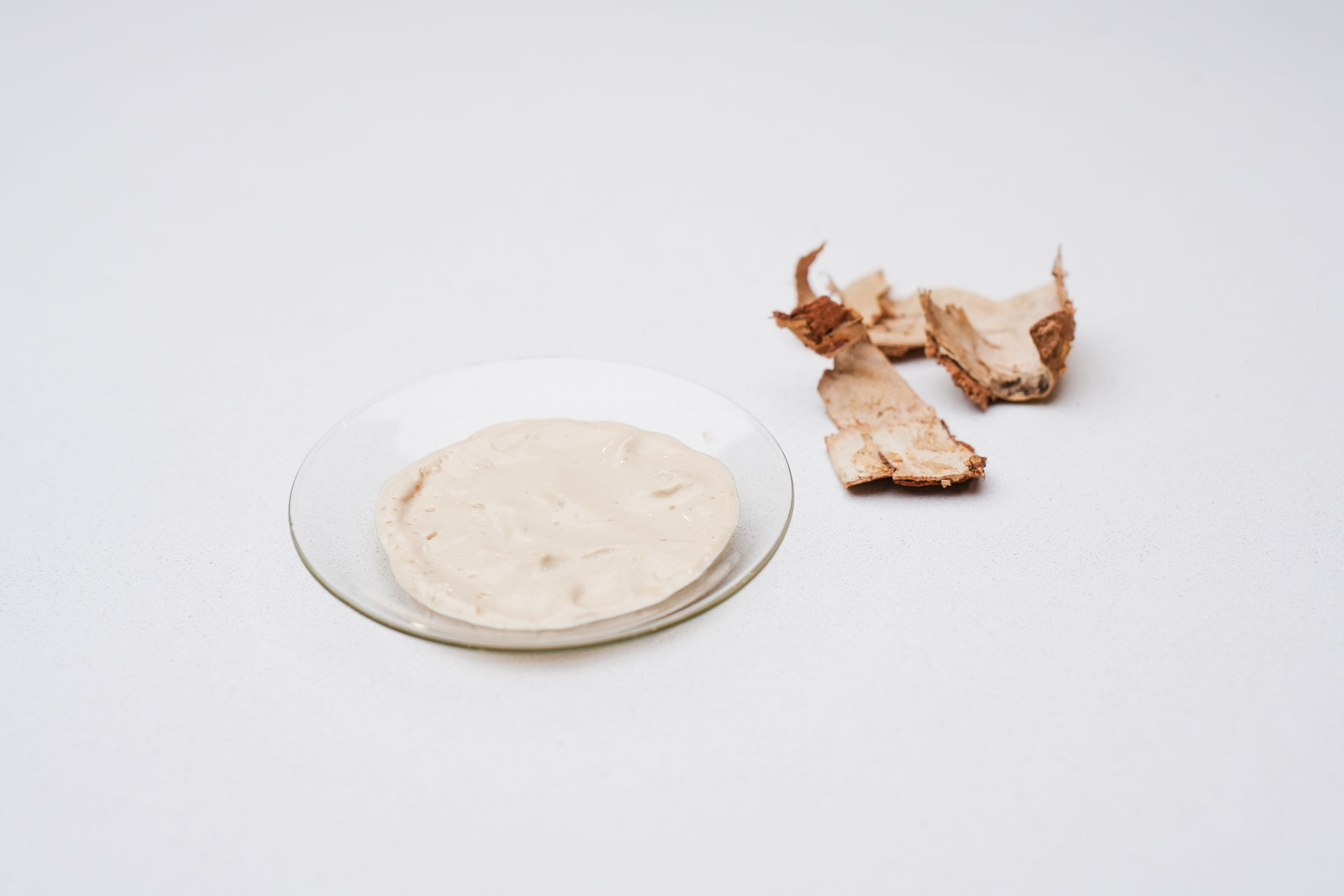
Suberin is a naturally occurring polymer found in plant cell walls and is particularly abundant in birch bark, where it helps protect the tree against water, oils and environmental stress. Innomost sources bark from side streams of the Nordic forest industry and uses patented processing technology to refine it into a mixture of biobased compounds for coatings, adhesives, packaging materials and other industrial applications.
Suberinno can be used as a standalone coating material or incorporated into existing formulations with other organic and inorganic components. Innomost attributes moisture and grease resistance to the material’s hydrophobic properties and says it can also contribute oxygen-barrier performance. The final result still depends on the substrate, formulation, coating weight, drying conditions and the other materials used in the finished structure.
That dependence on formulation is central to the scale-up challenge. A renewable coating ingredient does not become a food-packaging solution simply because the base chemistry performs well. Paper and board suppliers need stable coating rheology and film formation, converters need reliable drying and runnability, and food manufacturers need evidence that the finished structure protects the product through its intended shelf life.
Innomost has been using industry trials to test those variables while producing current volumes at its Kokkola facility. The company’s own packaging work has increasingly focused on industrial validation, process compatibility and commercial readiness rather than laboratory performance alone. That shift is necessary if Suberinno is to move from specialty development batches into recurring orders from converters or coating formulators.
The planned larger plant would change the commercial proposition. High-volume packaging programmes depend on consistent specifications, dependable lead times and enough production capacity to support multiple converting sites. A coating ingredient can pass a technical trial and still struggle to gain adoption if customers cannot secure predictable volumes or if each scale increase changes the material’s behaviour.
Feedstock consistency will be part of that test. Birch bark is generated within an established forest-industry system, giving Innomost a side-stream raw material rather than a crop grown specifically for packaging chemistry. Natural feedstocks can still vary by source, storage and processing history, so industrial production has to control those differences tightly enough to deliver a coating ingredient with repeatable functional properties.
The side-stream model gives the material a clear circular-economy narrative, but process efficiency remains important. Extracting and refining suberin requires energy, equipment and chemicals, and a renewable feedstock does not remove those impacts. The industrial case will depend on how efficiently useful compounds can be recovered from incoming bark and how much value the resulting material creates in higher-performance applications.
The work fits a wider transition in fibre packaging. Paper and board are moving into formats that still require functions historically delivered by polymer layers, waxes or complex multilayer structures. Recent barrier developments across the food-packaging sector show the same tension: reduce fossil-derived content and improve recyclability without compromising shelf life, sealing or line performance.
Suberinno enters that field as a functional ingredient rather than a finished package, which means its success will depend heavily on partners able to formulate, coat and validate complete structures. Food-contact applications add another layer of control. Barrier performance alone does not establish suitability for a specific food pack, and converters still need to assess the full construction against applicable food-contact and migration requirements.
Innomost’s current positioning is strongest where the material can contribute functionality inside a coating system that is then validated for the intended product and process. The company’s own recent packaging work has emphasised the same need for industrial trials, process compatibility and customer reference cases before broader implementation.
The two-to-three-year plant ambition therefore sets a useful timetable for judging progress. Before a larger facility is justified, customer trials have to become repeat business and production specifications have to survive scale-up. The next phase is less about proving that birch bark contains useful chemistry and more about showing that the refined material can be manufactured consistently enough for industrial coating lines.
Suberinno is unlikely to replace every fossil-derived barrier chemistry as a single drop-in material, but that is not the only route to commercial value. A versatile ingredient that contributes moisture, grease or oxygen performance inside established coating systems can still displace part of the conventional formulation. If that role proves repeatable at scale, Innomost’s planned plant would turn a forestry side stream into a more substantial packaging-material supply chain.