IN Brief:
- JBS completed its transaction with Oman Food Capital on 19 November, acquiring an 80% stake in a new food holding company.
- The venture combines the A'Namaa poultry project at Ibri with Al Bashayer's beef and lamb processing facility at Thumrait.
- Following further investment, the company projects approximately 300,000 tonnes of annual production capacity and more than 3,000 direct jobs over five years.
JBS has completed a US$150 million investment in a joint venture with Oman Food Capital, establishing an 80% controlling interest in a business combining poultry, beef, and lamb processing operations in Oman. The transaction closed on 19 November 2026 and will support the completion of two major manufacturing facilities.
Oman Food Capital, the food and agribusiness investment arm of the Oman Investment Authority, holds the remaining 20% of the new holding company. The venture consolidates A’Namaa Poultry Company’s integrated poultry project at Ibri and Al Bashayer Meat Company’s beef and lamb processing facility at Thumrait.
The investment was originally agreed in February 2026. Completion establishes the ownership structure through which JBS and Oman Food Capital intend to develop the production assets, rather than signalling that the facilities have reached their planned operating capacity.
JBS expects the business to achieve approximately 300,000 tonnes of annual industrial production capacity after the proposed investments have been completed. The company also projects more than 3,000 direct jobs across the production chain during the next five years.
Those figures remain forward-looking targets. The company has not disclosed a confirmed date for achieving the planned annual capacity, its present combined production volume, or a complete commissioning timetable for the two sites.
A’Namaa’s integrated poultry operation is located in the Ibri region of northern Oman, approximately 380 kilometres west of Muscat. Investment will concentrate on completing the facility and developing its ability to supply poultry products for domestic and international markets.
Al Bashayer’s facility at Thumrait, in southern Oman, will provide beef and lamb processing capability. Combining the two assets gives the venture a manufacturing platform spanning three animal proteins, although individual production requirements differ substantially between poultry and red meat.
An integrated poultry operation must coordinate livestock receiving, slaughter, dressing, evisceration, chilling, cutting, and packing. The final configuration depends on whether the business supplies whole birds, portioned meat, or products requiring further processing.
The relationship between these stages determines effective throughput. A slaughter line may be designed to handle a particular number of birds per hour, but processing cannot maintain that rate unless chilling, inspection, cutting, packing, and refrigerated storage have sufficient corresponding capacity.
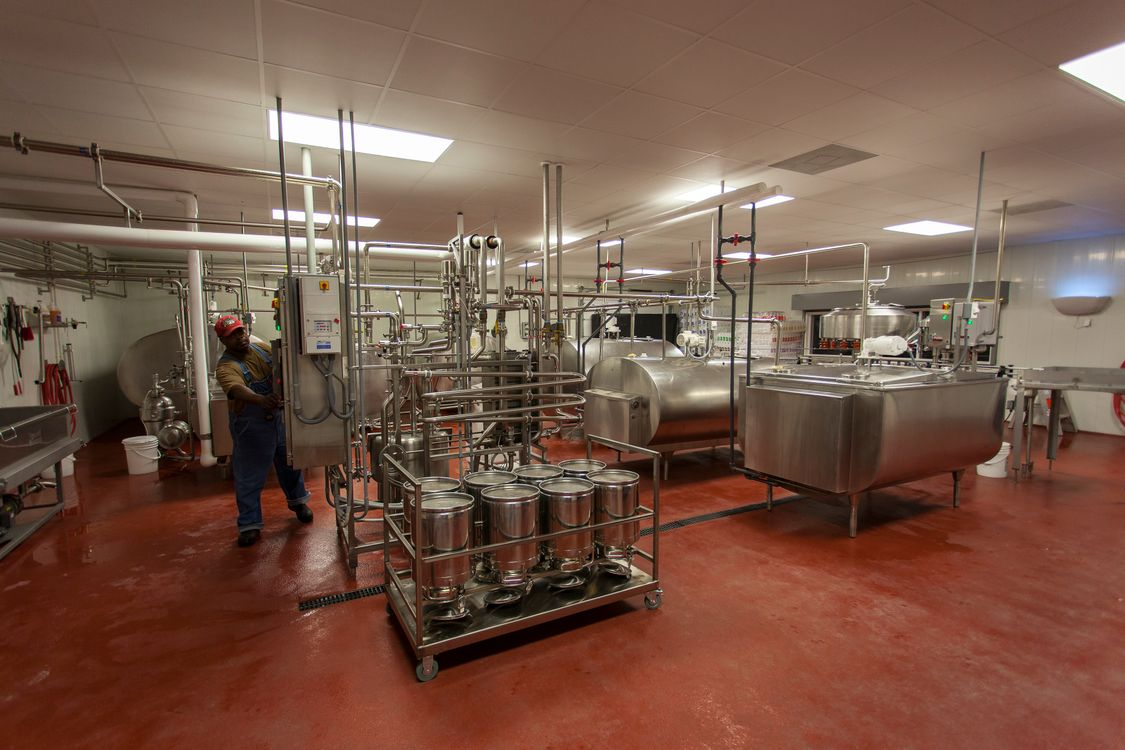
Chilling is particularly important because the product must reach and maintain temperatures appropriate to its subsequent handling and storage. Equipment capacity must account for the volume of product entering the system and the heat that must be removed within the validated process.
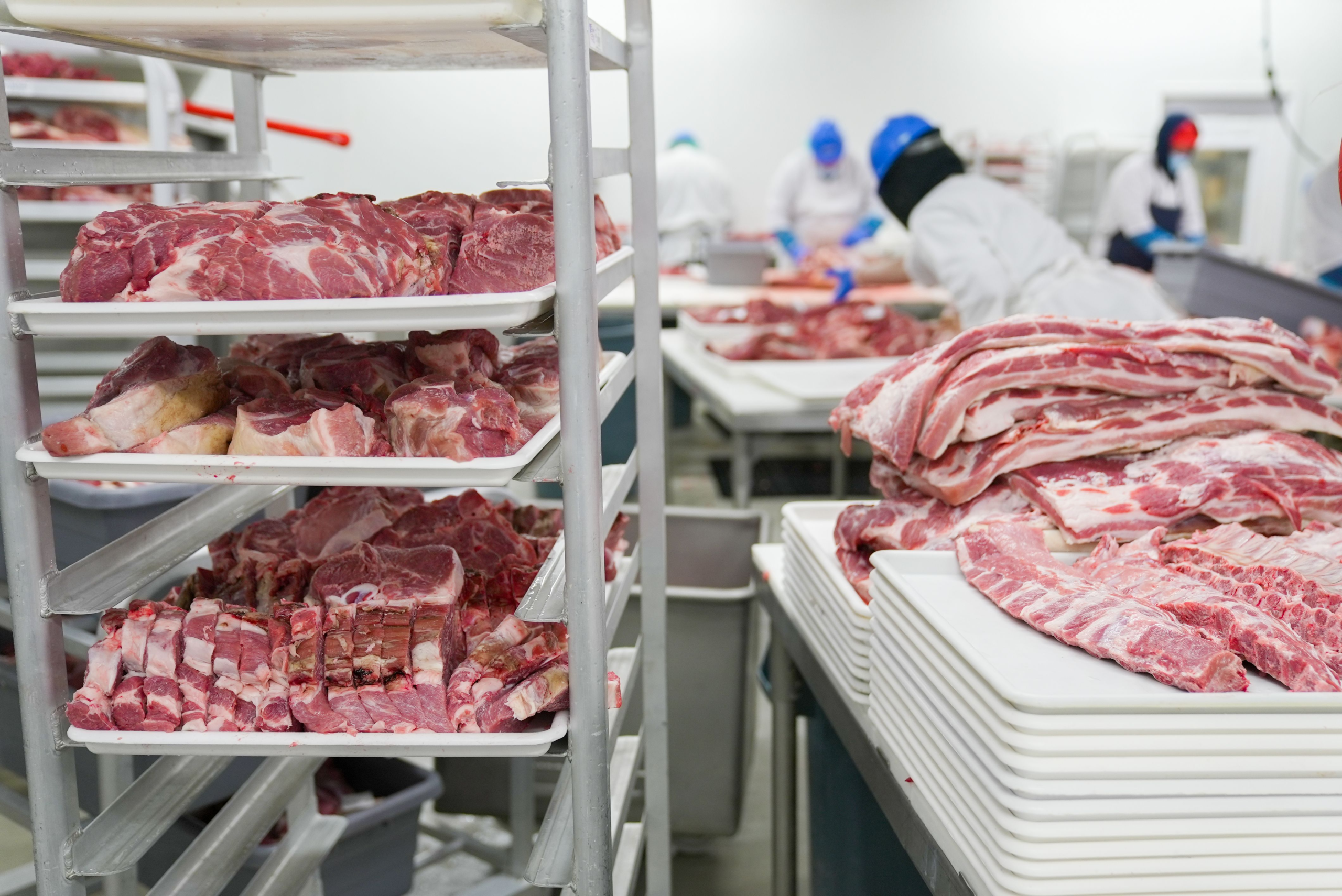
The same production planning challenge applies to beef and lamb, although carcass sizes and handling arrangements differ. Dressing operations, carcass chilling, boning, portioning, and packaging require machinery and layouts suited to the species and finished products being manufactured.
Product variability affects equipment selection. Differences in animal size, carcass weight, and the intended cutting specification can influence the time required for handling and the degree to which individual operations can be automated.
Where several product groups are manufactured within the same industrial business, processing schedules must also accommodate their different raw material and quality requirements. The venture’s common ownership does not establish that poultry and red meat will be handled on shared production lines.
Food safety controls must reflect the hazards and conditions associated with each operation. Hygienic zoning, cleaning procedures, temperature monitoring, traceability, and inspection systems need to be appropriate to the production stage and the product’s intended use.
The company intends to develop the facilities as a halal meat production platform. Meeting relevant halal requirements involves suitable slaughter and handling practices, certification, traceability, and controls over the materials and procedures used during processing.
Export destinations may impose further conditions. Veterinary certification, establishment approval, microbiological requirements, labelling, and product documentation can differ between markets, requiring manufacturers to maintain systems capable of demonstrating compliance.
The need to preserve product temperature continues beyond the factory. Chilled and frozen meat operations depend on refrigerated storage, appropriately managed loading, and transport arrangements that maintain the required conditions through distribution.
Processing capacity and cold storage capacity must therefore be planned together. Additional slaughter or cutting equipment will provide limited benefit if the resulting products cannot be chilled, packed, stored, and dispatched at corresponding rates.
JBS has experience operating large-scale protein manufacturing networks internationally. The company intends to bring that expertise to its Omani investment, although it has not identified machinery suppliers, specific automation systems, or individual equipment contracts in the November completion announcement.
The proposed 300,000-tonne annual capacity will consequently depend on engineering and commissioning decisions still to be implemented. Installation alone will not establish full commercial readiness: production systems must be tested, validated, staffed, and integrated with the required supporting utilities and supply arrangements.
Operating the two facilities will also require access to livestock, feed, packaging, water, energy, maintenance services, and suitably trained personnel. The costs and reliability of those inputs will influence the volume and product mix the business can manufacture commercially.
Oman Food Capital’s participation connects the venture to the country’s programme of developing domestic food production. The investment is intended to strengthen food security while establishing capacity to supply halal meat products to regional and international markets.
Domestic production and export activity place different demands on the operating network. Local distribution may allow shorter delivery routes, while overseas shipments require appropriate cold chain arrangements, border documentation, and access to suitable transport infrastructure.
The company has not disclosed confirmed export contracts or the proportion of future production allocated to domestic customers. Its stated intention is to develop both markets as the facilities progress towards their planned output.
The employment projection includes positions across the production chain, rather than a confirmed number of workers already employed at the two plants. Recruitment, training, maintenance capability, and technical supervision will be important during the development and commissioning phases.
JBS now controls the joint venture following completion of the November transaction. The next manufacturing milestones are the completion and commissioning of the Ibri and Thumrait facilities and the subsequent demonstration of their operating capacity.
The projected annual output and employment programme remain dependent on those investments. The completed development at this stage is the establishment of the joint venture and its ownership of the two production assets.