IN Brief:
- Oishii has secured the first close of a $150m Series C round to scale its indoor Smart Farm model.
- The company plans to expand production, robotics integration, farm infrastructure, R&D, and product formats.
- The funding reflects a more industrial phase for vertical farming, where automation, unit economics, and packaging efficiency are central.
Oishii has closed the first stage of a $150m Series C financing round to scale its indoor Smart Farm model across production, robotics, farm infrastructure, R&D, and product development.
The round was led by SPARX Asset Management, with participation from Nomura Real Estate Development, MISUMI Group, Mizuho Bank, and other investors. Oishii, founded in 2016 and headquartered in New Jersey, has now raised $370m since launch.
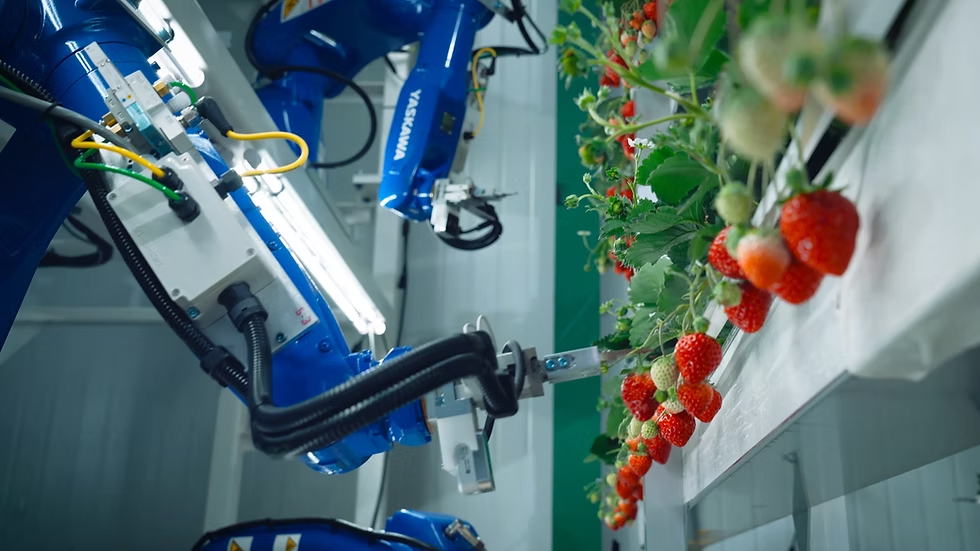
The company operates indoor vertical farms producing premium strawberries, using controlled growing environments that combine robotics, automation, advanced environmental management, and Japanese growing techniques. Its farms manage key growing conditions including air, heat, light, nutrition, pollination, harvesting, and post-harvest handling.
The new funding will support increased production capacity, further robotics integration, expanded farm infrastructure, new product formats, and continued innovation work in the United States and Japan. Oishii has also strengthened its automation position through the acquisition of Tortuga AgTech and a strategic partnership with MISUMI, which is supporting automation and manufacturing requirements across both markets.
Vertical farming has entered a tougher commercial phase after several years of high-profile investment and difficult operating results across the sector. Energy use, capital intensity, crop economics, and competition with field-grown produce have forced operators to focus more tightly on automation, crop value, and production discipline. The most credible models are increasingly built around higher-value crops and controlled supply chains rather than broad claims about replacing conventional agriculture.
Strawberries are a demanding crop for controlled-environment production. Pollination, fruit handling, ripeness, shelf life, softness, and visual quality all create operational difficulty. The crop is also labour-intensive in conventional systems, making it a logical target for robotics and environmental control if production costs can be reduced enough to support scale.
Oishii’s model places robotics and automation at the centre of consistency, not simply labour reduction. Harvesting robots, environmental controls, and data-led growing systems can reduce variation between batches and support year-round production. In premium fruit, inconsistency erodes value quickly, while harvest damage or poor post-harvest handling can undermine product quality before it reaches retail.
The company has also been broadening its market position. Oishii launched the Omakase Berry at ultra-premium price points, before adding Koyo Berry and Nikko Berry formats aimed at broader access. It has also moved into preserves and refreshed packaging for the Nikko Berry with a stay-fresh top-seal format designed to improve shelf life while reducing plastic use compared with traditional clamshell packaging.
In fresh produce, precision growing only protects value when post-harvest handling and pack performance are aligned with the crop. Respiration, moisture, bruising, visibility, and shelf life all sit between the farm and the final sale. Similar packaging pressures have been visible in laser-perforated Arnitel film work targeting produce waste, where material performance was tied directly to shelf-life extension and reduced spoilage.
Oishii’s top-seal format sits in that practical territory. The farm can control growing conditions with precision, but packaging has to preserve fruit quality through handling, distribution, retail display, and consumer use. For delicate produce, the boundary between agriculture, processing, and packaging is increasingly blurred.
The funding round gives Oishii more capacity to test that model at scale. The next phase will depend on whether controlled-environment production, automation, and premium produce packaging can move beyond a distinctive market position into a durable manufacturing system. Vertical farming does not need another round of broad promises. It needs plants that can produce consistently, pack efficiently, and keep unit economics under control.