IN Brief:
- Orderly will run a six-month feasibility study with two East Midlands SME manufacturers in different sectors.
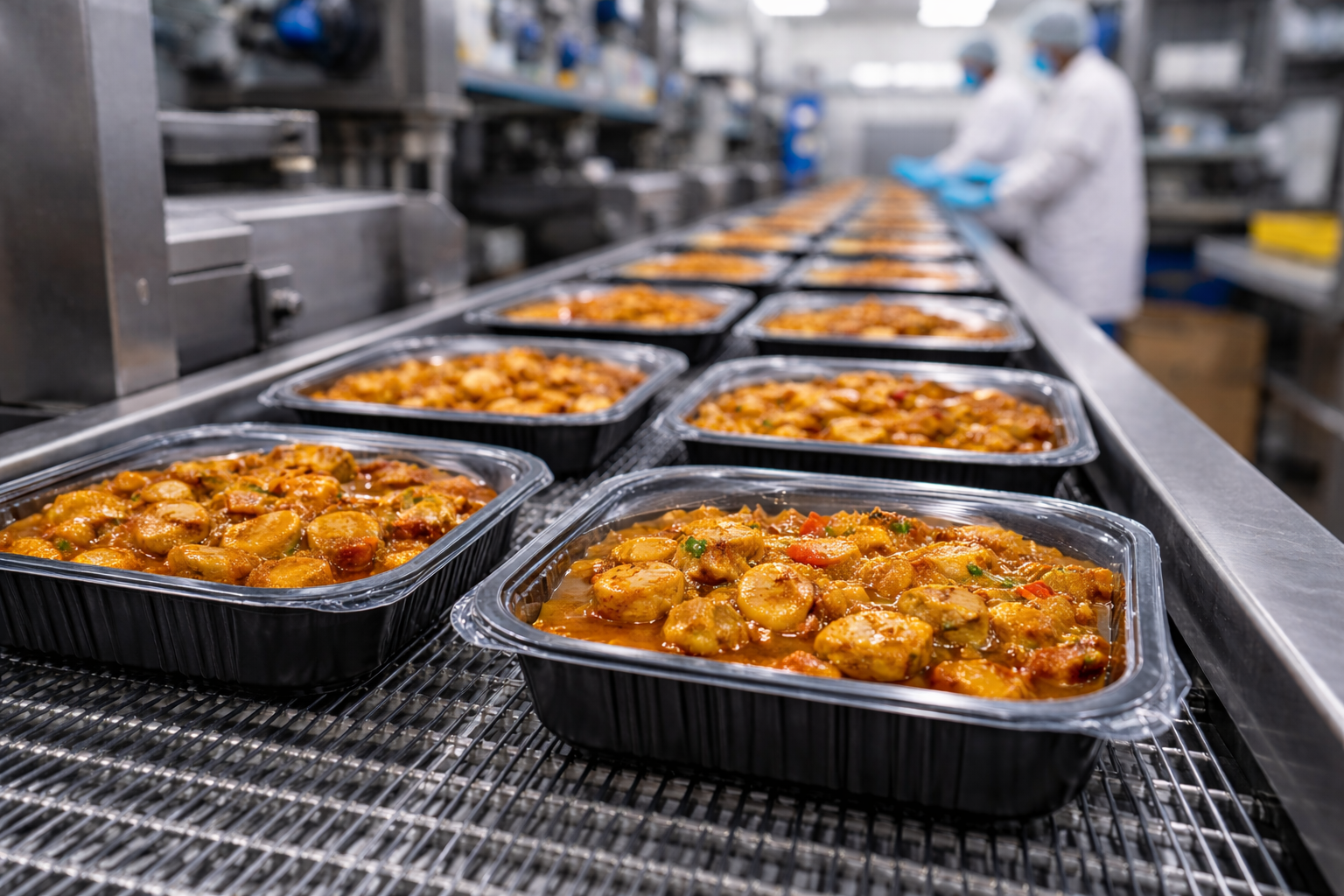
- The prepared-food trial will examine real-time stock and usage data to improve ordering decisions and reduce raw-material waste.
- The project is intended to test whether operational AI can work with existing factory systems without requiring enterprise-scale integration teams.
Orderly has secured Innovate UK support for a six-month feasibility study that will test whether its operational artificial intelligence technology can be adapted for smaller manufacturers, including a prepared-food producer in the East Midlands.
The food-manufacturing trial will focus on stock and ordering. Orderly plans to examine whether inventory levels and material usage can be monitored in real time to improve purchasing decisions and reduce raw-material waste, while a second manufacturer in another sector will test whether the same approach can cope with different equipment, data, and workflows.
The project is supported through Innovate UK’s Made Smarter Innovation SME resource and energy efficiency feasibility-studies programme, which was established to develop industrial digital technologies capable of improving resource or energy efficiency in SME manufacturing.
That makes the work a feasibility exercise rather than a finished factory product deployment. Orderly is testing whether its existing technology can be converted into an affordable, scalable, and sufficiently simple system for manufacturers that do not have large data teams or lengthy integration budgets.
The company’s current technology was developed for restaurant operations. Its Digital Store Assistant combines information from existing business systems with live operational data, including camera feeds, to forecast requirements and recommend actions to staff.
Orderly reports that restaurant sites using the system have achieved average food-waste reductions of 21%. That figure is not evidence of equivalent manufacturing performance, and the factory study is specifically intended to determine which parts of the restaurant model transfer successfully to industrial production.
Prepared-food manufacturing presents a more complicated operating environment. Ingredients may be ordered days ahead, committed to planned batches, processed through several stages, and held as work in progress or finished goods before reaching a customer.
Shelf life, traceability, production scheduling, changeovers, minimum batch sizes, and equipment availability all affect the value of an inventory recommendation. A system that simply identifies the amount of an ingredient in stock cannot make a useful decision unless it also understands when that ingredient is needed and how production plans are changing.
Orderly says the feasibility project will examine data already held across stock systems, production software, sensors, cameras, and spreadsheets. The proposed self-service setup would guide manufacturers through connecting those sources, describing their processes, and defining operational outcomes without relying on a large implementation team for every site.
Those outcomes could include reducing raw-material waste, improving stock decisions, identifying production inefficiencies, or making better use of labour and equipment. The company is deliberately testing whether the same platform can adapt to different factories rather than imposing one standard model on every manufacturer.
That distinction is important for SMEs, where individual plants can differ widely even within the same food category. Two factories producing similar prepared foods may have different equipment, batch structures, stock systems, shift patterns, customer requirements, and measures of acceptable waste.
The challenge for an operational AI platform is therefore not simply generating a forecast. It has to identify which information matters to a particular plant, determine when a changing condition requires action, and present that recommendation early enough for staff to alter the outcome.
Peter Evans, chief executive officer of Orderly, said: “SMEs do not need a watered-down enterprise product. They need technology designed around the systems, people and constraints they already have.”
Orderly’s stated aim is to avoid another dashboard that creates additional information without changing a decision. The manufacturing version is intended to detect changing conditions, assess their likely operational effect, and recommend a next action to the people running the process.
For prepared-food production, the stock trial provides a useful test because excess inventory and shortages create different but equally direct costs. Ordering too much perishable material can produce write-offs, while ordering too little can interrupt planned batches and reduce service levels.
Real-time data could improve that balance, but only if the underlying information is sufficiently accurate. Physical stock, usage records, production schedules, and system quantities have to remain aligned or an apparently sophisticated recommendation can simply automate a poor inventory record.
The study will produce a proof of concept, evidence from the two factory trials, and a roadmap covering the technical, operational, and financial requirements for a potentially adoption-ready product. Those outputs should provide a clearer indication of whether self-service implementation is realistic outside the controlled conditions of a development project.
The second, non-food factory is significant for the same reason. If the system only works after extensive configuration for one prepared-food operation, it may remain a bespoke project rather than the scalable SME product Orderly is trying to develop.
Manufacturing also brings demands that a restaurant system does not necessarily encounter, including production equipment status, batch genealogy, maintenance constraints, and more formalised quality controls. The feasibility work should show which additional data and process models are needed before recommendations can be trusted on the factory floor.
The current project therefore sits well short of claims that artificial intelligence has solved food-factory waste. Its value is in testing a narrower proposition: whether fragmented operational information can be connected economically enough for smaller manufacturers to make earlier and better decisions without replacing the systems they already use.
If that model proves workable, the prepared-food trial could demonstrate a relatively low-disruption route into operational AI for SMEs. If it does not, the project should expose where data quality, factory complexity, or implementation cost continues to make apparently simple digitalisation considerably less simple once it reaches production.