IN Brief:
- The Manapparai project covers 28 acres and will manufacture Lay’s and Kurkure products.
- The factory is expected to generate around 650 direct and indirect employment opportunities.
- PepsiCo aims to source processing potatoes through partnerships covering more than 1,200 farmers and 1,500 acres by 2030.
PepsiCo has broken ground on a ₹8.68bn snack manufacturing facility in Tamil Nadu, extending its Indian production network into the south of the country and developing an agricultural supply base to serve the expansion.
The factory will occupy 28 acres at the SIPCOT industrial park near Manapparai in Tiruchirappalli district. PepsiCo plans to manufacture Lay’s and Kurkure products at the site, with commercial production scheduled to begin by July 2028. Approximately 650 direct and indirect jobs are expected to be created.
The development forms part of a wider ₹57bn Indian investment programme through 2030. PepsiCo opened its fifth food factory in Assam in September and has also invested in beverage concentrate manufacturing in Madhya Pradesh. The Tamil Nadu project adds capacity in a region that the company has identified as an important market for its snacks business.
The investment includes an expansion of regional agricultural sourcing. PepsiCo intends to establish relationships with more than 1,200 farmers growing processing potatoes across approximately 1,500 acres by 2030. The programme will incorporate support for soil testing, agricultural mechanisation, and micro-irrigation.
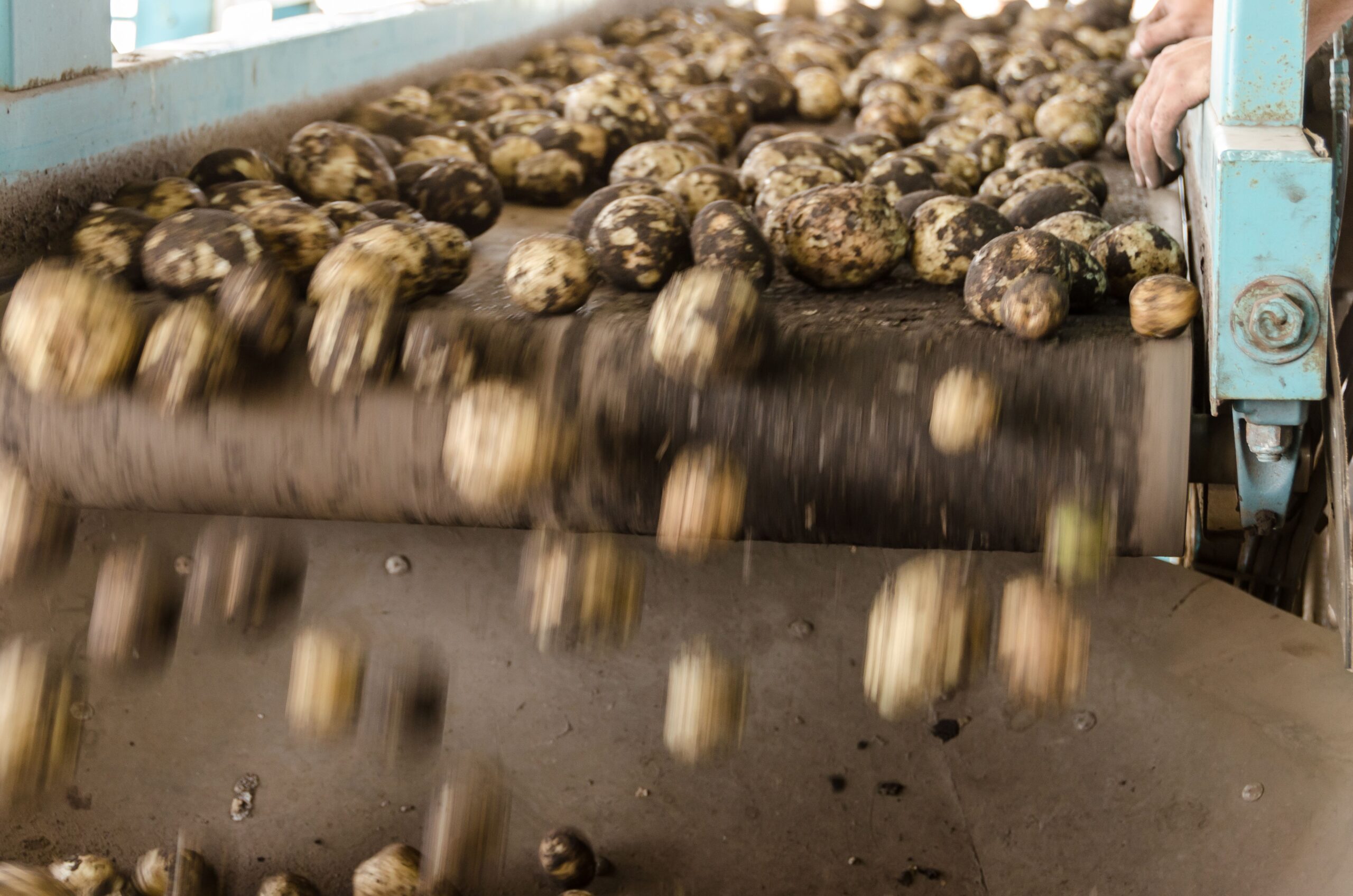
Potatoes used to manufacture crisps require different characteristics from many varieties grown for the fresh produce market. Their dry matter content affects the relationship between the weight of raw material received and the quantity of finished product obtained after frying. More water must be evaporated from potatoes with a lower solids content, potentially increasing thermal energy consumption and reducing finished product yield.
Reducing sugar concentrations are another important characteristic. Sugars react with amino acids during frying through the Maillard reaction, contributing to the colour and flavour of the finished crisp. Excessive concentrations can lead to undesirable darkening and increased formation of acrylamide. Selecting appropriate varieties and managing their storage conditions help manufacturers control these effects.
Agricultural partnerships give the processor a route to communicate such specifications before planting and harvesting, rather than relying entirely on the grading of potatoes after delivery. Soil conditions and water availability also affect crop yield and tuber quality. The planned support for micro-irrigation and soil testing is intended to address these agricultural production variables.
The timing of harvests and the availability of suitable storage will influence how much material the new factory can procure locally throughout the year. Potatoes continue to undergo physiological changes after harvesting, and unsuitable storage temperatures can increase reducing sugar levels. Storage programmes must also manage moisture loss, sprouting, and deterioration while maintaining the quantities needed for industrial processing.
The plant’s Kurkure production adds different upstream manufacturing requirements. Extruded snacks are commonly made from cereal-based formulations processed under controlled heat, pressure, and shear. Their production involves the preparation of a suitable feed mixture and subsequent treatment to achieve the desired shape, texture, and moisture content.
Although extruded and potato-based products may use related seasoning and packing operations, their raw material handling and primary processing equipment differ. Site design must allocate space for the individual production processes alongside common services, including utilities, ingredient storage, maintenance, and finished goods handling.
Seasoning and packaging operations can become constraints when upstream equipment is capable of producing more material than the downstream systems can process. The number of pack sizes and flavours manufactured at a site also affects the frequency of changeovers and the allocation of production time. PepsiCo has not disclosed the number of lines planned for Manapparai or the rated capacity of individual machines.
The geographical expansion will change the relationship between production and distribution. Packaged snacks are relatively bulky in relation to their weight, because packaging must protect products against crushing and other mechanical damage. Locating manufacturing nearer the destination market can reduce some finished goods movements, depending on the configuration of warehousing and distribution routes.
The project is also expected to generate demand for locally supplied packaging materials and supporting services. Cartons, flexible laminates, and other consumables need to meet manufacturing specifications and perform consistently on the installed packing equipment. The selection and qualification of suppliers will form part of establishing the site’s operational supply chain.
The wider investment programme continues through 2030, two years after the target for commercial production at Manapparai. Construction, equipment installation, supplier qualification, and the expansion of agricultural sourcing will determine how quickly the new factory can progress from initial production towards its intended operating capacity.