IN Brief:
- Ever After Foods and Roslin Technologies report a 19-fold improvement in cultivated protein productivity against their stirred-tank benchmark.
- Their combined process achieved more than 150 million cells per millilitre and 40 g of cultivated protein per litre.
- The tests produced structured tissue on an edible plant-based scaffold representing less than 2% of final product weight.
Ever After Foods and Scottish biotechnology company Roslin Technologies have reported a substantial improvement in cultivated meat productivity after combining porcine stem cells with an edible packed-bed production system designed to generate structured tissue.
The partners measured cultivated protein productivity of 40 grams per litre using Ever After Foods’ Edible Packed Bed technology and Roslin’s pluripotent stem cells. This represented a 19-fold increase over a stirred-tank suspension benchmark using the same cells, according to results announced on 13 October 2026.
The joint programme also recorded 57 grams of dry biomass and 326 grams of wet biomass per litre. Compared with the stirred-tank reference, dry biomass productivity increased 19-fold and wet biomass productivity 11-fold. Cell densities exceeded 150 million cells per millilitre, giving the partners a combination of high cell concentration and greater protein production per cell.
Conventional cultivated meat development frequently concentrates on expanding animal cells to achieve higher densities within a bioreactor. Although cell concentration affects how much biological material can be produced in a given volume, it does not establish how much edible protein or structured tissue will ultimately result. Cells must also develop sufficient biomass and the desired composition before the process can supply a useful food ingredient.
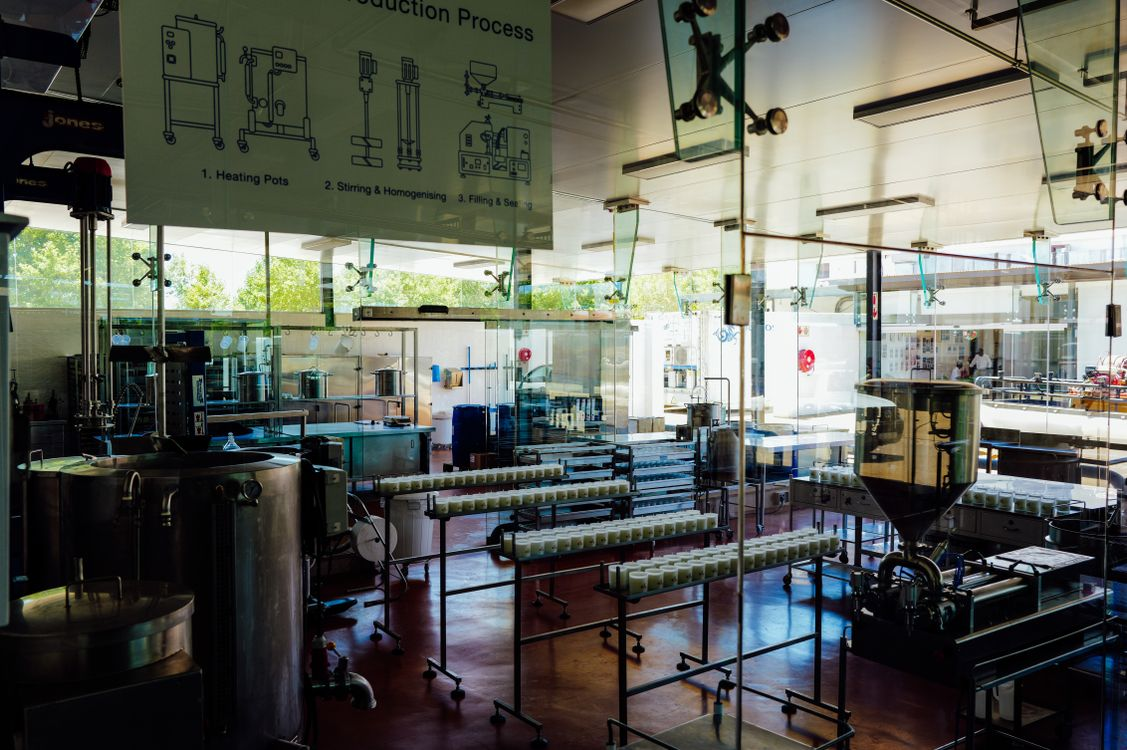
Ever After Foods’ system addresses that distinction by supporting cell growth on an edible scaffold rather than relying entirely on cells suspended in a liquid medium. Its PlantriX scaffold provides a plant-based structure on which the cells can grow and form tissue. The company says the arrangement allows structured cultivated material to be produced directly within the manufacturing process.
The experimental results indicate that greater cell concentration contributed only part of the measured improvement. Compared with the stirred-tank benchmark, the packed-bed system reached approximately five times the cell density, while the amount of dry biomass and protein produced per cell increased by approximately four times. The combined effects explain why protein productivity improved substantially more than cell concentration alone.
The reported volumetric measurements were calculated after excluding contributions from the scaffold and culture medium. Ever After Foods says the edible plant-based scaffold represented less than 2% of the final product by weight. This distinction is important when comparing process output, because including the weight of a supporting material in the cell-derived yield would overstate the amount of cultivated tissue produced.
By measuring both wet biomass and dry biomass, the partners have also provided a more informative account of productivity than wet tissue weight alone. Wet biomass includes water retained within biological material, whereas dry biomass is measured after water removal. Protein content gives a further indication of the composition of the cultivated output, although the three measurements do not establish the nutritional or sensory characteristics of a finished food product.
Cell-line performance remains central to the process. Roslin Technologies contributes porcine pluripotent stem cells, which are intended to provide a reproducible biological starting material for cultivated pork production. The comparison used the same cells in different manufacturing environments, allowing the reported productivity differences to be associated with the cultivation systems under the conditions tested.
The results do not establish that every animal cell line will show equivalent performance in an edible packed bed. Cell metabolism, nutrient requirements, oxygen demand and tissue-forming behaviour can vary, and the partners have not published the complete operating conditions or statistical data required to evaluate the findings independently.
Commercial production also introduces constraints that are not resolved by a high laboratory or development-scale productivity figure. Cells need sufficient nutrients and oxygen throughout the growing material, while metabolic waste must be removed without creating unsuitable conditions in parts of the bioreactor. As a packed bed becomes larger, maintaining consistent transport through the structure can become more demanding because different regions may experience different flow conditions.
An edible scaffold could reduce certain downstream processing requirements if the tissue can remain on its supporting structure in the final food or ingredient. However, the partners have not published a comparative cost analysis showing how the tested process affects growth-medium consumption, energy use, equipment capital costs, cleaning requirements or final manufacturing cost per kilogram.
Food safety and regulatory authorisation will remain separate requirements. The resulting cultivated material must be assessed according to the relevant jurisdiction’s rules, with evidence covering cell identity, production conditions, residual materials and the characteristics of the final product. In the UK, the Food Standards Agency has recently expanded its guidance on cell-cultivated food authorisation, including the information required on growth media and toxicological assessment.
Ever After Foods has been extending its biological capabilities alongside development of the manufacturing platform. Its earlier acquisition of Fishway added aquatic cell technologies and expertise in animal-component-free growth media. The collaboration with Roslin is distinct, concentrating on the behaviour of porcine cells in the edible packed-bed environment rather than the expansion of the company’s cell-line portfolio.
Eyal Rosenthal, chief executive of Ever After Foods, emphasised the difference between the number of cells grown and the quantity of edible material produced, arguing that manufacturing productivity must be assessed through protein and tissue output. Ernst van Orsouw, chief executive of Roslin Technologies, described the findings as evidence that cell biology and cultivation equipment could be integrated to address production challenges.
The companies are continuing development and scale-up work, but have not announced a commercial factory commissioning date, a validated production cost or third-party verification of the reported results. The published figures therefore establish a comparison between specific experimental cultivation systems, rather than proof that the technology has already achieved cost-competitive commercial meat production.
Further trials will need to demonstrate whether the measured gains persist as bioreactor volume increases and whether operating conditions can be maintained consistently over repeated production cycles. The October results provide a quantified technical benchmark against which that subsequent scale-up work can be assessed.