IN Brief:
- 2 Sisters Food Group has appointed Sarah Bull as development director for its meals division.
- The appointment adds senior chilled prepared foods and NPD experience to the group’s meals operation.
- The move comes as UK convenience manufacturing faces consolidation, retailer pressure, reformulation demands, and tighter supply chain expectations.
2 Sisters Food Group has appointed Sarah Bull as development director for its meals division, strengthening product development leadership across one of the UK’s largest prepared food manufacturing groups.
Bull joins with experience in chilled food development and ready meals, including work associated with Bakkavor and major retail customer programmes. Her appointment places NPD capability closer to the centre of 2 Sisters’ meals strategy at a time when chilled prepared foods are being shaped by consolidation, cost pressure, retailer differentiation, and faster product renovation cycles.
The meals division sits within a wider group that spans poultry, chilled, bakery, and other food categories. 2 Sisters is one of the UK’s largest food manufacturers and supplies major grocery, retail, and foodservice customers. That scale gives the group broad production reach, although it also creates complexity across recipes, customer specifications, allergens, packaging formats, ingredient sourcing, and service levels.
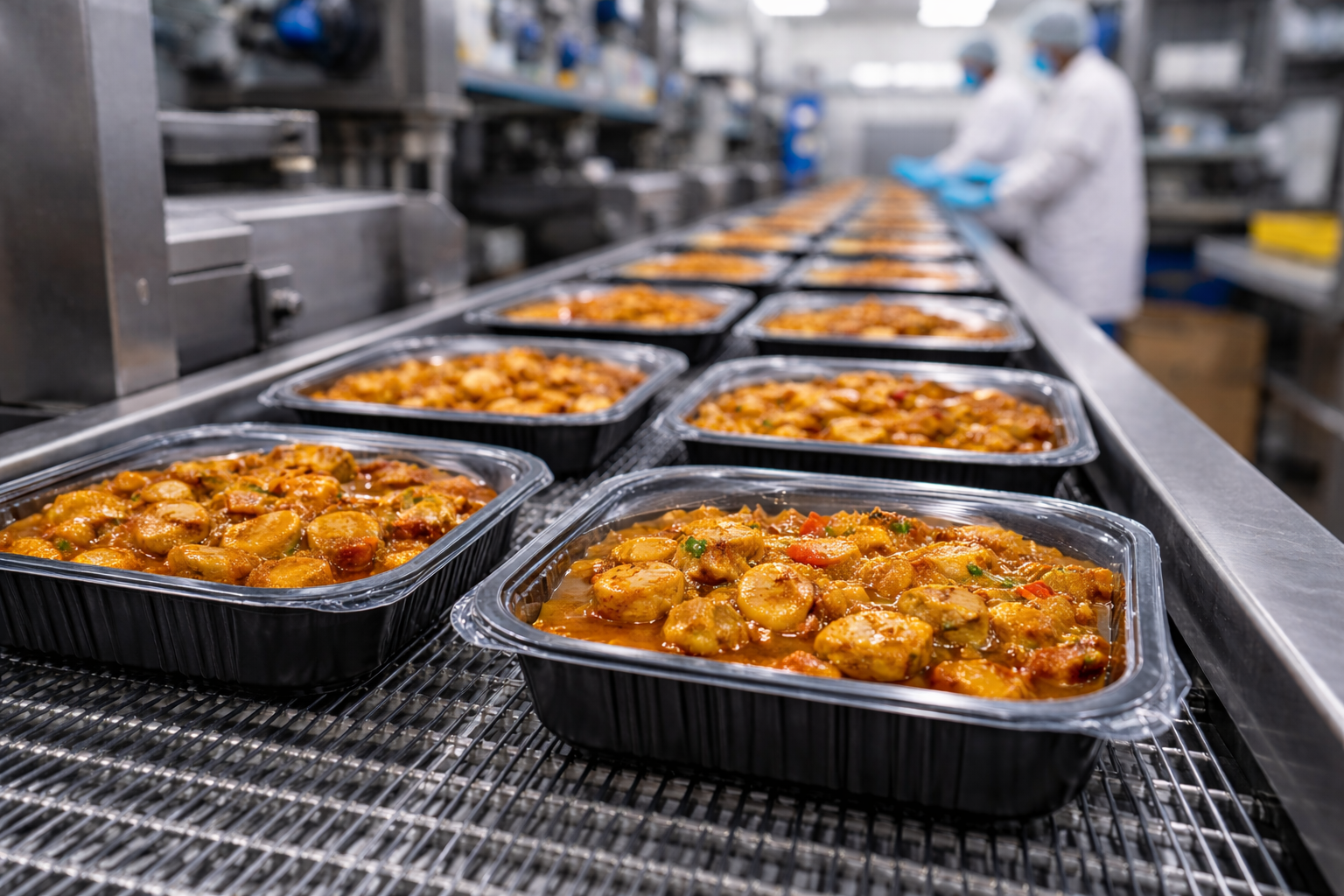
Ready meals and chilled prepared foods are demanding from an NPD perspective. New products have to satisfy consumer demand, retailer margin expectations, nutritional targets, factory capability, shelf life requirements, packaging constraints, and food safety rules. A product that performs well in a development kitchen still has to become a repeatable process using available lines, realistic labour, validated cooking and cooling controls, and packaging that protects the finished product through distribution.
UK convenience food manufacturing has become more concentrated as larger groups seek scale across chilled meals, sandwiches, salads, sauces, desserts, and prepared components. Scale can support procurement, customer service, investment, and technical systems, but it also increases the need for disciplined development processes. A wider manufacturing platform can quickly become difficult to manage if product complexity outruns operational control.
NPD teams in chilled meals are carrying heavier technical workloads. Salt, fat, sugar, calorie, protein, fibre, and clean label targets are being reviewed alongside flavour, authenticity, texture, and value. Reformulation can affect sauce viscosity, meat yield, pasta or rice stability, vegetable texture, water activity, reheating behaviour, and shelf life. Ingredient substitutions made for cost or nutrition reasons can create new process and allergen considerations.
Input cost pressure remains part of the commercial backdrop. June food commodity data showed overall prices easing slightly while vegetable oils rose and meat reached a record high, illustrating the uneven cost pressures that development and procurement teams must work around. Prepared meals combine several ingredient groups, so price movement in proteins, oils, dairy, grains, vegetables, and spices can affect both product design and margin.
The supply base is also under closer scrutiny. Chilled meals depend on reliable proteins, vegetables, grains, dairy, sauces, spices, packaging, and logistics. NPD teams increasingly have to understand whether the supply chain can support a concept consistently, not only whether the recipe performs in a trial. A product built around a vulnerable ingredient or constrained pack format can become difficult to launch at scale.
Retailers use prepared meals as a battleground for value, premiumisation, health, world cuisines, portion formats, and seasonal ranges. That increases the pace of launches and puts pressure on manufacturers to manage complexity without weakening service levels. More SKUs can improve category relevance but also add changeovers, forecasting risk, packaging inventory, allergen complexity, and line scheduling pressure.
Development decisions made early often determine factory efficiency later. A sauce that needs a narrow heating window, a garnish that cannot tolerate chilling variation, or a pack format that slows sealing can all create avoidable production problems. Strong development teams work with operations, engineering, technical, procurement, and commercial functions from the start, reducing the risk of products that are attractive in concept but inefficient in production.
Retailer specific innovation adds another layer. Major grocery customers want products that fit their own brand architecture, price points, nutrition positions, packaging targets, and promotional cycles. Manufacturers with senior NPD leaders who understand those customer systems can move faster through concept approval, factory trial, cost engineering, and launch.
Bull’s appointment strengthens the link between development and manufacturing inside 2 Sisters’ meals division. Chilled prepared foods are becoming more technically demanding, and larger platforms still depend on people who can translate market demand into products that factories can make repeatedly, safely, and profitably.