IN Brief:
- Compass will open a 10,000-square-metre Cuisine Centre at SmartParc SEGRO Derby.
- The facility will produce more than 70 million meals annually across over 200 dishes.
- Central production, waste-heat recovery, solar generation, and shared infrastructure will support the operation.
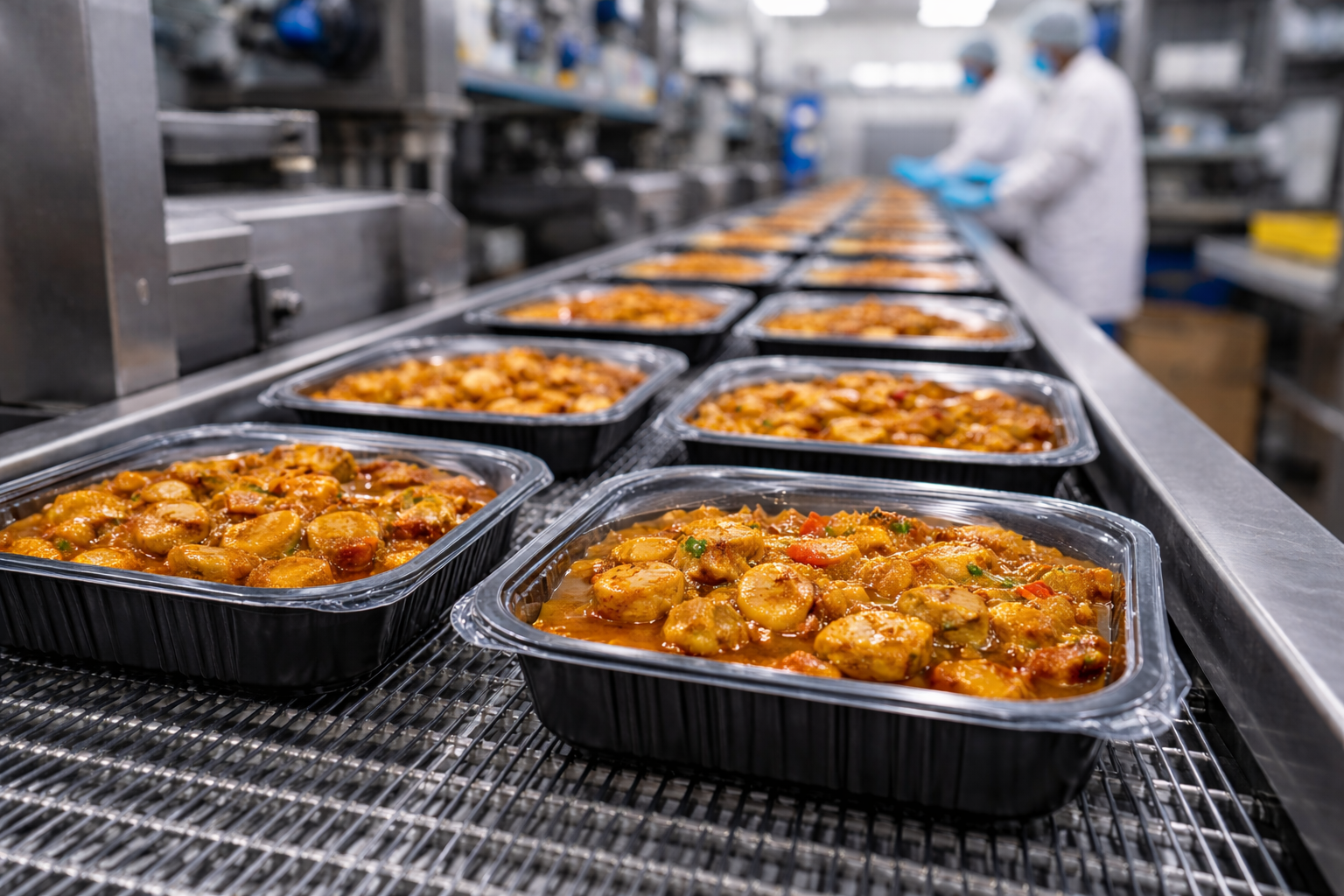
Compass Group UK & Ireland will open a 10,000-square-metre Cuisine Centre at SmartParc SEGRO Derby, creating annual capacity for more than 70 million prepared meals.
The facility is scheduled to begin operating in late 2026 and will supply public- and private-sector foodservice customers, including schools, hospitals, and workplaces. More than 200 main dishes, sides, and desserts are planned across multiportion and individually plated formats.
Compass intends to centralise a greater proportion of food preparation within the site, reducing the work required in individual catering kitchens while standardising recipes, portioning, cooking, cooling, packing, allergen control, and product release.
SmartParc SEGRO Derby occupies a 155-acre regenerated brownfield site developed for food manufacturing and distribution. Shared services, logistics infrastructure, and energy systems are intended to reduce the duplication that occurs when manufacturers develop isolated facilities.
An on-site energy centre will recover waste heat, while the first phase of solar generation is expected to provide approximately 20% of the Cuisine Centre’s electricity. The plant will nevertheless require substantial grid capacity for cooking, chilling, refrigeration, ventilation, cleaning, compressed air, and packaging.
At the stated production volume, average output would exceed 190,000 meals per day if spread across the full year. Actual schedules will vary with contracts and working patterns, requiring the facility to manage peak demand without creating excessive finished-goods stock or idle capacity.
Central production changes catering operations
Foodservice kitchens have traditionally carried out substantial preparation at the point of service, but labour shortages, variable equipment, limited estate space, energy costs, and tighter allergen controls are shifting more activity into dedicated production centres.
A central factory can support large cooking vessels, automated depositing, rapid chilling, portioning, sealing, coding, inspection, and high-throughput cleaning under repeatable conditions. Those systems would be difficult to reproduce across hundreds of customer sites.
The model also concentrates operational risk. An interruption affecting cooking, refrigeration, utilities, software, or packaging could disrupt meals across a large customer base, making redundancy, preventive maintenance, cybersecurity, and contingency planning central to the facility’s design.
Producing more than 200 dishes creates substantial scheduling and changeover complexity. Ingredients, recipes, cooking parameters, allergens, nutritional specifications, packaging, and shelf-life controls must remain connected as the plant switches between products.
Sequence planning can reduce cleaning and allergen changeovers by grouping compatible recipes, although customer demand and product shelf life will constrain the order in which lines can run. Excessive campaign lengths improve factory efficiency but may create more storage demand or reduce menu flexibility.
Automated inspection and connected quality systems will support fill-weight control, seal checks, code verification, temperature records, and traceability. The expansion of AI-supported manufacturing quality control at Polysense reflects the wider move towards systems capable of identifying process drift before non-conforming products accumulate.
Energy recovery supports industrial scale
Prepared-meal production adds heat during cooking and removes it again during chilling, creating opportunities for energy recovery. Heat rejected from refrigeration or other processes can support hot-water generation or compatible site loads when temperature levels and production schedules align.
Shared infrastructure at SmartParc may improve the use of those energy flows across several occupants rather than limiting recovery to one building. The commercial and environmental performance will depend on metering, contractual arrangements, maintenance, and whether demand exists when recovered heat is available.
Solar generation will offset part of the electricity consumed during daylight hours, although refrigeration and cold storage continue outside peak solar periods. Battery storage, demand management, and production scheduling may help align some flexible loads with local generation.
Packaging represents another substantial input because tens of millions of meals require trays, films, labels, cases, and pallets. Material choices must balance heat resistance, seal integrity, barrier performance, product presentation, recycling, and extended producer responsibility costs.
Central production could reduce energy and labour requirements at individual kitchens, but chilled distribution and storage form part of the complete system. Route density, vehicle utilisation, delivery frequency, and product life will determine whether factory efficiency is preserved through the final stages of supply.
The Cuisine Centre will combine industrial food production with contract catering at a scale rarely visible within individual customer kitchens. Its performance will rest on disciplined recipe management, reliable utilities, efficient changeovers, and the ability to distribute a large, varied meal portfolio without sacrificing consistency.