IN Brief:
- Macpac is offering Sulapac Flow 1.7, a thermoformable wood-polymer composite from Finland-based Sulapac.
- The material can replace PS, PP, or PLA in selected thermoformed packaging and product applications.
- Lower forming temperatures and shorter heating times can reduce energy use by up to 20%.
Stockport-based packaging manufacturer Macpac has added Sulapac Flow 1.7 to its thermoformed materials range, offering a wood-polymer composite designed to combine plastic-like processing performance with a natural fibre appearance.
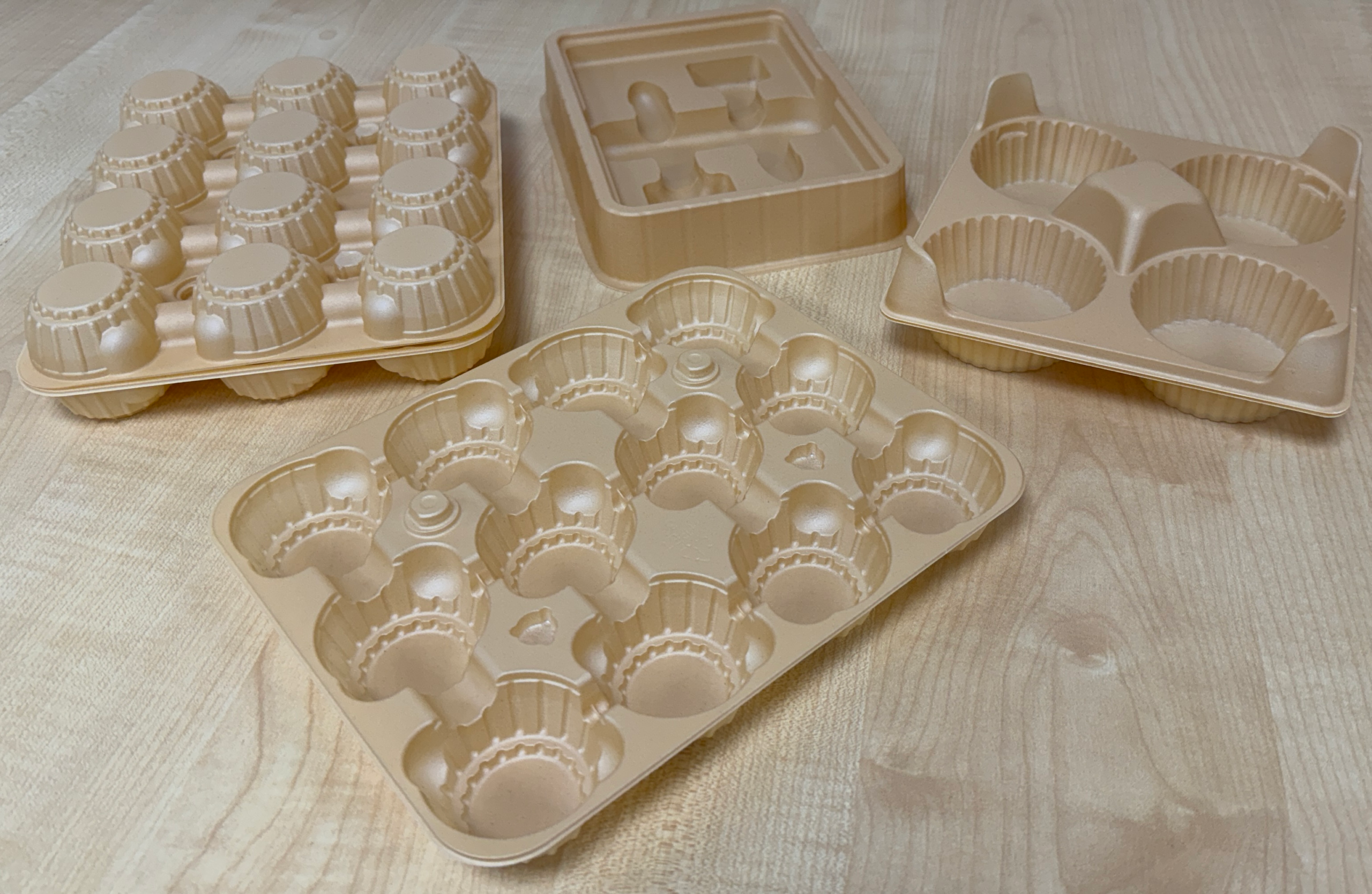
Developed by Helsinki-based Sulapac, the material combines biodegradable biopolymers with upcycled wood flour sourced from sawmill side streams in Northern Europe. It is designed for thermoforming and can be used in packaging inserts, product trays, retail displays, cake trays, food containers, drinking cups, lids, logistics trays, and single-use food packaging.
The material is positioned as an alternative to conventional plastics such as polystyrene, polypropylene, and PLA in selected uses. It retains shape, supports click-in and click-out functionality, resists collapse in water, and can be formed to detailed product requirements.
Sulapac Flow 1.7 has been developed for existing thermoforming lines, with no new equipment required. It can run through in-line and offline thermoforming processes, performs in both light and heavy gauge applications, and is compatible with tooling designed for PET or PS, subject to normal allowances for shrinkage and dimensional precision.
Processing performance is central to the material’s appeal. Sulapac says Flow 1.7 behaves similarly to PET and has a wider processing window than many bio-based alternatives. Its natural insulating properties allow lower thermoforming temperatures than conventional plastics, while shorter heating times can reduce energy use by up to 20%.
The material contains approximately 20% wood-based content and complies with FDA and EU food-contact regulations for all food types, subject to relevant restrictions and conditions of use. Sulapac says it is mechanically and chemically recyclable, industrially compostable in appropriate facilities, and free from PFAS. The company also states that the material does not leave permanent microplastics.
Macpac’s adoption gives UK customers access to the material through an established independent thermoforming specialist. The company supplies bespoke thermoformed packaging and has developed the addition as part of its wider work on material choice, sustainability, and production flexibility.
“Adding Sulapac Flow to our range of packaging materials reflects Macpac’s on-going commitment to helping clients meet their environmental targets and provide the required functionality and protection for their products,” said Graham Kershaw, managing director of Macpac.
“As a forward-thinking thermoformed packaging manufacturer, it is important that we review and expand our material offering in response to the changing needs of our global client base and to meet our own ambitious long-term growth strategy and sustainability goals.”
Materials that can run on existing thermoforming infrastructure have a clearer route into commercial trials than options requiring major process redesign. With food-contact clearance, tooling compatibility, and lower heating demand, Sulapac Flow gives Macpac a new option for customers trying to reduce reliance on conventional fossil-based plastics without abandoning thermoformed pack performance.