IN Brief:
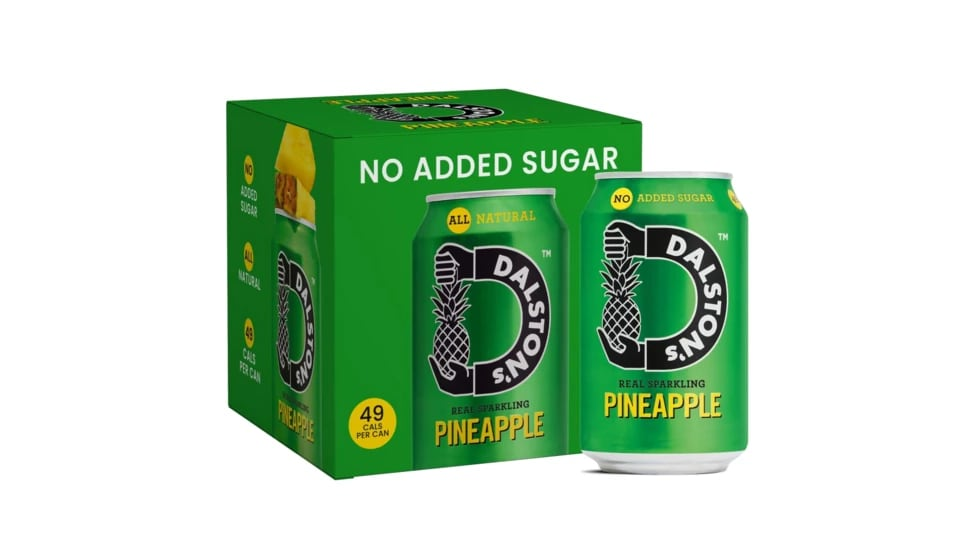
- Dalston’s Pineapple Soda single cans and multipacks are being recalled.
- The affected batches carry best-before dates of 4 August 2027.
- The incident highlights pressure on beverage can integrity, pressure control, and packaging QA.
Dalston’s Soda Company is recalling selected Dalston’s Pineapple Soda products after concerns that cans may break apart unexpectedly and leave sharp edges.
The recall covers 330ml single cans with batch code 037130 and 4x330ml multipacks with batch code 037129. Both formats carry a best-before date of 4 August 2027. Consumers have been advised not to open the product, not to return it to store, and to dispose of it safely in an external waste bin while avoiding unnecessary handling.
The Food Standards Agency lists the risk as a physical injury hazard rather than a conventional contamination or labelling issue. The concern is that cans may break apart unexpectedly, creating sharp edges that could cause injury. Stores selling the affected product are displaying point-of-sale notices, with customers directed to contact Dalston’s Soda Company for a refund.
Beverage safety is often discussed through formulation, microbiology, allergens, and labelling, yet the pack is part of the product system. A carbonated soft drink depends on the relationship between beverage composition, dissolved gas, fill level, seam integrity, can body performance, storage conditions, and distribution handling. When that system fails, packaging can become the immediate hazard.
Aluminium cans are a mature packaging format, but the production controls behind them are exacting. High-speed filling, seaming, carbonation control, pressure resistance, lacquer performance, transport vibration, palletisation, secondary packaging, and temperature exposure all influence final pack behaviour. A failure in one area can emerge as swelling, leakage, seam failure, rupture, or loss of integrity.
Dalston’s affected product is a fruit soda rather than a live fermented drink, but the recall comes as beverage brands continue to add natural, functional, low-sugar, and lightly processed products to the market. Product developers are reducing sugar, avoiding artificial ingredients, adding juice or botanical systems, changing acid profiles, and working with new flavour bases while still expecting stable carbonation and long shelf life.
For manufacturers, can performance starts well before filling. Empty can specification, incoming inspection, depalletisation, rinsing, filling temperature, CO2 level, seam set-up, closure checks, coding, pasteurisation or tunnel processing where used, and finished goods handling all create control points. Packaging quality assurance has to sit beside product quality assurance, not downstream from it.
Recent work by Canovation and CANPACK to move resealable aluminium cans toward pilot deployment shows how much engineering still sits inside a format that can appear simple from the outside. Resealability, pressure performance, compatibility with existing filling infrastructure, and consumer convenience all have to be balanced. The Dalston recall sits at the safety end of the same engineering spectrum, where pack structure, closure, filling, and product behaviour must remain tightly controlled.
The recall also reflects the supply-chain complexity behind many challenger beverage brands. Smaller brands often scale through contract packing and wider retail distribution, giving them access to specialist equipment and quality systems without owning the full production base. That model can work well, but it depends on strong communication between brand owner, co-packer, packaging supplier, and retailer. Product specifications, process limits, packaging tolerances, and complaint trends need to move quickly through the chain.
Recall execution becomes more sensitive when a pack may be unsafe to handle. Standard consumer advice often asks shoppers to return an affected item to store. In this case, consumers are told not to return the cans, but to handle them as little as possible and dispose of them externally. That distinction changes how retailers, customer service teams, and public notices communicate the risk.
Physical hazards from packaging can also create a sharp brand response because the risk is tangible. A contaminant risk may be invisible to consumers, but a can that could break apart is easily understood. Companies have to identify root cause, narrow the affected range, confirm whether other products are exposed, and communicate clearly without encouraging unnecessary handling of affected stock.
For beverage plants, packaging integrity checks should be linked to trend monitoring as well as pass/fail controls. Seam measurements, pressure tests, line rejects, can damage, fill variation, complaint data, and warehouse incidents can reveal a developing problem before it becomes a recall. Data from co-packers and suppliers only protects the product when it is reviewed as part of the safety system.
The recall remains limited to specified Pineapple Soda batches, but the production issue it exposes is broader. As beverage innovation becomes more varied and brands move through more complex manufacturing routes, can integrity remains a core safety requirement. A successful drink is not only the liquid inside the pack; it is the complete system that keeps that liquid safe, stable, sealed, and fit to handle.