IN Brief:
- Buttermilk Confections is recalling Honeycomb Blast Choc Bar because it contains undeclared milk casein.
- The affected product is the 45g bar with batch code BM26105 and a best-before date of 15 June 2027.
- The recall underlines the sensitivity of allergen control in plant-based and free-from confectionery manufacturing.
Buttermilk Confections is recalling its Honeycomb Blast Choc Bar after milk casein was identified in a product that did not declare milk on the label.
The affected product is the 45g Honeycomb Blast Choc Bar with batch code BM26105 and a best-before date of 15 June 2027. The Food Standards Agency has issued an allergy alert, warning that the product may pose a health risk to anyone with an allergy or intolerance to milk or milk constituents.
Buttermilk Confections is recalling the affected product from customers and has issued point-of-sale notices. Customers with a milk allergy or intolerance have been advised not to eat the product and to return it to the store from which it was bought for a full refund.
The incident is particularly sensitive because the product sits in the plant-based confectionery category, where consumer trust depends heavily on allergen controls, label accuracy, and separation of dairy and non-dairy production risks. Plant-based positioning does not reduce the requirement for allergen verification; it increases the reputational and safety consequences when controls fail.
Milk is one of the UK’s regulated allergens, and casein is a milk protein. Undeclared milk can trigger serious reactions in sensitive consumers, with risk arising not only from deliberate dairy ingredients but also from cross-contact, contaminated raw materials, shared equipment, rework, incorrect packaging, and label control failures.
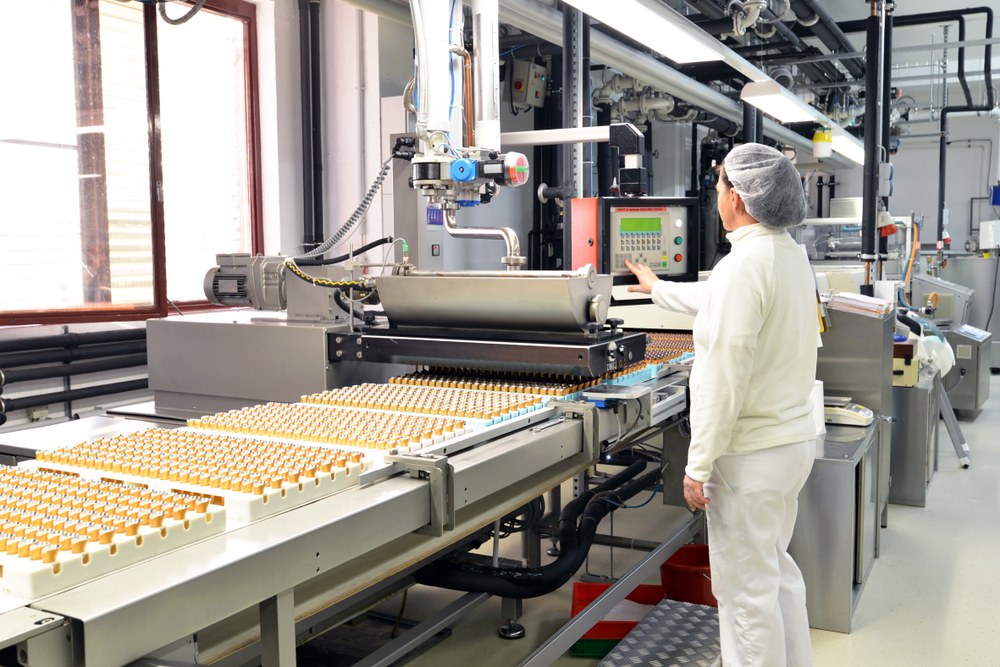
Confectionery manufacturing carries several specific vulnerabilities. Chocolate and compound coating lines can handle dairy and non-dairy recipes, inclusions, fillings, wafers, honeycomb, nuts, flavour systems, and emulsifiers, often with multiple changeovers. Even where a product is formulated without milk, the production environment has to control residues, supplier specifications, cleaning validation, line clearance, and packaging verification.
Allergen recalls frequently begin with operational detail rather than a single dramatic breakdown. A wrong film reel, a missed line clearance, a contaminated ingredient, an unverified supplier change, or an incomplete cleaning step can be enough to put undeclared allergen into market. The recall of Second Nature Brands snack packs after undeclared ingredients entered mixed packs showed how packaging, production, and labelling controls can quickly become food-safety controls.
The plant-based sector faces added scrutiny because many consumers select products for medical, dietary, ethical, or religious reasons. Vegan positioning and allergen-safe positioning are not identical, but shoppers can associate non-dairy branding with lower milk risk. Manufacturers therefore need clear controls around claims, precautionary labelling, and factory segregation to avoid creating confidence that the process cannot support.
Supplier assurance is a critical part of that system. Ingredient suppliers may change processes, sites, raw material sources, or cleaning procedures, and those changes can introduce allergen risks if they are not communicated and assessed. Finished-product testing can provide an additional check, but it cannot replace validated controls throughout procurement, production, and packing.
Batch-level traceability has limited the scope of the recall. Identifying the affected batch code and best-before date allows retailers and customers to remove specific stock rather than withdrawing a wider range unnecessarily. In fast-moving confectionery channels, precise traceability can reduce disruption while protecting consumers.
Retailers will expect plant-based and free-from manufacturers to demonstrate robust allergen management, including segregation, cleaning validation, label checks, supplier audits, testing protocols, and incident response. The cost of a recall extends beyond the product removed from sale, reaching brand confidence, retailer relationships, technical-team workload, and future listing discussions.
Buttermilk’s recall appears narrow at batch level, but it sits within a broader manufacturing challenge. As confectionery businesses expand plant-based ranges and work with more complex inclusion systems, allergen controls have to keep pace with product development. Free-from credibility is built through raw material control, verified cleaning, accurate labelling, and disciplined line management.