IN Brief:
- Waitrose has installed new milk tanks at Leckford Estate after unhomogenised milk production rose by 74% in three years.
- Total production capacity has increased by 95% compared with 2023 levels.
- The investment shows how process differentiation is creating value in fresh dairy.
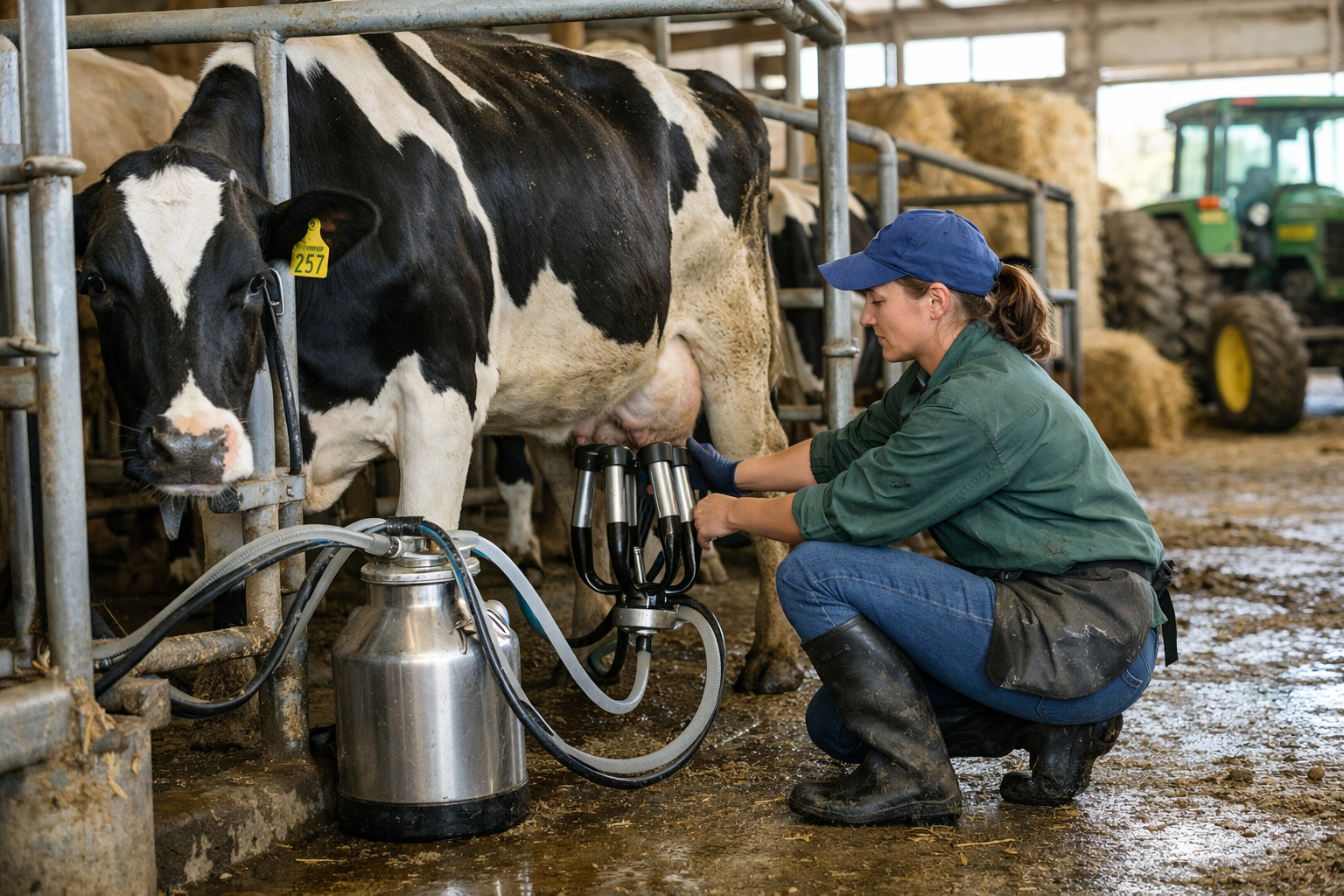
Waitrose has installed new milk processing equipment at its Leckford Estate in Hampshire after demand for unhomogenised organic whole milk rose sharply.
Production of Waitrose Duchy Organic Unhomogenised Milk at the estate has increased by 74% over three years. Following the installation of new milk tanks, total production capacity has risen by 95% compared with 2023 levels, giving the retailer’s farm operation more room to meet demand for added-value fresh dairy.
Unhomogenised milk is pasteurised but does not pass through the high-pressure homogenisation stage used to break down fat globules and distribute cream evenly through the product. That process difference allows cream to rise naturally and gives the milk a texture and sensory profile closer to traditional whole milk formats.
The investment is notable because fresh liquid milk is often treated as one of the most commoditised areas of dairy. Retail pricing pressure, high volumes, short shelf life, and chilled distribution requirements leave limited room for margin expansion. Waitrose’s decision to add capacity shows how processing choices can create value even in a mature category.
Sales of Waitrose Duchy Organic British Free Range Unhomogenised Whole Milk rose by 29% over the past year, while No.1 Organic Unhomogenised Ayrshire Whole Milk increased by 34%. Online search interest has also strengthened. The manufacturing challenge is to convert demand into repeatable production without weakening quality, shelf life, or line efficiency.
Fresh milk processing depends on tight control of intake, pasteurisation, cooling, filling, hygiene, storage, and distribution. Adding capacity is not simply a question of installing larger tanks. The site must manage milk flows, cleaning cycles, segregation, food safety checks, and dispatch timing while preserving the characteristics that distinguish the product.
The move also connects to wider dairy innovation. Much of the category’s growth is coming from higher-value formats: high-protein products, functional beverages, cultured dairy, premium milk, and products positioned around minimal processing. These formats place more emphasis on process control and differentiation than on commodity volume alone.
Interest in unhomogenised milk has benefited from demand for whole foods and products perceived as less heavily processed. The product is still processed for safety, with pasteurisation remaining essential. Its value lies in selecting the processing steps needed for safety and quality while avoiding those not required for the intended product profile.
The investment points to a wider commercial lesson for dairy processors. Added value does not always require complex ingredient systems or novel technology. Sometimes it comes from preserving a characteristic that standardisation removed. In this case, the distinction is physical structure and sensory quality rather than fortification or reformulation.
Capacity expansion also strengthens supply reliability. A niche premium product can be managed with limited volume, but once demand grows, under-capacity risks missed sales and operational pressure. New tanks give the Leckford Estate more flexibility to handle production growth while maintaining chilled-chain discipline.
Fresh dairy is moving in two directions at once. Commodity milk remains under pressure from price competition, while premium and process-led formats are creating pockets of value. Processors that support those higher-value formats with equipment, quality systems, and supply planning will be better placed to scale without losing the attributes that created demand in the first place.