IN Brief:
- Nestlé’s European Waters business remains under scrutiny as the group considers a partial or broader disposal.
- Investigations and environmental allegations have increased complexity around valuation, warranties, and buyer risk.
- The case highlights how water sourcing, treatment controls, and regulatory identity now affect beverage asset value.
Nestlé is facing a more complex path towards any sale of its Waters business as legal, environmental, and regulatory issues continue to weigh on the division.
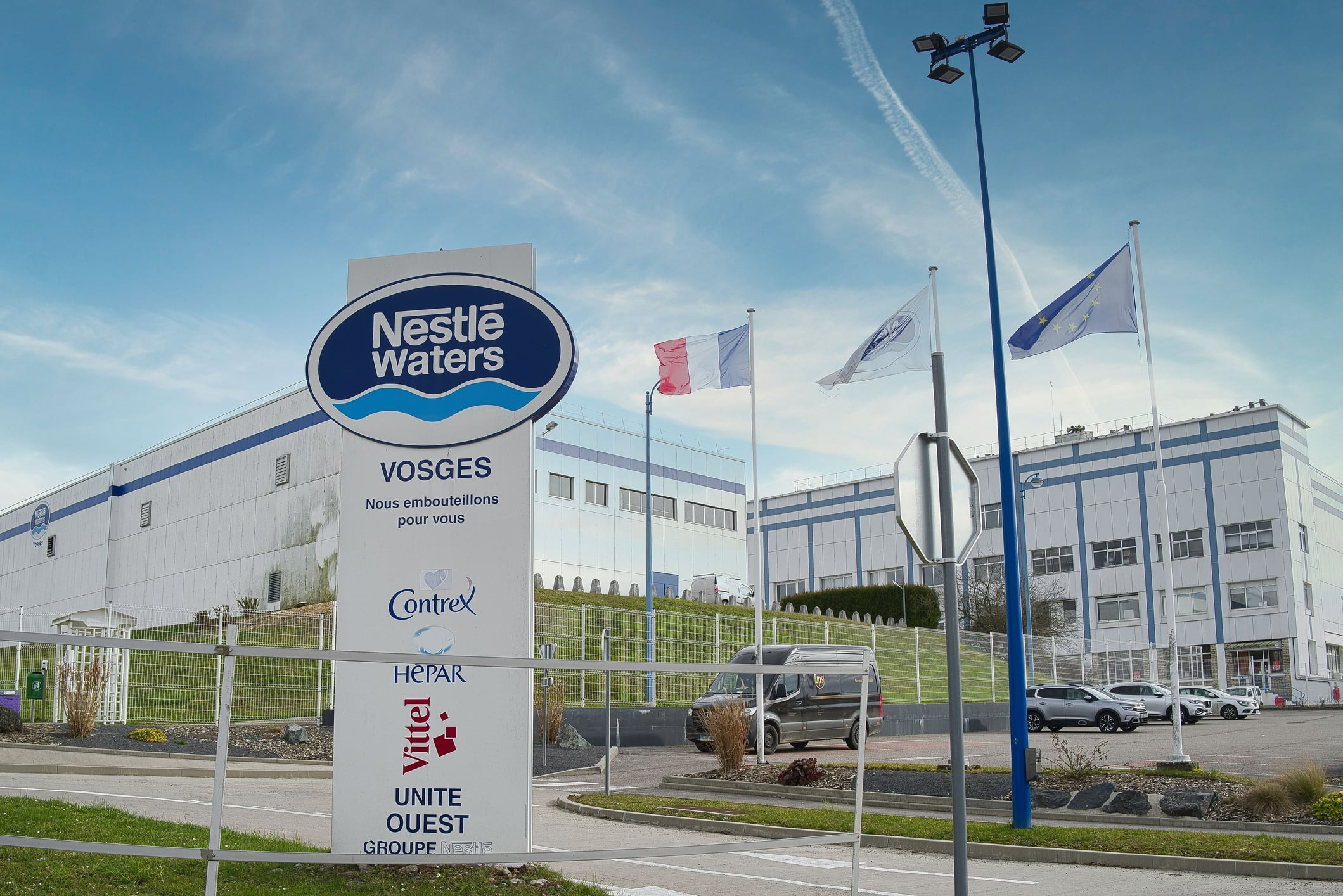
The group has been exploring options for its Waters portfolio, with industry attention focused on whether Nestlé pursues a partial disposal, a staged transaction, or a fuller exit from the category. The business includes internationally recognised bottled water brands, but recent scrutiny around operations in France has raised questions over buyer risk, valuation, warranties, and post-transaction operating requirements.
The European Waters business has been linked to a reported valuation of around €5bn, although that figure now sits beside a rising compliance burden. French investigations have examined treatment practices and alleged consumer deception connected with natural mineral water. Separate environmental allegations around historic plastic waste have added further pressure and may influence how potential buyers approach diligence.
Natural mineral water is not a standard beverage category where processing flexibility can be applied freely. Its legal identity depends on source, composition, permitted treatment, and labelling. Technologies familiar in other beverage plants can become sensitive when used in a product whose value depends partly on being natural, stable, and tied to a protected source.
Filtration, microbiological control, water quality monitoring, packaging integrity, and contamination prevention are normal parts of beverage production. In natural mineral water, those same technical decisions sit close to the regulatory definition of the product itself. If treatment methods are found to conflict with that identity, the consequences can extend from labelling and consumer trust into asset value, brand equity, and access to market.
The pressure has already reached operational level, with raids at Perrier-linked sites sharpening attention on mineral water compliance, treatment controls, and the legal definition of natural mineral water. The potential sale process now shows how those same questions can move directly into corporate strategy. A water source, bottling site, or brand cannot be valued only by sales, margin, and distribution if unresolved regulatory exposure sits beneath it.
Buyers are likely to focus on indemnities, remediation costs, licence conditions, extraction rights, treatment practices, quality assurance records, and historic liabilities. The commercial attraction of brands such as Perrier, Vittel, Contrex, and San Pellegrino has to be balanced against the operational and legal cost of stabilising the business. Due diligence becomes more technical than a conventional consumer brand transaction.
Water security, source protection, environmental stewardship, and packaging waste are now central operating risks in beverage manufacturing. A bottled water business depends on long-term permission to extract, bottle, transport, and market a resource that is under growing public and regulatory pressure. Any weakness in governance around those stages can quickly affect trust.
Packaging remains part of the same risk profile. Bottled water has long been exposed to plastic waste criticism, and environmental claims around packaging, recycling, and circularity are now closely watched. Historic disposal issues, if tied to the same business under review, could broaden buyer concerns beyond production controls into environmental liabilities and brand recovery costs.
Nestlé’s broader strategy has been to focus on priority categories including coffee, nutrition, petcare, and food and snacks. Waters may sit outside that sharper portfolio logic, but exiting a category under scrutiny is rarely straightforward. The more sensitive the compliance history, the more detailed the transaction structure becomes.
The outcome will be watched across the beverage sector because it shows how quickly manufacturing controls can alter strategic optionality. Natural mineral water depends on technical discipline, documentary proof, and regulatory trust. When that trust is challenged, the issue no longer sits inside the quality department; it changes the price, the buyer pool, and the future shape of the business.