IN Brief:
- Sabert Corporation Europe has launched a redesigned paper cutlery range for takeaway, catering, workplace dining, and food-to-go.
- The range features stronger neck performance, reinforced tines, improved grip, and smoother ergonomics.
- Manufacturing improvements include more efficient material use and reintroduction of some production waste into the pulping process.
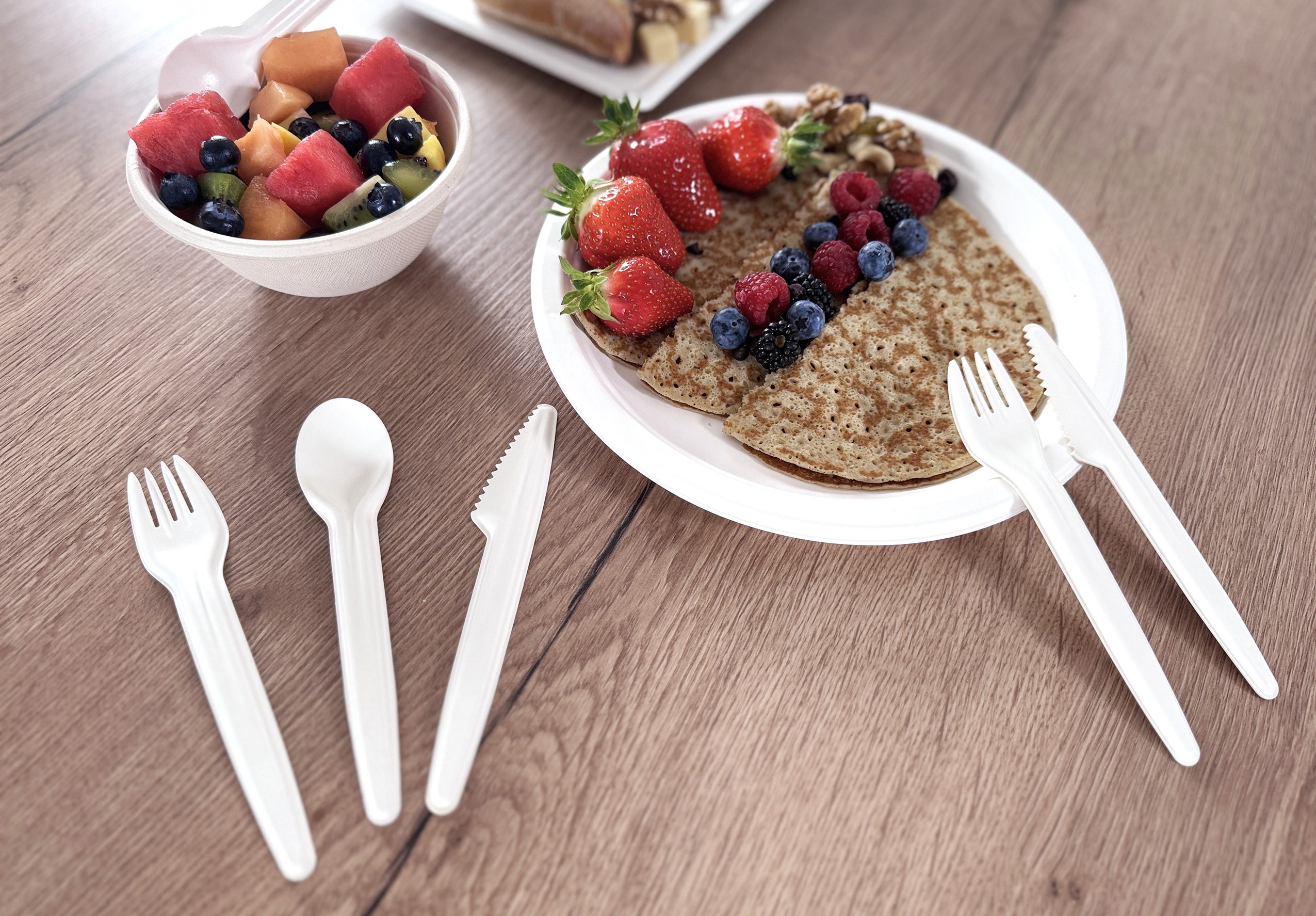
Sabert Corporation Europe has launched the latest generation of its paper cutlery range, with redesigned fibre-based forks, knives, and spoons aimed at foodservice, takeaway, workplace dining, catering, and food-to-go applications.
The updated range has been developed to improve strength, grip, ergonomics, and eating comfort while retaining end-of-life credentials. The products remain recyclable where suitable collection systems exist and are certified TÜV OK Compost Home, giving operators a fibre-based alternative for service environments where plastic reduction remains a priority.
The redesign includes stronger neck performance, reinforced tines, and a revised size and shape intended to create a more balanced feel in use. Sabert has also focused on surface smoothness and handling, addressing a common weakness of some fibre-based cutlery formats: the perception that more sustainable alternatives can feel rough, weak, or awkward compared with conventional plastic.
Kévin Fidalgo, Product & Innovations Manager at Sabert Corporation Europe, said: “Customers are no longer willing to compromise between sustainability goals and product performance. This latest development delivers a stronger, smoother and more comfortable eating experience, helping operators meet evolving customer expectations.”
The company has also adjusted the manufacturing process to use materials more efficiently. A proportion of production waste is reintroduced into the pulping process at Sabert’s manufacturing site, supporting material efficiency while maintaining quality requirements for finished products.
Isabelle Ernotte, Quality, Environment, Health & Safety Manager at Sabert Corporation Europe, said: “Continuous improvement is an important part of our product development approach. We’ve further optimised our manufacturing process and a proportion of production waste is reintroduced into the pulping process at our manufacturing site. This supports efficient use of materials while maintaining the high quality standards our customers expect.”
Foodservice packaging is moving through a demanding transition. Operators want alternatives to fossil-based single-use plastic, but many fibre-based formats have faced scrutiny over durability, moisture resistance, texture, disposal routes, and cost. Cutlery is especially unforgiving because performance is judged immediately in the hand and during use.
Recent movement across the packaging sector shows how quickly operators are being pulled between several sustainability routes. Reusable packaging infrastructure is expanding in some areas, while speciality paper price increases have reinforced the cost pressure facing paper-based formats. Sabert’s launch sits between those two forces: demand for lower-plastic solutions is rising, but material efficiency and performance remain decisive.
Paper cutlery has to do more than satisfy a material preference. Forks need strength at the neck and tines, knives need enough rigidity to handle real foods, and spoons need surface smoothness and shape consistency. Products used across takeaway, workplace dining, and catering also need to survive storage, handling, transport, and high-volume service without excessive breakage.
The process improvements are therefore as relevant as the product redesign. Reintroducing some production waste into the pulping process supports more efficient material use, although the finished product still depends on real-world collection, recycling, or composting infrastructure. Packaging sustainability increasingly depends on the complete system rather than a single material choice.
The latest Sabert range responds to a practical barrier facing fibre-based foodservice products. A compostable or recyclable claim will not secure repeat use if the cutlery performs poorly. Strength, smoothness, ergonomics, and reliability are now part of the sustainability case because they determine whether operators can replace plastic without downgrading the customer experience.