IN Brief:
- Campaigners have criticised delays to the UK Government’s proposed ban on sales of high-caffeine energy drinks to children.
- The policy would affect drinks containing more than 150mg of caffeine per litre and sold to under-16s.
- Manufacturers and retailers face continued uncertainty around formulation, labelling, age verification, and responsible marketing controls.
The UK Government is facing renewed pressure to bring forward legislation restricting the sale of high-caffeine energy drinks to children.
Health organisations, academics, youth campaigners, and public figures have criticised the delay, marking more than 700 days since the policy was pledged in the 2024 King’s Speech. The proposed restriction would ban direct sales of high-caffeine energy drinks to under-16s, with the relevant threshold previously set around products containing more than 150mg of caffeine per litre.
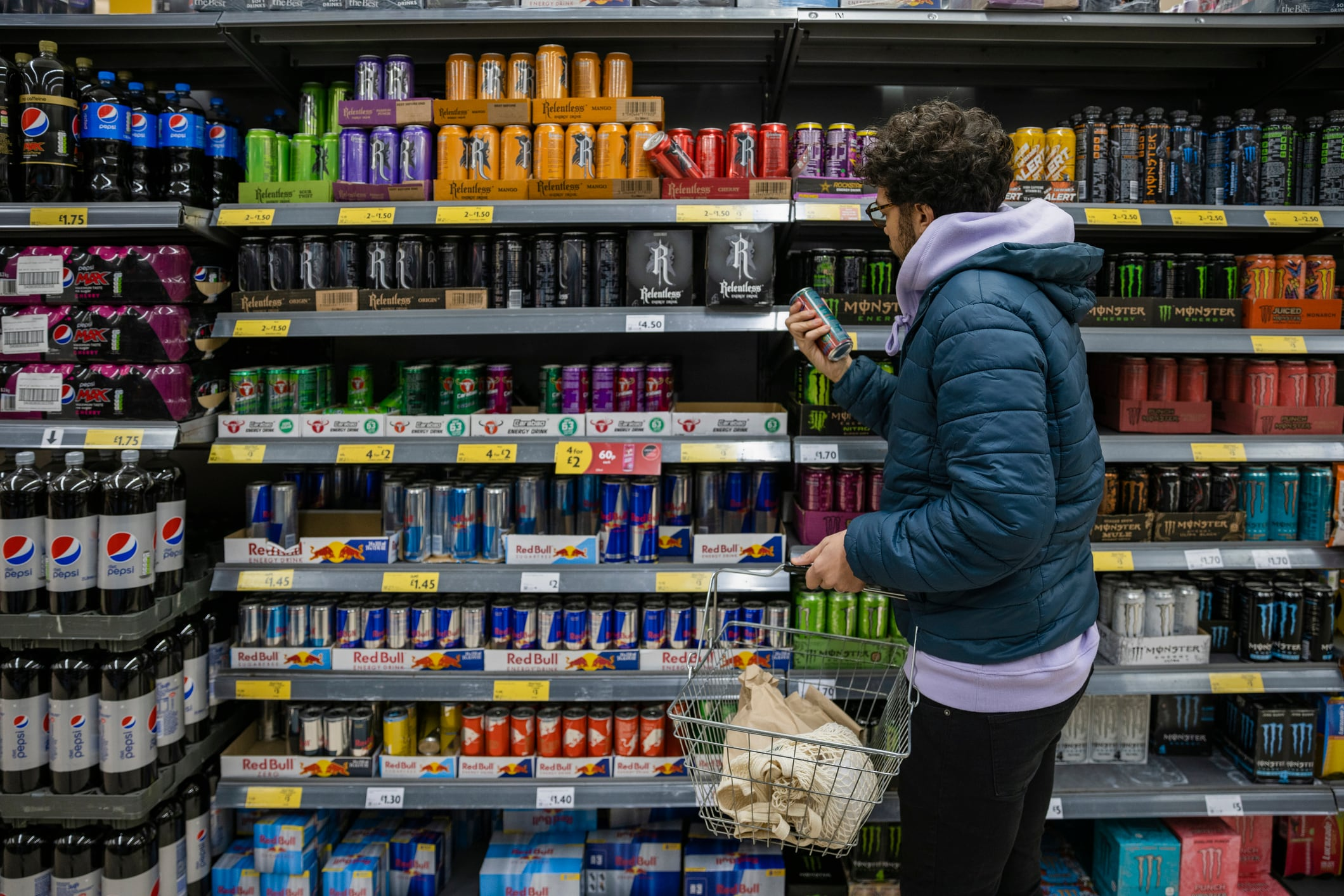
High-caffeine energy drinks already carry warning labels stating that they are not suitable for children, and many supermarkets apply voluntary restrictions. Campaigners argue that voluntary controls leave gaps across smaller retailers, cafes, convenience outlets, and online channels, creating uneven access and an uneven competitive environment.
The delay prolongs uncertainty rather than removing risk. A formal ban would affect labelling, product range structures, retail execution, sales channels, customer guidance, marketing controls, and potentially pack architecture. Manufacturers with high-caffeine products need to understand which SKUs fall within the threshold, how age controls will be implemented, and whether reformulation, range segmentation, or additional compliance support will be needed.
The issue sits inside a fast-changing soft drinks market. Energy drinks have expanded well beyond their original use cases, competing with functional beverages, hydration drinks, sports nutrition formats, and lifestyle-led canned drinks. Better-for-you beverage innovation has also accelerated, with products built around electrolytes, nootropics, vitamins, collagen, probiotics, fibre, and reduced sugar.
Fermentation-led and functional beverages are already moving deeper into mainstream distribution, with recent leadership changes at Remedy’s UK and European business pointing to the category’s growing commercial structure. Regulation around high-caffeine energy drinks could accelerate that shift, especially if brands look for lower-risk formulations that preserve adult appeal without youth access concerns.
The proposed under-16 ban would not automatically remove energy drinks from the market. Instead, it would create a more formal age-restricted retail environment. Much of the operational burden would sit with retailers, but manufacturers still have work to do. Product data, warning statements, customer communications, and sales channel policies must be clear enough to support compliance at the shelf and online.
Reformulation may become an option for some brands. Reducing caffeine below the regulatory threshold could allow products to avoid age-restricted classification, although that changes the functional proposition. Reformulation also affects taste, sweetness balance, bitterness, acidity, flavour masking, and consumer expectation. Brands built around stimulation may need new product architecture rather than a simple technical adjustment.
Labelling is another pressure point. Products already carrying warning statements may still need changes if age-restricted legislation specifies wording, positioning, or visibility. Any pack update creates cost and timing issues, particularly for companies holding large printed packaging inventories or operating across multiple markets. Retailers may also require product data updates before listing or continuing to range affected SKUs.
The prolonged policy gap is awkward for manufacturers because it creates an extended period of expectation without full implementation detail. Companies cannot ignore a promised ban that remains politically live, but they also cannot finalise changes without firm text and timing. A cautious approach means mapping exposure, preparing artwork and formulation scenarios, reviewing claims and youth-facing marketing, and keeping retailers briefed on likely compliance changes.
High-caffeine beverages aimed at or easily accessed by children remain under sustained scrutiny. Caffeine thresholds, warning labels, age verification, and responsible marketing are now part of beverage manufacturing risk. The policy delay has not softened that direction; it has merely stretched the period in which the sector has to prepare without certainty.