IN Brief:
- Hébert Group is scaling Dry Molded Fiber tray and lid production with Andritz at its Orgelet site in France.
- The production set-up supports food, dairy, cosmetics, and reuse applications using cellulose-based fibre forming technology.
- The project reflects rising demand for packaging formats that reduce plastic dependence while remaining suitable for industrial production.
Hébert Group is scaling production of Dry Molded Fiber trays and lids in France through a collaboration with Andritz, strengthening capacity for fibre-based packaging in food, dairy, cosmetics, and reuse applications.
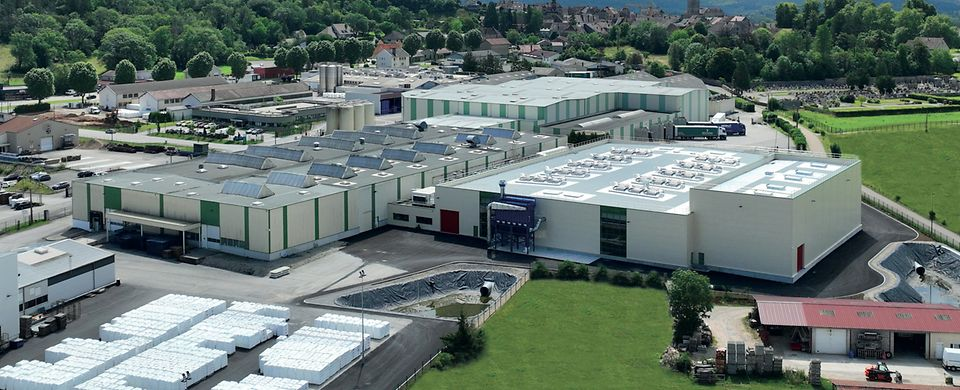
The French packaging specialist has installed dedicated production capacity at its Orgelet site, using moulded cellulose fibre technology to manufacture rigid formats that can reduce reliance on plastic in selected applications. Andritz has supported the project through equipment supply, commissioning, process optimisation, and line support.
The production arrangement includes fibre preparation and moulding equipment designed to support repeatable output at industrial volumes. The current focus is on trays and lids, while deeper-drawn products are also being assessed to widen the number of applications that dry moulded fibre systems can address.
Dry Molded Fiber has gained interest because it reduces the water intensity associated with some traditional fibre-forming processes. The technology uses cellulose fibres to form packaging with lower water and energy requirements than conventional wet moulding approaches, while retaining the broader material logic of paper-based packaging: renewable feedstocks, recyclability where systems exist, and a route away from fossil-based single-use plastic.
Food producers and foodservice operators are under sustained pressure to reduce plastic packaging, but the shift only works when alternatives survive filling, stacking, distribution, storage, and use. Fibre-based packaging has to be produced with stable dimensions, reliable strength, acceptable barrier performance, and compatibility with downstream packing operations.
The move sits within a wider packaging market shaped by material substitution, reusable systems, paper price pressure, and tightening sustainability requirements. Rising speciality paper costs, including the increases already affecting paper-based packaging supply, have made fibre efficiency and process stability more important. Investment in reusable packaging infrastructure also shows how brand owners and operators are pursuing several routes at once rather than relying on one replacement material.
That wider context makes the Hébert-Andritz project a practical test of manufacturing maturity. Fibre packaging can only take volume from plastic when it functions as an engineered production system. Cycle times, forming accuracy, tooling durability, moisture behaviour, lidding compatibility, and finished-pack handling all determine whether a format can move beyond pilot and niche applications.
Food contact and chilled use add further constraints. Packs may need to withstand moisture, grease, cold storage, stacking loads, and transport vibration without losing shape or creating failures on filling and sealing lines. Any variation in geometry can create production stoppages or quality rejections, especially where automated handling is used.
The technical development of dry moulded fibre is therefore being shaped as much by production reliability as by sustainability claims. Lower-plastic packaging will not be adopted at scale simply because it is fibre-based; it has to meet operational standards that were developed around mature plastic formats over decades.
Hébert Group’s collaboration with Andritz brings that challenge into sharper focus. The work is centred on commissioning, process control, and capacity development, the less visible elements that often decide whether a packaging material becomes a mainstream industrial option. As food packaging continues to move away from single-use plastic, projects that improve fibre forming at production scale will carry increasing weight.