IN Brief:
- adapa has introduced PaperFlow P-type for recyclable paper-based food flowpacks.
- The material is designed for HFFS and VFFS machinery, including older production lines.
- The launch reflects the push to balance PPWR readiness, recyclability, barrier performance, and line efficiency.
adapa Group has extended its PaperFlow P-type packaging family, positioning the paper-based material as a recyclable option for food manufacturers using horizontal and vertical flow-wrapping machinery.
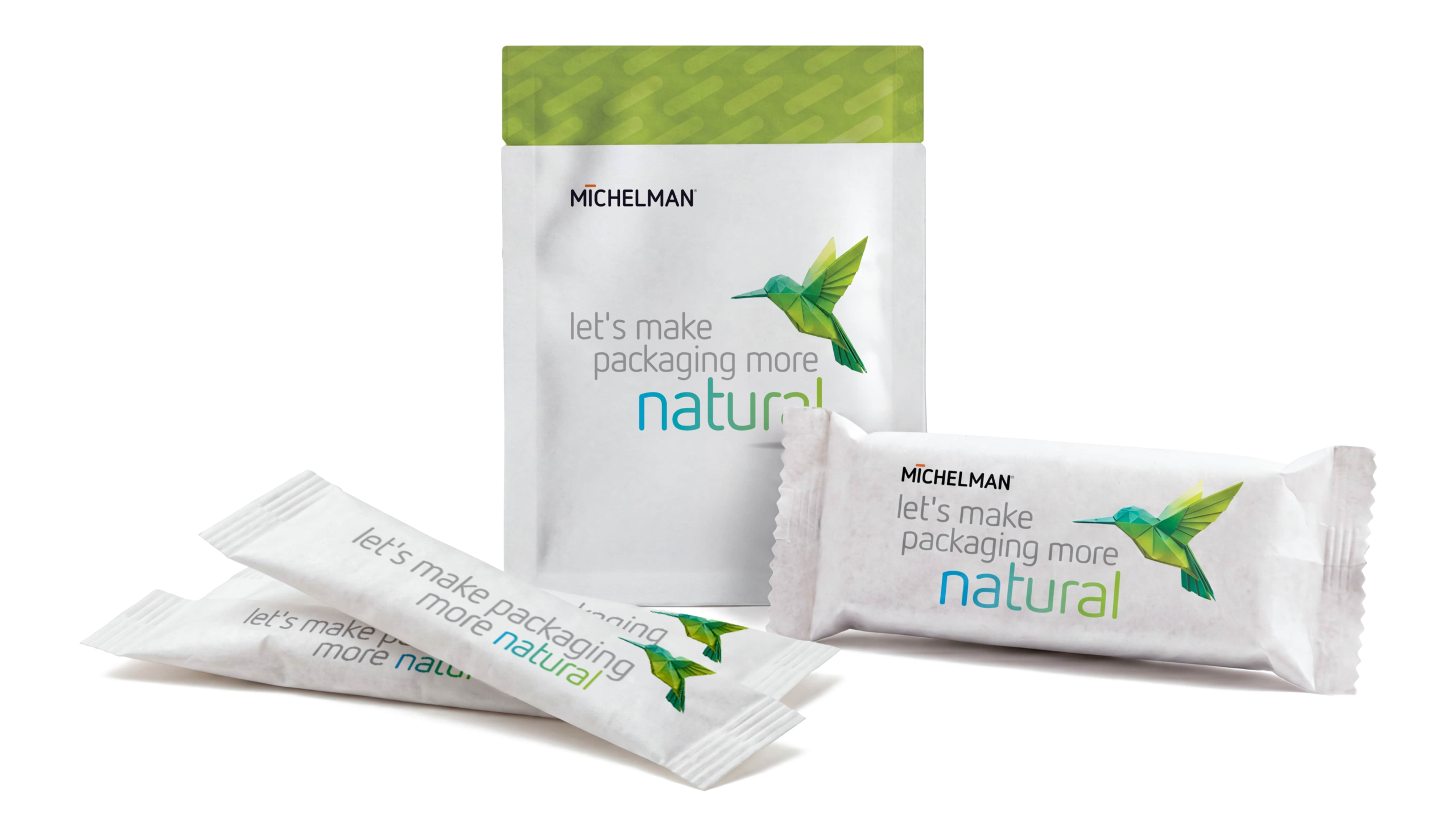
Developed for categories including snacks, crisps, chocolate, biscuits, cereals, and instant coffee refills, the material is available in 70gsm, 80gsm, and 90gsm paper formats. Standard and high-barrier versions allow pack structures to be matched to product weight, shelf-life needs, moisture sensitivity, and protection requirements.
PaperFlow P-type has passed the Confederation of European Paper Industries recyclability test, supporting compatibility with standard paper recycling streams. The structure combines high paper content with an ultra-thin BOPP support layer, designed to provide the dimensional stability and sealing behaviour needed for industrial flow-wrapping applications.
That engineering detail is central to the proposition. Many paper-based packaging concepts perform well in trials before struggling on high-speed equipment, where stiffness, tearing, seal consistency, tension control, and product protection can quickly weaken the commercial case. adapa has designed PaperFlow P-type for existing HFFS and VFFS machinery, including older lines, with fewer adjustments than unsupported paper structures typically require.
The material is also available as a pre-made pouch with a reclosable zipper feature, extending the format beyond simple single-use flowpacks. In snacks, bakery, cereals, and confectionery, reclosure and portion control remain important product attributes, particularly where packs are expected to combine convenience with a stronger end-of-life story.
Packaging engineers are now dealing with several pressures at once. Regulation is pulling packaging towards higher recyclability and lower unnecessary material use, while retailers and brand owners are reducing reliance on conventional fossil-plastic formats. At the same time, production teams still need material that prints, seals, codes, protects, packs, ships, and opens reliably. A more recyclable structure that creates persistent machine downtime simply moves waste upstream.
Recent fibre-based packaging developments show how quickly material decisions become factory decisions. Paranova’s St Neots expansion has added capacity for fibre-based food-to-go packaging, while VTT’s cellulose film development points to new routes for replacing or reducing plastic in flexible applications. PaperFlow P-type sits close to those developments, but with a direct focus on high-volume flow-wrapping lines already installed across food manufacturing.
Snacks, biscuits, cereals, and confectionery place demanding conditions on flexible packs. Moisture protection, grease resistance, aroma retention, oxygen control, print quality, retail handling, and pack strength all affect product quality before recyclability enters the discussion. A paper-based structure that cannot maintain seal quality or survive line handling may create greater losses than the material saving can justify.
The use of a thin BOPP support layer reflects the compromise now shaping much of the packaging market. Pure fibre structures have appeal from a material-simplification perspective, but many food applications still need polymer functionality to deliver barrier performance and runnability. Hybrid paper structures that can pass recognised recyclability testing while retaining line performance are likely to become a larger part of the converter and brand-owner toolkit.
Producer responsibility fees and PPWR preparation will make that evidence more commercially significant. Work around EPR cost reduction has already brought recyclability ratings, pack weight, and material choices into financial planning. A material that improves recyclability but undermines throughput will struggle. A structure that supports both fee exposure and factory performance has a clearer route to adoption.
Supplier documentation will also carry more weight as regulation tightens. Food-contact suitability, recyclability test results, fibre content, barrier data, print performance, and machinery compatibility need to be available before procurement teams commit. Packaging decisions are moving away from broad sustainability language towards files of technical evidence that can withstand customer, regulator, and internal engineering scrutiny.
PaperFlow P-type therefore lands in a market that has moved beyond demonstration projects. Food manufacturers are no longer asking only whether paper-based alternatives exist. They are asking whether those alternatives can be introduced without capital-heavy line changes, avoidable downtime, or quality risk. In flow-wrapped categories, the answer will depend less on the word “paper” and more on how the structure behaves at speed.