IN Brief:
- BW Packaging has expanded the Hayssen X850 multi-jaw flow wrapper into European markets.
- The system can run at up to 300 packs per minute and is designed for high-seal-integrity food applications.
- European processors are selecting packaging machinery around speed, hygiene, gas flushing, and recyclable-film compatibility.
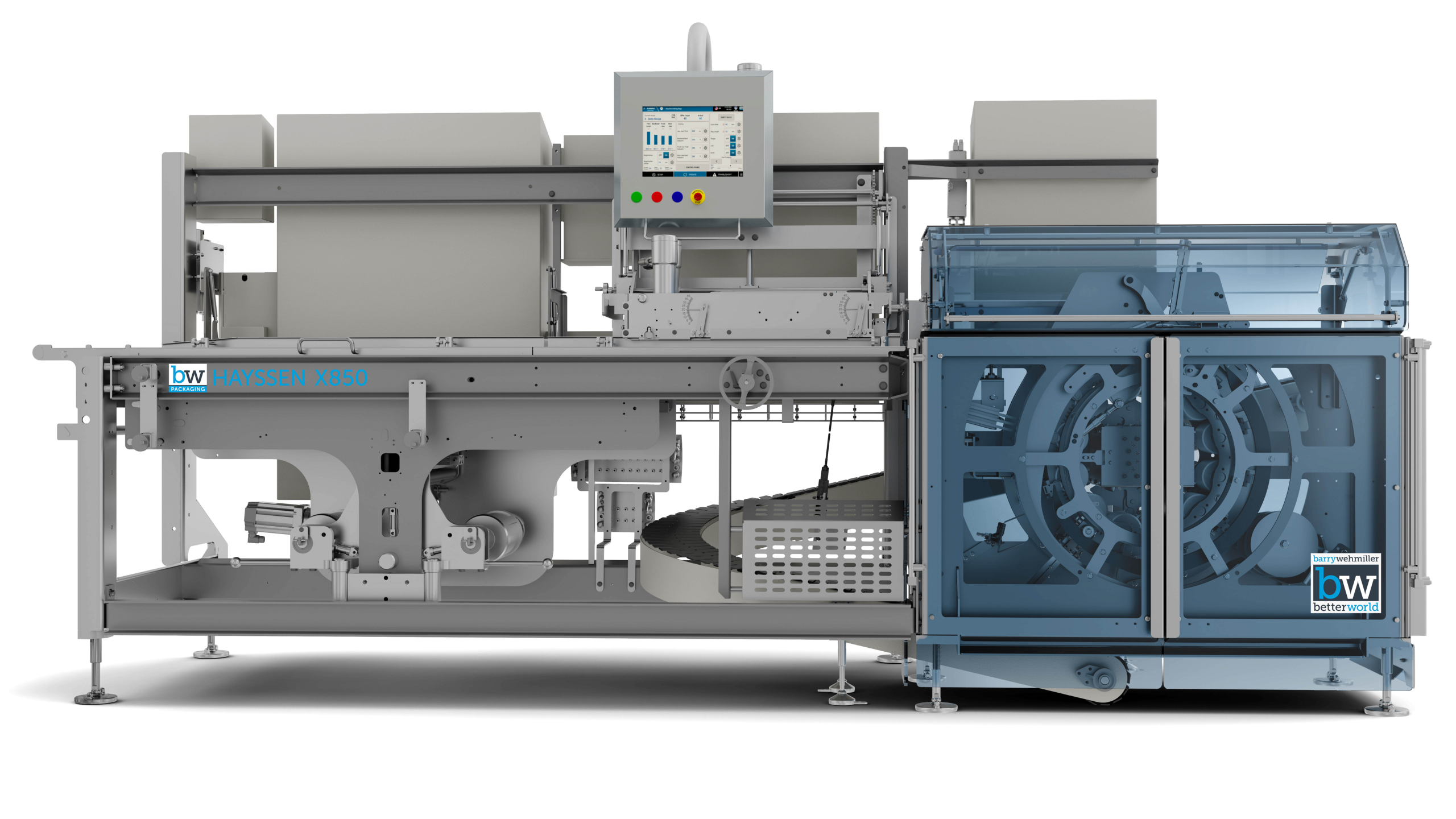
BW Packaging has expanded its Hayssen X850 multi-jaw flow wrapper into European markets, targeting food manufacturers that need high-speed flexible packaging with strong seal integrity and hygienic design.
The X850 was developed for block and sliced cheese applications, as well as other food products that require precise wrapping, controlled atmosphere packaging, and reliable performance at high throughput. The machine can run at up to 300 packs per minute and uses patented servo ring technology, a quick-release jaw design, and jam-clearing capability that can resolve product interruptions without stopping the line.
The system includes a stainless-steel frame rated for IP66 washdown, HMI-controlled gas flushing, and independent temperature control. In chilled food and cheese production, those features sit close to the core requirements of shelf-life protection, hygiene validation, and line availability.
Flexible packaging lines are being asked to do more than run quickly. Speed now has to sit alongside film transition, labour constraints, hygiene performance, energy management, and operator training. A wrapper that cannot handle new materials, cleaning regimes, or SKU variation can become a constraint long before it reaches the end of its mechanical life.
European food packaging is under sustained regulatory and customer pressure. Recyclability, material reduction, and pack documentation are increasingly built into specification work, which means packaging equipment has to cope with structures that may behave differently under tension, heat, and sealing pressure. Mono-material films, thinner gauges, and new barrier structures all have to run at industrial speed if packaging strategies are to survive contact with production reality.
Flow wrapping remains attractive because it gives manufacturers a high-speed, material-efficient format for cheese, bakery, snacks, confectionery, and chilled foods. Its performance depends on stable product presentation, accurate film control, consistent sealing, and dependable modified-atmosphere handling. Minor changes in film or product geometry can quickly produce leakers, rejects, poor appearance, or unplanned downtime.
The X850’s jaw design is intended to extend seal dwell time while maintaining speed. That is important where products need stronger seals without excessive heat input, particularly as films become more technically varied. The ability to clear jams without bringing the machine to a halt also addresses one of the more expensive forms of downtime on high-volume lines.
Operator interface is becoming another decisive equipment issue. Food factories are running more product changes with fewer experienced staff available on every shift. Guided controls, access management, maintenance prompts, and simpler changeover routines help reduce reliance on a small group of highly experienced operators. On a high-speed packaging line, that can influence waste and uptime as much as the mechanical headline speed.
The launch also sits alongside a broader movement toward scalable processing and packaging platforms. Mid-sized food plants are gaining access to more industrial-grade equipment without necessarily committing to oversized systems, while larger plants are prioritising machinery that can absorb future material and SKU changes. Homogenisation, inspection, robotics, wrapping, and filling equipment are all moving in the same direction: more automation, more data, and less tolerance for single-purpose assets.
Cheese packaging is especially unforgiving. Oxygen exposure, moisture imbalance, contamination, and seal failure can all shorten shelf life or increase waste. A high-speed wrapper that maintains seal quality while supporting gas flushing and washdown cleaning gives processors a route to higher productivity without weakening the protective role of the pack.
As recyclable films and lower-material structures become more common, packaging machinery will decide how quickly those specifications can move from trial to routine production. The X850’s European expansion adds another high-speed option for plants balancing productivity, hygiene, pack integrity, and material transition on the same line.