IN Brief:
- Klöckner Pentaplast has launched kp Infinity fruit trays for packed fresh produce.
- The expanded polypropylene trays are recyclable, lightweight, stackable, and designed to reduce product damage.
- Fresh produce packaging is being redesigned around product protection, material efficiency, handling, and recycling performance.
Klöckner Pentaplast has expanded its kp Infinity portfolio with recyclable trays designed for packed fresh fruit, moving the range further into produce packaging.
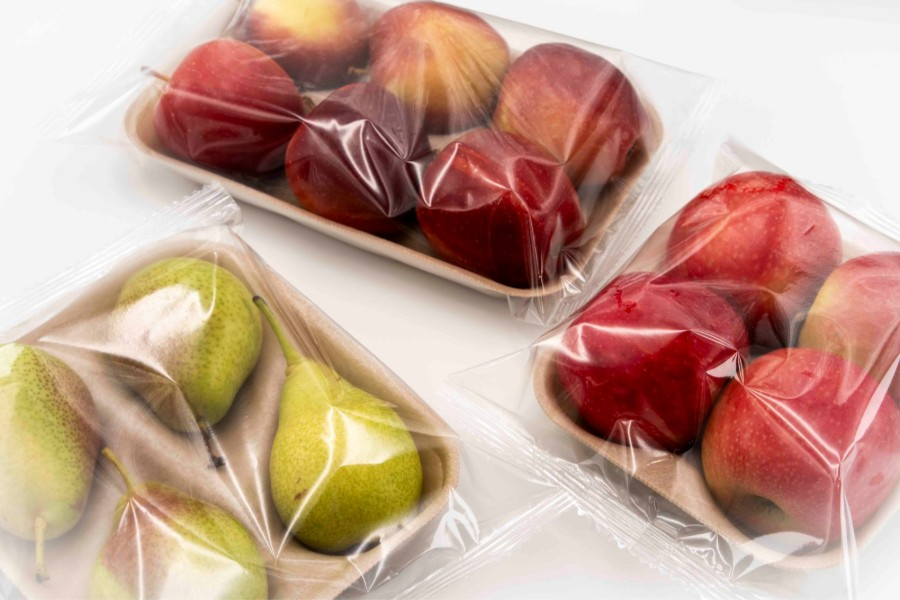
The new trays are manufactured from expanded polypropylene and are intended for products such as apples and pears. They combine a lightweight structure with durability, stackability, and a traditional presentation style, while carrying consumer-facing recycling messaging to support correct disposal.
Fresh produce packaging has to balance material reduction with product protection. Fruit packs must limit bruising, maintain shelf presentation, support efficient transport, and fit retail packing requirements, while also moving toward simpler recycling and lower environmental impact. Removing material at the expense of product damage can increase waste elsewhere in the chain.
The kp Infinity fruit trays are designed to protect packed fruit during packing, distribution, retail handling, and consumer transport. Their stackable format supports storage and logistics efficiency, while the expanded polypropylene structure provides a mono-material route for recycling where suitable systems are available.
The range can also be paired with kp FlexiStretch overwrap or kp FlexiFlow films, giving packers a linked tray-and-film system rather than separate components that have to be qualified independently. That becomes more useful as produce lines are asked to handle tighter specifications, faster changeovers, and stronger sustainability requirements.
Packaging material selection is becoming more contested across food categories, with fibre, plastics, metal, and hybrid structures all competing on recyclability, barrier performance, cost, weight, and availability. Barrier development and regulatory pressure are sharpening those trade-offs, particularly where producers are trying to reduce material impact without weakening shelf life or increasing waste.
Fresh produce is one of the clearest examples of that tension. Apples, pears, tomatoes, berries, and other packed produce are vulnerable to damage from compression, vibration, and repeated handling. Packaging that reduces bruising can protect yield and commercial value, even while packaging itself remains under scrutiny. The calculation is no longer packaging waste alone; it is packaging waste and food waste together.
Expanded polypropylene offers several attributes for this task. It is light, resilient, water-resistant, and capable of absorbing handling stress. Its mono-material construction also gives it a clearer recycling route than laminated or multi-component structures, although actual recovery will still depend on local collection and sorting infrastructure.
Line compatibility will shape adoption. Produce packers often operate on tight margins, with seasonal labour requirements and established packing equipment. A tray that can be introduced without major line redesign, excessive denesting issues, or slower wrapping speeds has a stronger commercial case than one that delivers theoretical sustainability gains but disrupts throughput.
Stackability and transport efficiency also carry economic value. Fresh produce moves through packhouses, distribution centres, retail depots, stores, and home storage, often under time and temperature pressure. Packaging that reduces empty-pack storage, improves pallet efficiency, and protects product presentation can influence cost and waste across the full chain.
Clear on-pack recycling instructions address another recurring weakness in packaging circularity. Even where a material is technically recyclable, disposal confusion can send packs into the wrong stream. Instructions cannot solve infrastructure gaps, but they can reduce avoidable contamination where local systems support the material.
Klöckner Pentaplast’s fruit-tray expansion places kp Infinity in a category where packaging is judged by both its end-of-life route and its ability to prevent product loss. Produce packaging will keep moving toward lighter and more recyclable formats, but the winning structures will be those that still perform under real packing, handling, and retail conditions.