IN Brief:
- Kersia UK has launched BioDtex for rapid hygiene checks in food manufacturing environments.
- The portable lamp detects organic matter, chemical residue, scale, and surface contamination within seconds.
- Food plants are strengthening surface inspection as hygiene teams face tighter audit, training, and contamination-control demands.
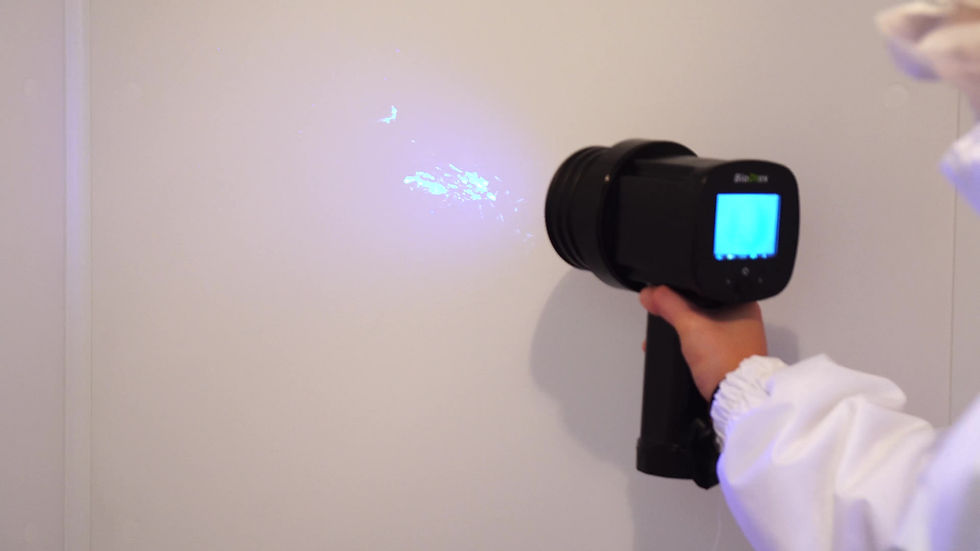
Kersia UK has launched BioDtex, a portable inspection lamp designed to help food manufacturing hygiene teams detect surface contamination that may be missed during routine visual checks.
The device uses UV-A technology to reveal organic matter, chemical residue, scale, and other surface contamination across production environments. It can be used on seals, welds, joints, crevices, and uneven surfaces, where residues can remain after cleaning or where swabbing may not easily identify the exact location of a problem.
BioDtex is designed to provide rapid visual feedback in normal lighting conditions, allowing technical, quality, and hygiene teams to scan equipment and surfaces within seconds. The unit also includes image capture functionality, enabling users to document surface findings, support inspection records, and track problem areas over time.
Food-plant hygiene depends on the ability to find contamination before it becomes a finished-product issue. Visual inspection remains common, but many production surfaces can appear clean while retaining residue in small entrapment points. Swabbing and environmental monitoring remain essential, yet they cover selected areas at selected times and often deliver results after the inspection moment has passed.
Biofilm and residue control are persistent problems because contamination rarely spreads evenly across a line. It can collect around gaskets, hinges, weld seams, valves, drains, damaged surfaces, and poorly accessible joints. Those residues can support microbial survival, reduce cleaning effectiveness, or contaminate later production runs if they are not identified and removed.
Kersia’s BioDtex lamp has been independently tested by Campden BRI against a range of organisms associated with food-industry hygiene risk, including Listeria spp., Salmonella spp., Staphylococcus aureus, E. coli, Bacillus spp., Enterococcus spp., Cronobacter spp., Lactobacillus spp., Campylobacter jejuni, Clostridium perfringens, Enterobacter cloacae, Vibrio spp., and Bacillus cereus. The device is designed to highlight fluorescence from microorganisms and residues rather than replace laboratory testing.
Its practical use is likely to sit around post-clean checks, hygiene training, investigation after positive environmental results, line start-up checks, and verification after maintenance work. Maintenance is a particularly important point of risk because equipment may be opened, adjusted, lubricated, or repaired before being returned to production.
Hygiene teams are also being asked to produce stronger evidence for audits and internal reviews. A written cleaning record gives one layer of assurance, but visual evidence can help show where action was taken and how repeat issues were resolved. The camera function supports that workflow by capturing findings rather than relying on verbal descriptions or memory.
Training is another likely application. New staff often need time to understand the difference between a surface that looks acceptable and a surface that still carries contamination risk. Showing residues directly can make cleaning expectations more concrete and help operators understand why specific areas need more attention.
Food safety incidents, allergen recalls, packaging failures, and hygiene lapses continue to show how small process weaknesses can escalate. Faster inspection tools do not remove the need for validated cleaning protocols, ATP testing, microbiological sampling, or allergen controls, but they can help direct attention to areas that need immediate correction.
The value of BioDtex will depend on how it is built into existing hygiene systems. Used casually, it risks becoming another inspection accessory. Used within a structured cleaning, verification, and training programme, it can help teams find residues faster, document corrective action, and reduce the hidden contamination risks that survive ordinary visual checks.