IN Brief:
- Wintipak is investing in a Heidelberg Boardmaster inline flexo press at its Halle/Saale operation in Germany.
- The press is designed for speeds of up to 600 metres per minute and rapid job changes across aseptic packaging production.
- The project supports rising demand for carton-based liquid food packaging with tighter cost, waste, and sustainability requirements.
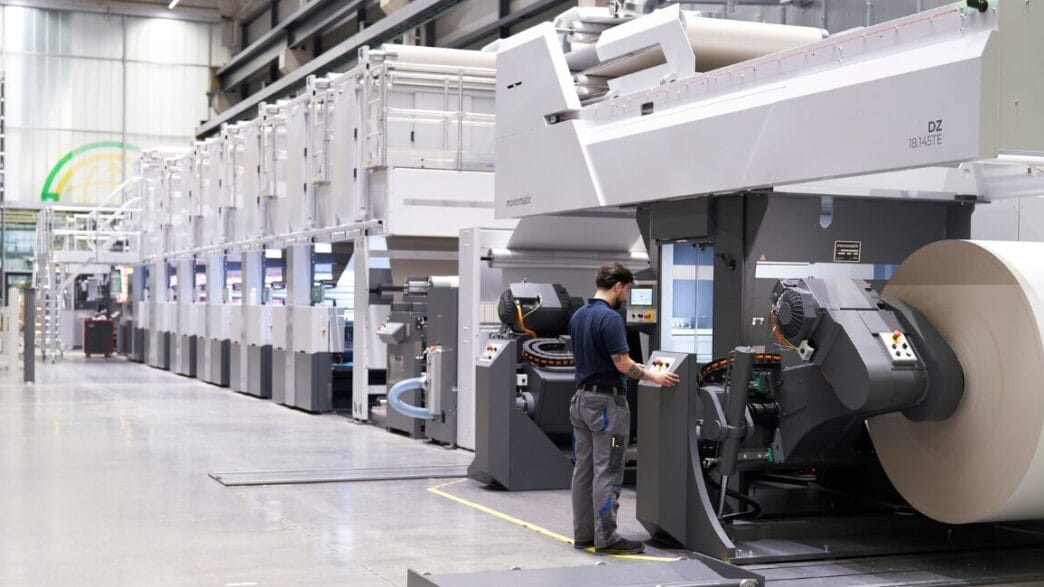
Wintipak is expanding its printing capacity for aseptic liquid food packaging with an investment in a Heidelberg Boardmaster inline flexo press at its Halle/Saale site in Germany.
The investment will increase productivity, add operational flexibility, and support higher production volumes for carton-based aseptic packaging used in liquid food applications. Wintipak supplies aseptic packaging materials for categories including milk, juice, and plant-based drinks, with both blank-fed and roll-fed systems in its wider portfolio.
Heidelberg’s Boardmaster platform is designed for high-volume folding carton and cartonboard production, with production speeds of up to 600 metres per minute. The system also supports rapid job changes and reduced start-up waste, allowing converters to handle multiple orders per day while limiting material losses at the beginning of each production run.
Liquid food packaging is being pulled between sustainability expectations, retailer requirements, recycled-content rules, pack design constraints, and filling-line performance. Aseptic cartons must protect product stability, support long shelf life, run efficiently through forming and filling systems, and maintain print quality across large volumes and multiple SKUs.
Printing capacity in this part of the market is not limited to shelf impact. High-speed carton production affects availability, cost, lead times, and the ability to respond to changes in demand. Beverage and dairy manufacturers often rely on printed packaging that has already been specified, approved, and scheduled into filling operations, so delays or inefficiencies in print can move quickly into factory planning, customer service, and finished-goods availability.
The Halle investment also reflects the changing economics of waste. Start-up losses, misregistration, colour adjustment, and changeover inefficiency become material issues when cartonboard volumes are high and input costs remain exposed. Reducing start-up waste can improve production cost while supporting sustainability reporting at a point when packaging material use is under closer scrutiny.
Packaging regulation is adding pressure to that operating environment. Retailer concern over the PPWR transition has already shown how stock, conformity declarations, PFAS restrictions, and packaging already in circulation can create production and compliance risk. Wintipak’s capacity investment sits on the manufacturing side of the same transition: more sustainable packaging formats still have to be printed, converted, supplied, and filled at industrial speed.
Aseptic carton packaging is likely to remain important in dairy, juices, broths, sauces, and plant-based beverages because it combines ambient shelf-life benefits with established filling infrastructure. Pack makers, however, face rising expectations around fibre sourcing, material efficiency, recyclability, barrier performance, and end-of-life handling. Equipment that supports faster, cleaner, and more flexible production gives converters a stronger position as customers push for both technical performance and sustainability evidence.
The project also fits Wintipak’s broader expansion in Halle, where additional capacity is being developed for next-generation aseptic carton packaging. Adding high-speed print capability is a logical part of that build-out, particularly as liquid food manufacturers seek suppliers able to handle volume without losing flexibility.
Plant-based drinks, flavoured milks, functional beverages, nutritional products, and private-label ranges are creating more pack variants and shorter planning windows. High-speed equipment that reduces changeover waste can help packaging converters serve that complexity without forcing every customer into longer runs or higher inventory.
Wintipak’s Halle investment shows how packaging sustainability is becoming a factory issue as much as a material issue. The strongest carton concept still needs converting capacity, print reliability, line compatibility, and predictable supply. In aseptic liquid foods, that operational layer will decide how quickly lower-waste packaging ambitions can be translated into filled packs.