IN Brief:
- SPAR UK has recalled Clayton Park Kitchen Chicken & Mushroom Sauce because of undeclared soya.
- The recall applies to 440g packs with all use-by dates and is England specific.
- The incident reinforces the importance of allergen controls, label verification, and supplier data in chilled meal production.
SPAR UK has recalled Clayton Park Kitchen Chicken & Mushroom Sauce because the product may contain soya that is not declared on the label.
The recall applies to 440g packs with all use-by dates and is specific to England. Customers with a soya allergy have been advised not to consume the product and to return it to the store for a full refund. Customer notices have been issued, and allergy support organisations have been contacted as part of the recall process.
Undeclared allergens create a direct food safety risk because the product can appear normal while being unsafe for a specific consumer group. In this case, the presence of soya without label declaration creates a hazard for people with a soya allergy and triggers a recall rather than a routine stock correction.
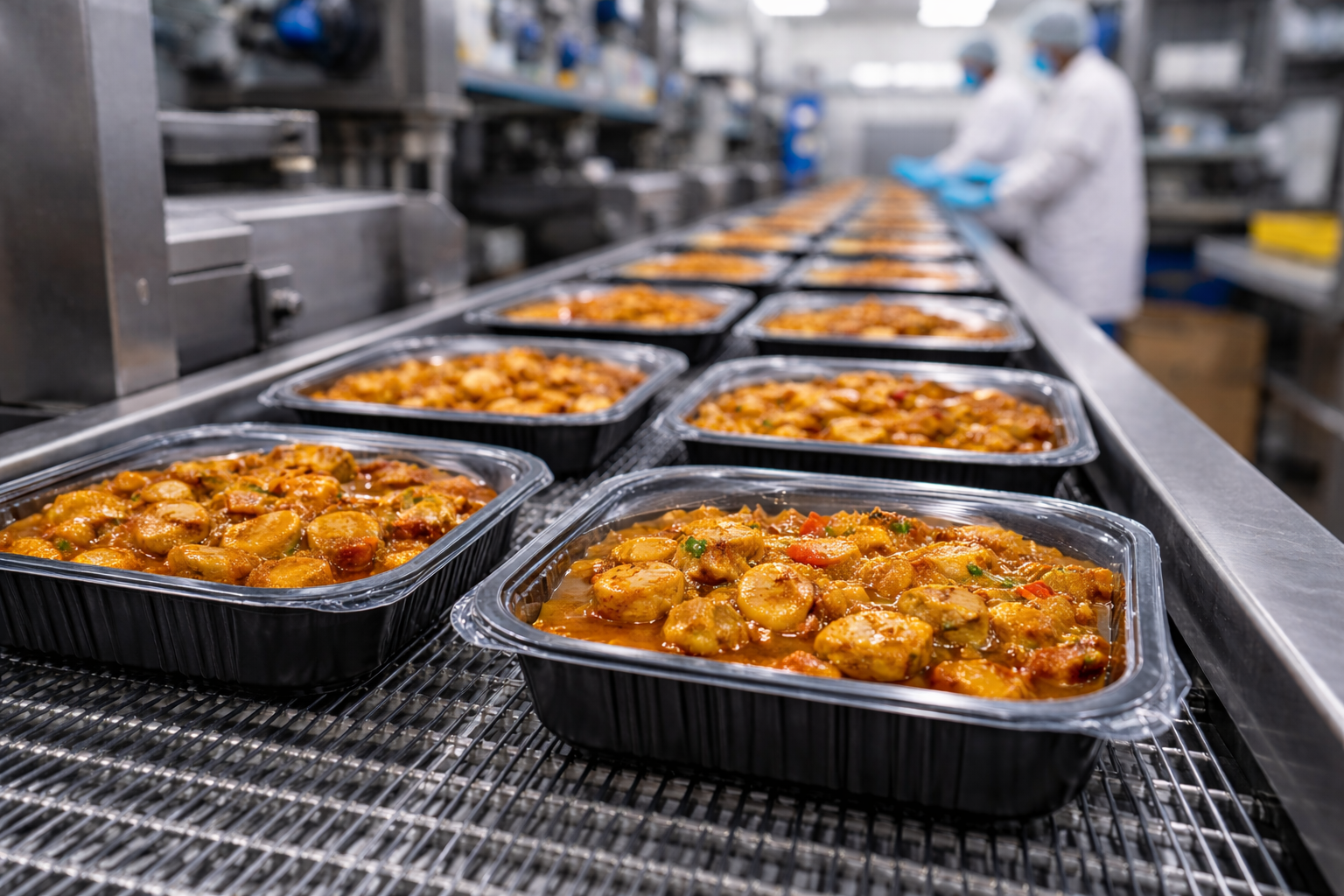
Chilled sauces and meal components can carry considerable complexity. A chicken and mushroom sauce may draw on dairy components, stocks, thickeners, seasonings, oils, flavour systems, stabilisers, and prepared inclusions. Allergens can enter through a primary ingredient, a compound ingredient, a processing aid, a supplier substitution, shared handling, or a mismatch between recipe and label.
The recall covers all use-by dates, which widens the operational response. Affected stock must be identified, removed from sale, communicated clearly to stores and customers, and recorded through the recall process. Technical teams then have to establish whether the cause sits in formulation, raw material documentation, packing, supplier control, or label approval.
Prepared food safety failures have been visible across several categories in recent weeks. PrepWorld’s prepared fruit recall over Salmonella risk involved a different hazard type, but the operational disciplines are shared: traceability, documentation, clear responsibilities, and fast communication between manufacturers, retailers, authorities, and consumers.
Allergen management remains one of the most demanding areas of food safety because it depends heavily on information accuracy. A product can be microbiologically stable and visually acceptable while still presenting a serious risk. That places significant weight on label content, pack integrity, recipe control, supplier declarations, line clearance, and final verification.
Label control is often the critical failure point. Food manufacturers manage multiple SKUs, retailer formats, promotional packs, artwork revisions, ingredient changes, and supplier substitutions. A small error in artwork, label stock, recipe version control, or product routing can create a recall even where the product itself has been made consistently.
The risk increases where similar products use different allergen profiles. A sauce, ready meal, or chilled component may share production assets with variants containing soya, milk, mustard, gluten, celery, or other declarable allergens. Line clearance, cleaning validation, scheduling, and positive release systems all have to be strong enough to prevent the wrong product, label, or ingredient from moving forward.
Digital recipe and specification systems can reduce errors, although they do not remove the need for disciplined factory checks. Operators need clear label reconciliation, barcode verification, line clearance records, and escalation routes when pack or recipe information does not match. Technical teams need current supplier specifications and immediate change notification when ingredients are altered upstream.
Retailer branded and convenience channel products add further complexity because brand owner, manufacturer, supplier, wholesaler, and retailer responsibilities must align. A recall notice may carry the retailer’s name, while root cause can sit elsewhere in the value chain. Supplier approval, audit trails, and contractual clarity therefore remain essential.
The SPAR recall reinforces a familiar truth in chilled food production: allergen control is only as strong as the weakest connection between recipe, ingredient, label, pack, and final check. Prevention depends on systems that treat allergen data as a live production control, not an administrative field completed after the product has already been made.