IN Brief:
- Vinca and Kingsland Drinks are extending their partnership into 75cl aluminium wine bottles.
- The bottles use 100% post-consumer recycled aluminium and weigh around 70g compared with about 450g for glass.
- The move strengthens alternative beverage packaging as EPR, transport emissions, and event safety reshape wine formats.
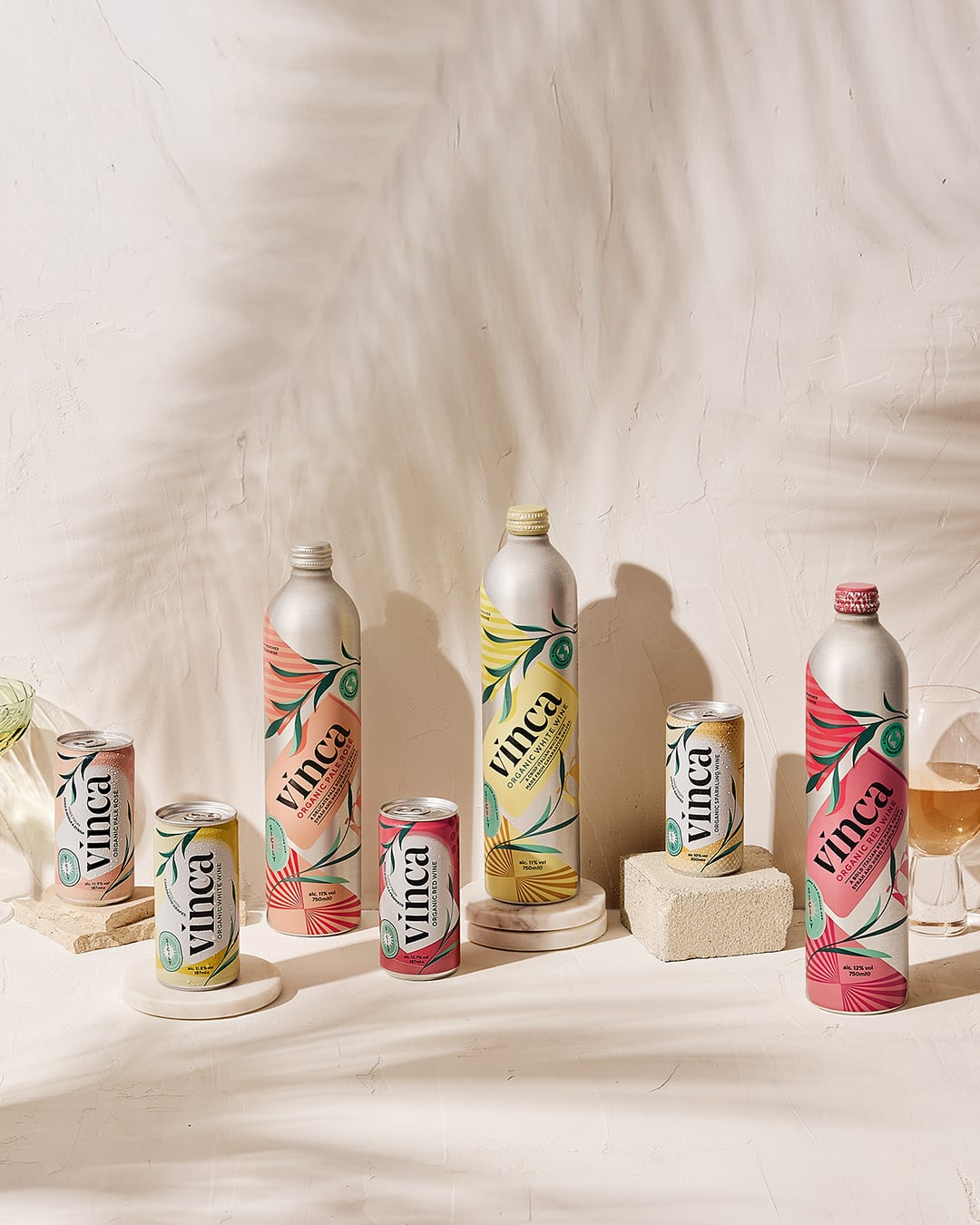
Vinca and Kingsland Drinks are expanding their production partnership to include 75cl aluminium wine bottles alongside existing canned wine formats.
The new capability will see Kingsland Drinks produce Vinca red, white, and rosé wines in aluminium bottles at its Irlam facility in Greater Manchester. The site already produces Vinca’s organic Sicilian wines in can formats, including 187ml still wines and 200ml sparkling options.
The aluminium bottle format is made from 100% post-consumer recycled aluminium and is designed to provide a lighter alternative to conventional glass wine bottles while retaining the familiar 75cl size. The bottle weighs around 70g, compared with an average glass bottle weight of about 450g.
That weight difference reaches well beyond the filling line. Bottle weight affects inbound packaging transport, filled product logistics, pallet loads, warehouse handling, event suitability, breakage risk, and extended producer responsibility fees. As packaging costs and emissions reporting become more visible, alternative formats are moving further into beverage production planning.
Wine has traditionally been closely associated with glass, but the category is under pressure to reconsider that default. Glass performs well on barrier, shelf life, premium cues, and consumer familiarity, but it is heavy and energy intensive. Lightweight glass, bag-in-box, cans, paper bottle concepts, rPET, and aluminium formats are all being tested as producers balance brand expectations with carbon, cost, and logistics pressure.
Kingsland Drinks’ aluminium bottle capability gives the UK wine packing sector a stronger alternative format platform. The company has highlighted the recyclability, lightweighting, and logistics benefits of aluminium, along with the format’s suitability for festivals, events, and outdoor consumption where shatterproof packaging can reduce safety concerns.
The expanded relationship gives Vinca more localised control over production. Bringing aluminium bottle production into the existing Kingsland partnership allows the brand to align canned and bottled alternative formats more closely, with shared quality systems and a production partner already familiar with the product.
Alternative formats are often judged by consumer acceptance, but the manufacturing requirements are just as demanding. Filling aluminium bottles requires pack compatibility, closure performance, dissolved oxygen control, line handling, decoration or labelling systems, and quality checks suited to the material. The format has to work at scale without undermining wine quality.
Aluminium also changes handling characteristics. The material chills faster than glass, which can be useful in event, convenience, and on-the-go occasions. It also behaves differently under condensation, storage, and secondary packaging conditions, all of which can affect distribution and merchandising.
EPR adds a further commercial driver. Producer responsibility costs increasingly reward lighter and more recyclable materials, although outcomes depend on national schemes and collection infrastructure. Aluminium’s established recycling route gives it an advantage where collection and reprocessing systems are mature.
The sustainability calculation still has to be handled carefully. Recycled content, actual collection rates, transport distances, filling efficiency, pack losses, and end-of-life behaviour all affect performance. A lightweight pack that is poorly recovered will not deliver the same benefit as one that remains within a strong recycling loop.
Wine producers also have to protect quality cues. Premium perception has historically favoured glass, especially for still wine. Aluminium bottles therefore need to demonstrate lower weight and recyclability while maintaining acceptable appearance, shelf presence, handling, and product protection.
The partnership shows how alternative beverage packaging is becoming more operationally mature. Canned wine established one route away from traditional bottles; 75cl aluminium bottles offer another, targeting channels that still want a bottle format but need lower weight and improved event handling.
Kingsland’s expanded capability positions the Irlam facility as a more flexible platform for wine brands testing new formats. As EPR, logistics cost, and carbon reporting continue to affect beverage packaging decisions, lightweight alternatives are likely to gain further production interest. Glass will remain important, but it will no longer be the automatic answer for every wine occasion.