IN Brief:
- Small overfills can accumulate into substantial product and margin losses across high-speed food packing lines.
- Feed consistency, hopper settings, product behaviour, maintenance, changeovers, and excessive safety margins can all increase giveaway.
- Sentinel 5.0 uses connected production data and machine learning to identify anomalies and support earlier intervention.
Ishida Europe is urging food manufacturers to examine product giveaway more closely as high ingredient, labour, and energy costs increase the value lost through small but repeated overfills on packing lines.
Giveaway occurs when packs consistently contain more than their declared weight. Manufacturers normally operate above the legal minimum to reduce the risk of underweight packs, but excessive margins place saleable product into each pack without generating corresponding revenue.
A fraction of a gram appears modest on a single unit, yet the volume accumulates quickly across high-speed lines running several shifts. The effect is particularly pronounced in meat, cheese, confectionery, coffee, nuts, proteins, and premium snacks, where the product carried by every unnecessary gram has a relatively high value.
Dean Ball, product manager at Ishida Europe, said: “Giveaway is often seen as an unavoidable cost of doing business, and with factories managing multiple day-to-day priorities, opportunities to address it can sometimes be overlooked.”
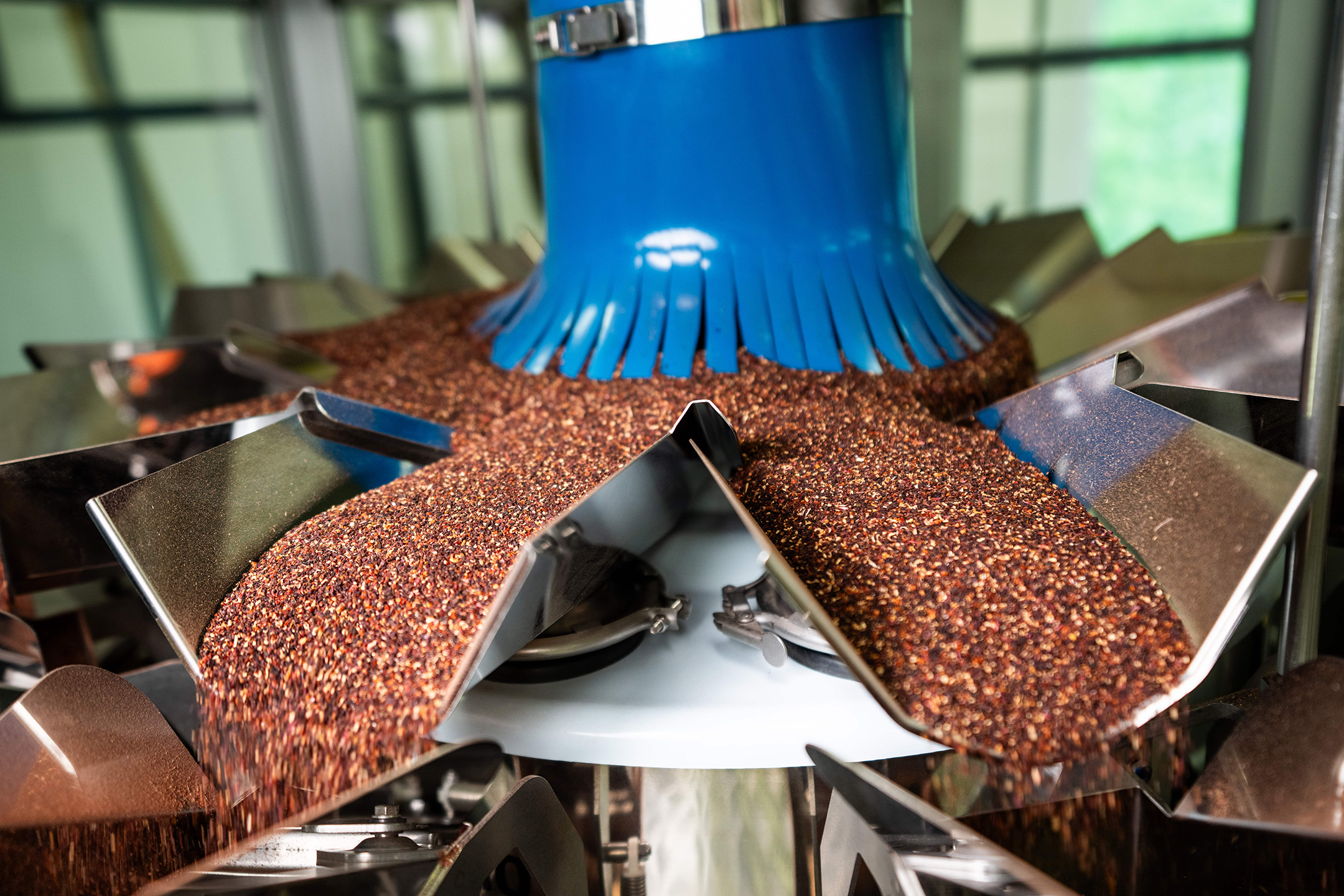
Variation can enter through inconsistent product feed, poor distribution around a multihead weigher, unsuitable contact surfaces, incorrect hopper timing, worn components, vibration, recipe changes, and uneven piece size. Each factor changes the combinations available when the machine calculates a portion close to target weight.
Multihead systems distribute product across several weigh hoppers and select the combination that best matches the target. Accurate, fast operation depends on keeping enough suitable combinations available for every cycle, while poor flow can leave too few hoppers ready and force a less precise result or reduced speed.
Product behaviour determines the appropriate machine configuration. Sticky, fragile, frozen, granular, and mixed products require different feeder angles, vibration settings, hopper volumes, surface finishes, discharge timing, and transfer arrangements if portions are to remain accurate without damaging the food.
Higher line speeds can expose weaknesses in that setup, particularly when operators increase the nominal target to avoid rejects. Frequent product and format changes add further instability if settings are copied between recipes without sufficient checking or if maintenance condition varies across shifts.
Ball said: “Product giveaway is typically driven by a combination of factors. Higher line speeds can increase variation from the target weight, increasing the likelihood of overfilled packs. This is often compounded by more complex product mixes and formats, ageing equipment, inconsistent maintenance, and a natural tendency to overcompensate to avoid underweight risk.”
Connected data exposes gradual drift
Ishida’s Sentinel 5.0 platform connects production information from weighing, checkweighing, X-ray inspection, and other equipment through dashboards and remote monitoring. Machine learning is used to detect anomalies and direct attention towards changes that may otherwise disappear within shift averages.
Live weight distributions, throughput, rejects, stoppages, and machine behaviour can reveal whether giveaway follows a particular recipe, shift, product feed, component, or changeover. Earlier detection allows the plant to intervene before a temporary deviation becomes accepted as the normal operating condition.
Ball said: “Real-time visibility allows manufacturers to identify trends early and take corrective action, helping to bring product giveaway under closer control. Solutions such as AI-driven remote monitoring systems are designed to support this by turning data into practical insights that can significantly improve weighing accuracy.”
Dashboards do not replace mechanical discipline because the corrective action may involve cleaning a feeder, adjusting product presentation, replacing a worn part, revising a recipe, or retraining operators. Useful monitoring connects the anomaly to an established response rather than generating another stream of alarms without ownership.
A Zotter chocolate installation using Ishida weighers handles targets from 20g to 130g across bags and boxes, with reported deviation below 0.5%. The installation shows how accurate portioning and recipe flexibility can coexist when machine configuration and product flow remain controlled.
Ingredient inflation strengthens the return from reducing overfill because a fixed two-gram excess carries more value when it contains cocoa, dairy protein, meat, nuts, or concentrated flavour systems. Giveaway also embodies the energy, water, labour, refrigeration, and handling used to produce food that is supplied without payment.
Optimisation must remain within quantity-control requirements. Manufacturers cannot lower the average so aggressively that underweight packs become more frequent or statutory controls are weakened, so checkweighers, sampling plans, calibration, records, and statistically appropriate set points remain essential.
Connected monitoring can support maintenance as well as weight control. Changes in cycle time, hopper availability, feeder response, or rejection patterns may indicate deterioration before a machine stops, allowing planned intervention instead of emergency repair during a production campaign.
Older equipment may still deliver improvements through better setup, maintenance, operator routines, and data capture, while replacement machines can add automated feed control, hygienic design, connectivity, and greater recipe capacity. The decision depends on the value of recoverable product, current reliability, and the cost of continued variation.
Factories have often treated overfill as insurance against a visible compliance failure, but rising product values make that insurance increasingly expensive. Accurate weighing, supported by live data and disciplined intervention, can protect declared quantity without allowing routine safety margins to become a permanent source of lost margin.