IN Brief:
- Duranova paperboard ran continuously on Kiefel’s Natureformer KFD 75 at speeds above 150 metres per minute.
- One production line could manufacture more than 80 million formed packaging units annually, depending on format and tooling.
- Food trays, lids, cutlery, and dry goods packs remain subject to food contact, barrier, sealing, and line validation.
Fiberdom and Kiefel have completed industrial production trials that converted reel fed Duranova paperboard into three dimensional moulded packaging at full operating speed.
Running on Kiefel’s Natureformer KFD 75 dry forming platform, the material maintained continuous flow at more than 150 metres per minute. Depending on geometry, tooling, cycle time, and finished specification, the companies estimate that one line could produce more than 80 million packaging units annually.
Duranova is made from FSC certified wood pulp or paperboard and is cut, pressed, and formed directly from a reel. Conventional wet moulded fibre production first mixes pulp with water, then forms and dries the product before finishing, whereas the dry process removes much of that water handling and associated thermal demand.
The demonstration component was a protective insert for consumer electronics, chosen because it required consistent dimensions, controlled surfaces, low unit costs, and reliable output across long production runs. During the trial, the tooling cut and formed a complex shape while the web continued moving through the machine.
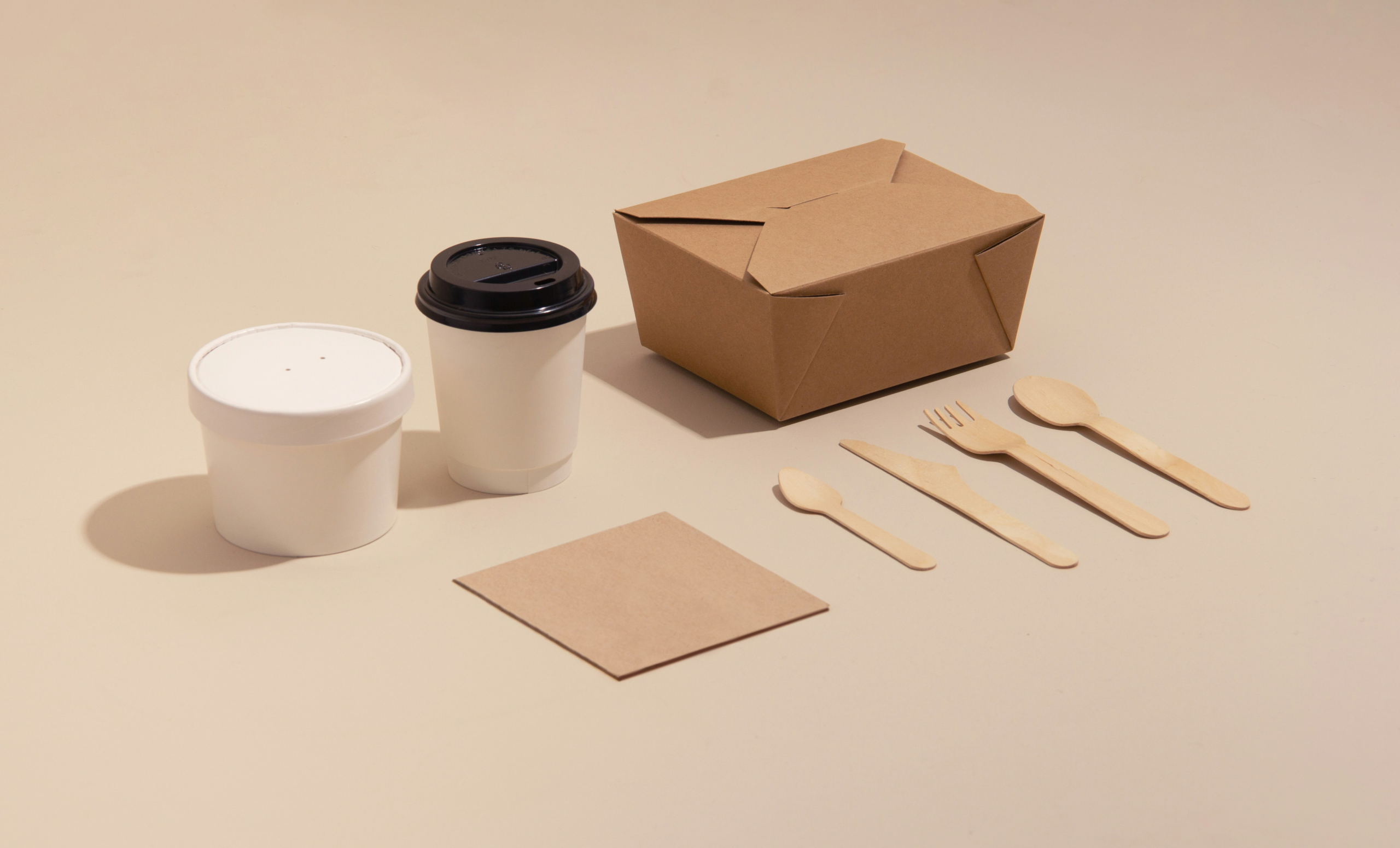
Development work now extends towards home compostable food trays, lids, cutlery, and formed packs for dry goods. Formats exposed to changing humidity are also under consideration, provided that the fibre structure retains sufficient strength during packing, distribution, storage, and use.
Although the trial established the capability of the machinery and material, individual food formats will still need to satisfy migration limits, hygiene controls, barrier specifications, sealing performance, and the temperature or moisture demands of the packed product. A dry goods tray presents a markedly different challenge from a chilled protein tray, prepared meal container, or pack containing oil and sauce.
Tooling design will shape commercial performance as closely as machine speed. Each formed item must retain its geometry after pressing, release cleanly from the mould, stack without damage, and pass through denesting, filling, sealing, inspection, case packing, and palletising equipment without repeated stoppages.
Throughput moves fibre beyond pilot production
High output addresses one of the persistent weaknesses surrounding alternatives to thermoformed plastic. Food packaging is bought in very large volumes, so environmental performance cannot compensate indefinitely for a process that produces too slowly, requires excessive labour, or delivers a pack several times more expensive than the material it replaces.
Dry forming could reduce the water and energy required by wet fibre moulding, although its full environmental performance will depend on paper production, coatings, scrap recovery, transport, electricity use, and the proportion of packs that leave the line within specification. A line capable of high theoretical speed offers limited value if rejects, tool wear, or downstream handling repeatedly interrupt production.
Material distribution must remain consistent across corners, walls, rims, and load bearing areas, particularly when trays are stacked, sealed, or lifted by robotic equipment. Excess fibre raises weight and cost, while insufficient material can lead to cracking, deformation, poor flange quality, or failure under compression.
Barrier development will determine how far the technology can move beyond dry products and foodservice articles. Chilled meat, dairy products, sauces, and ready meals require resistance to moisture, oil, oxygen, and temperature, yet coatings must provide that protection without undermining recycling or compostability and without cracking during forming.
Manufacturing capacity for fibre based food packaging is already expanding elsewhere in the UK. Paranova’s £5m investment at St Neots added high speed converting capability for sandwich skillets, wrap boxes, trays, cartons, and other food to go formats, illustrating the wider move from small fibre trials towards industrial output.
European packaging rules are strengthening the commercial pressure behind that investment. Producers face demands to reduce unnecessary plastic, improve recyclability, account more closely for packaging weight, and prepare for higher producer responsibility charges, although none of those requirements removes the need for shelf life, safety, speed, and pack integrity.
Food manufacturers will expect representative trials covering grease, moisture, temperature, stacking, transport, filling, and sealing before committing to large volumes. Converters will also need evidence that tooling can be changed efficiently enough to support several customers, product sizes, and campaign lengths rather than one continuously running pack.
Dry fibre forming must also integrate with existing packaging lines, many of which were designed around the tolerances and surface behaviour of plastic. Differences in stiffness, friction, static, moisture response, flange shape, and nesting can alter the performance of feeders, conveyors, sealers, and robotic handling.
Fiberdom and Kiefel have demonstrated an output rate relevant to mainstream packaging economics. Commercial adoption will now rest on retaining that speed while the material acquires the barriers, hygienic performance, dimensional accuracy, and equipment compatibility required inside a working food factory.