IN Brief:
- Action on Fibre participants have introduced or reformulated around 500 higher-fibre products since 2021.
- One hundred launches and recipe changes during 2025 added an estimated 130m fibre servings.
- Wider progress depends on maintaining taste, texture, affordability, processing performance, and regulatory positioning.
The Food and Drink Federation says manufacturers have added an estimated two billion servings of fibre to UK diets since 2021 through launches and reformulation across bread, snacks, cereals, dairy products, and prepared foods.
Members of the organisation’s Action on Fibre campaign have introduced or updated around 500 products and recipes carrying “source of fibre” or “high in fibre” positioning during the past five years. One hundred launches and reformulations during 2025 added an estimated 130m servings.
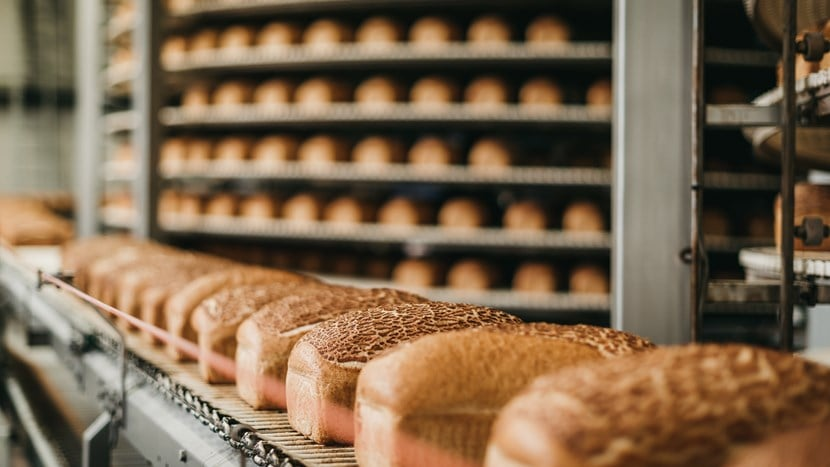
Examples include Ryvita’s Snack It range, Kingsmill’s Tiger loaf, and an expanded Activia breakfast-pot range. The Kingsmill product uses wheat fibre to provide 3.2g of fibre per 100g, allowing a white bread format to qualify as a source of fibre without adopting the full sensory profile of wholemeal bread.
Only 4% of adults meet the government recommendation of 30g of fibre a day, while consumer research indicates that 7% know the recommended level. Manufacturers have concentrated much of their work on familiar products, where higher household penetration can add more servings than a specialist range with limited distribution.
Fibre enrichment alters more than a nutrition panel because ingredient choice can change water absorption, dough handling, viscosity, aeration, expansion, colour, sweetness perception, texture, shelf life, and digestive tolerance. Cereal fibres, inulin, resistant dextrins, beta-glucans, fruit fibres, and pulse fractions each behave differently during processing.
Bakery formulations illustrate the balance. Additional fibre can increase water demand and reduce dough extensibility, while high inclusion levels may create a dense crumb, dry eating quality, or faster perceived staling. Flour blends, enzymes, emulsifiers, fat, mixing, proofing, and baking conditions may all require adjustment.
Snacks and breakfast cereals face different constraints because fibre can affect extrusion pressure, expansion, crispness, bowl life, binding, and seasoning adhesion. Dairy and beverage applications must manage solubility, sedimentation, viscosity, flavour release, and possible interactions with proteins or live cultures.
Kate Halliwell, chief scientific officer at the FDF, said: “Food and drink manufacturers have worked hard to develop new products and reformulate recipes to help people increase their fibre intake, while maintaining the taste, quality, and affordability that consumers expect.”
Factory performance sets the reformulation limit
The two-billion-serving total shows the cumulative effect of applying reformulation across products that already have national distribution. Repeat purchase still depends on taste, price, convenience, and familiarity, while changes in colour, firmness, dryness, or flavour can be interpreted as a decline in quality even when the nutritional specification improves.
Ingredient suppliers are developing more specialised systems as the competition around fibre formulation expands into gut-health positioning, texture management, prebiotic claims, and the use of processing side streams. Mainstream launches provide the volume needed to move those systems beyond small functional ranges.
Regulatory policy will influence which products manufacturers reformulate next. The FDF wants the government to reconsider proposed nutrient-profiling changes that could place advertising or promotional restrictions on some higher-fibre products, and it opposes mandatory healthier-food sales reporting unless the rules apply consistently across the food system.
A product can contain more fibre while remaining high in sugar, saturated fat, salt, or calories, so development teams have to work across the complete specification. Fibre content sits alongside nutrient profiling, allergens, claims, ingredient declarations, cost, processing behaviour, retailer standards, and portion size.
Optimising a single measure can create repeated reformulation if policy or customer requirements subsequently change. A biscuit, cereal, or yoghurt designed only to reach a fibre threshold may need further work when promotional rules, calorie targets, sugar limits, or front-of-pack expectations are applied.
Supply consistency becomes more demanding as volumes rise. Specialist fibres may depend on imported crops or concentrated manufacturing capacity, while ingredients recovered from cereal, fruit, and vegetable side streams require stable colour, flavour, microbiology, particle size, functionality, and documentation before entering national recipes.
Ingredients that perform several functions offer the strongest production case. A fibre that manages water, supports structure, replaces some bulk removed during sugar reduction, or extends softness can improve processing as well as nutrition, reducing the cost of adding a claim without an operational benefit.
Scale-up remains a critical stage because a formula that performs in a development kitchen may behave differently under factory mixing energy, residence time, pumping, depositing, extrusion, fermentation, or baking. Pilot work, shelf-life testing, sensory evaluation, and line data are needed before a recipe becomes commercially dependable.
Affordability also constrains ingredient choice. Fibre systems vary widely in price and required inclusion rate, while processing changes can reduce output or increase waste if the recipe narrows the operating window. Reformulation has to hold margin and line efficiency alongside the nutritional target.
Action on Fibre has moved enrichment further into established bakery, snack, cereal, and dairy portfolios. Further progress will depend on ingredients that deliver reliable functionality, factories capable of holding revised processes, and rules that recognise improvement without presenting every higher-fibre product as nutritionally complete.