IN Brief:
- Capri Sun has started construction of a new production facility in Stargard, Poland, with first-phase investment exceeding €70m.
- Production is scheduled to begin by the end of 2027, with approximately 120 jobs expected at the site.
- The location will shorten routes into Central and Eastern Europe and the Nordic markets.
Capri Sun has started construction of a new beverage production facility in Stargard, Poland, expanding its European manufacturing network closer to customers across Central and Eastern Europe.
The first phase represents an investment of more than €70m and is scheduled for completion by the end of 2027. Approximately 120 jobs are expected to be created, while the site has been designed with enough space and infrastructure flexibility to accommodate later production growth.
Located in north-western Poland, Stargard offers road and rail connections towards Germany, the Baltic region, Scandinavia, and the wider Central European market. Bringing production closer to those destinations should reduce finished-product lead times, shorten transport routes, and give the manufacturer greater flexibility when allocating output between European facilities.
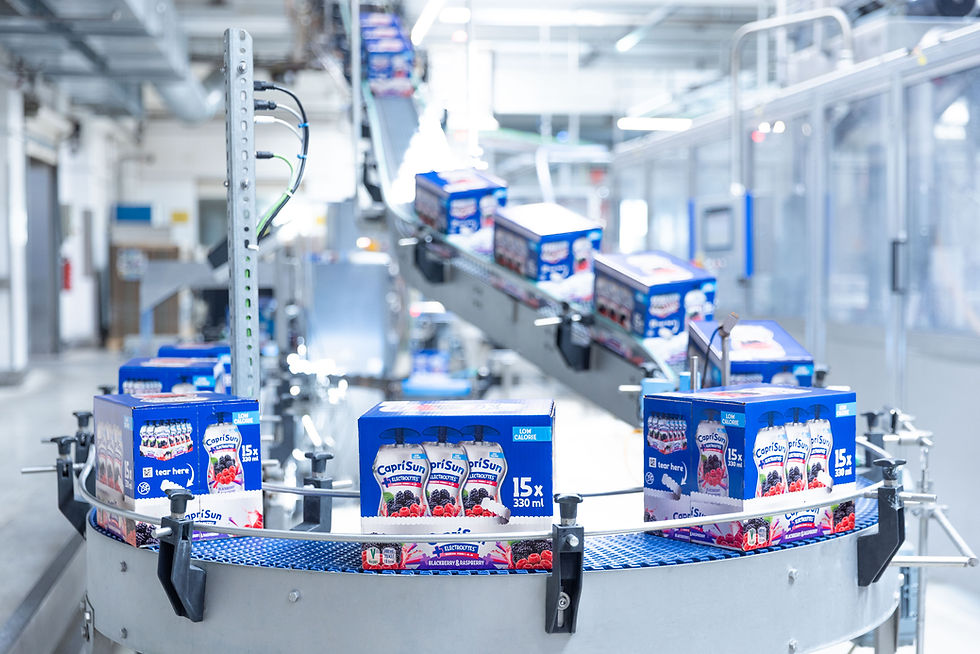
Capri Sun’s established operation in Eppelheim, Germany, will remain the group’s manufacturing centre of excellence, providing technical knowledge, operator training, process support, and product-development expertise. The wider production network currently supplies more than six billion drink pouches annually to over 100 markets.
Regional capacity moves closer to demand
European food and beverage manufacturers have increasingly favoured regional production networks over dependence on one heavily loaded site. Transport disruption, volatile energy costs, labour shortages, and uneven regional demand have increased the operational risk associated with moving finished products over long distances from a limited number of factories.
Stargard allows Capri Sun to extend capacity without separating the new plant from its technical base in Germany. Engineering support, packaging expertise, process development, and specialist training can remain connected with Eppelheim while routine production moves closer to several expanding markets.
The advantages of regional manufacturing extend beyond distance alone, since shorter replenishment cycles can reduce the amount of finished stock held in transit or positioned weeks ahead of demand. Those gains depend on accurate forecasting, reliable line output, and warehouses capable of absorbing seasonal peaks without creating new bottlenecks.
Beverage factories also rely on a wider utility and supplier system that must develop alongside the filling hall. Ingredient deliveries, process water, packaging materials, compressed air, refrigeration, cleaning chemicals, wastewater treatment, warehousing, and outbound transport all have to support the required output from the first commercial campaigns.
Capri Sun’s pouch format introduces further engineering requirements, particularly around film handling, sealing, filling accuracy, closure application, coding, and secondary packing. Materials transferred between production sites must be validated against the same specifications for barrier performance, seal strength, hygiene, shelf life, and transport durability.
Allowing for later expansion should help the plant respond to changes in flavour portfolios, pack sizes, sugar profiles, and functional beverage formats. A facility built around one fixed output assumption can become constrained quickly when product ranges change faster than the building or utility systems supporting them.
Packaging regulation will also influence how the site develops. European rules on recyclability, material reduction, labelling, and producer responsibility are placing greater pressure on manufacturers to test new structures without compromising filling speed, seal integrity, or product stability.
Production planning will need to account for the seasonal nature of the beverage market, where warmer weather, promotions, school holidays, and retailer campaigns can move demand sharply within a short period. Additional capacity offers little protection when upstream materials or downstream warehouse space remain tied to slower planning cycles.
Poland has become an increasingly important manufacturing base for companies serving several European regions, combining a large domestic market with industrial labour, established packaging suppliers, and transport links towards Germany, the Baltics, the Czech Republic, Slovakia, and Scandinavia.
Commissioning will extend well beyond construction of the building, with equipment procurement, installation, hygiene validation, recruitment, training, supplier qualification, and trial production all required before stable output begins. Projects that combine new machinery, new operators, and new local suppliers often encounter their greatest pressure during those final integration stages.
Operator capability will be particularly important during ramp-up, since filling and packaging lines rarely achieve consistent design output immediately after mechanical completion. Repeated short stoppages, material variation, incorrect settings, and maintenance interventions can restrict effective capacity even when individual machines perform correctly in isolation.
Capri Sun will also need to balance output between Poland and Germany without creating unnecessary duplication. The strongest network model will allocate products according to market proximity, line capability, packaging availability, maintenance requirements, and seasonal demand rather than treating the new site as a simple replacement for existing production.
Once commissioned, Stargard will give the group another substantial production option within Europe while preserving Eppelheim as its technical anchor. Shorter distribution routes and additional manufacturing headroom should improve regional responsiveness, provided that line performance, utility resilience, and supplier capacity develop at the same pace as the building itself.