IN Brief:
- FrieslandCampina has completed a new milk-reception facility and whey-processing upgrade at its Gerkesklooster cheese plant.
- The milk system shortens process flows, while existing reverse-osmosis systems already recover more than 100 million litres of water annually.
- Upgraded whey can now feed higher-value infant-nutrition processing at FrieslandCampina's Borculo operation.
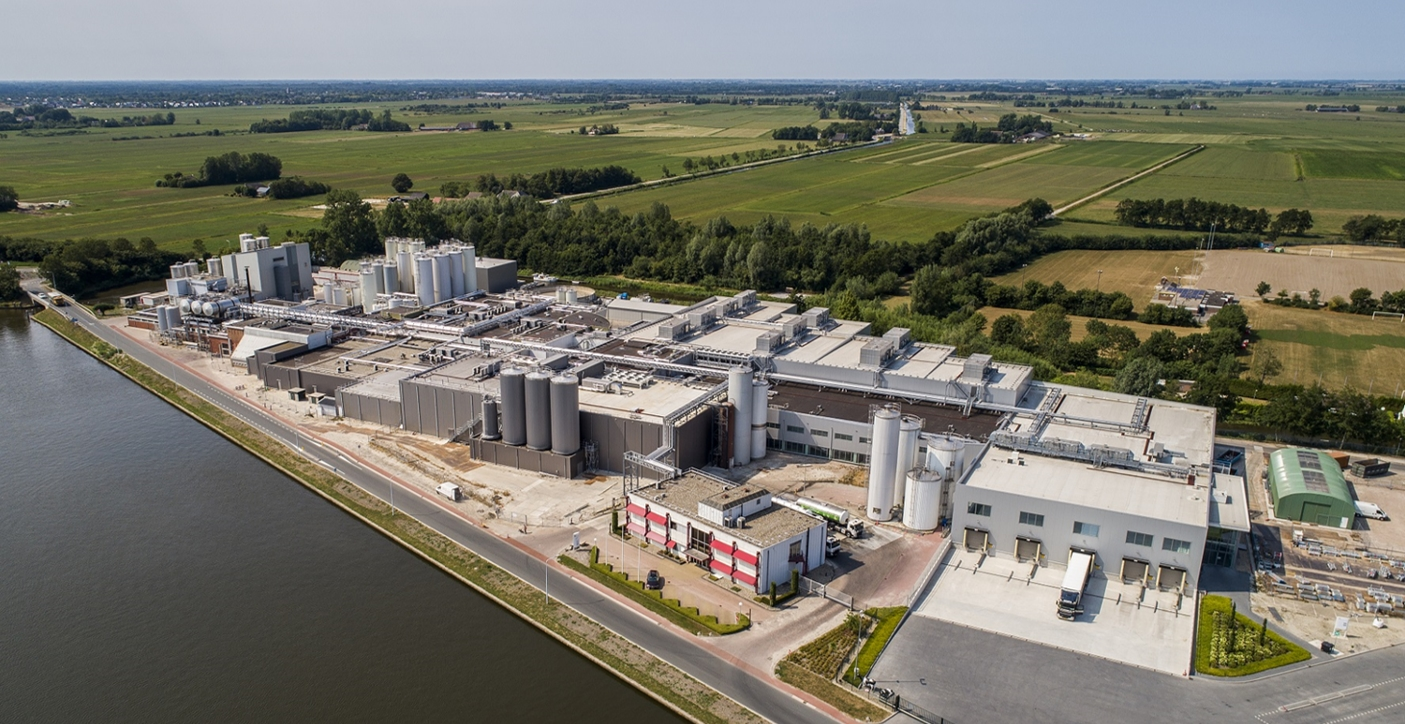
FrieslandCampina has completed a new milk-reception facility and upgraded whey processing at its Gerkesklooster cheese site in the Netherlands, finishing two projects originally included in a €20 million investment programme.
The new milk-reception installation has been designed around shorter and more streamlined product flows. FrieslandCampina says the arrangement should reduce energy and water consumption, lower maintenance costs, and increase the use of recycled water at the site.
The whey-processing upgrade allows Gerkesklooster to produce higher-quality whey suitable for subsequent use in infant-formula manufacturing. The material will be transported to FrieslandCampina’s Borculo operation for further processing, connecting cheese production more directly with the group’s specialised nutrition ingredients network.
Both projects were identified in FrieslandCampina’s 2024 annual reporting, which said €20 million was being invested in Gerkesklooster to optimise whey processing and construct the new milk-reception facility, with completion due in 2026. The current completion closes that investment phase and brings the new equipment into the site’s operating system.
Milk reception is a critical front-end process in a cheese factory. Tanker unloading, sampling, storage, transfer, cleaning, and routing all add pumping demand, pipework, valves, instrumentation, and cleaning requirements. Shortening those flows can remove unnecessary transfer steps and reduce the amount of equipment that has to be maintained and cleaned.
Water use is already a major focus at Gerkesklooster. FrieslandCampina said in 2025 that reverse osmosis was recovering more than 100 million litres of water annually from whey. The recovered water is reused in production and for cleaning equipment and milk tankers, lifting the site’s stated water self-sufficiency to 70%.
That water-recovery system is closely linked to whey processing because cheese production generates large quantities of whey containing water, protein, lactose, minerals, and other milk components. Separating the water for reuse reduces withdrawals, while further processing the remaining stream can increase the value recovered from each litre of milk.
The upgraded whey plant adds another step to that model. FrieslandCampina says Gerkesklooster can now produce whey suitable for infant-formula applications before onward processing at Borculo. Such markets place demanding requirements on consistency, hygiene, traceability, and specification control, giving the cheese site a role in a higher-value ingredients chain rather than treating whey simply as a secondary output.
FrieslandCampina has been investing elsewhere in the Netherlands to expand whey-protein capability. A wider investment programme announced in May covers Bedum, Veghel, and Workum, increasing capacity to process internally sourced whey into protein ingredients for performance, early-life, and medical nutrition.
The programme is worth more than €90 million and includes products such as WPC80, instantised whey proteins, and microparticulated whey systems. FrieslandCampina’s 2025 reporting also said its Borculo operation had doubled production capacity for whey protein isolate and milk-fat globule membrane ingredients.
Those investments show how dairy groups are increasingly linking cheese manufacture with specialist ingredient production. The commercial value of a cheese plant no longer rests only on cheese yield: water recovery, whey fractionation, concentration, and conversion into nutrition ingredients can materially alter the economics of the same raw-milk intake.
Resource efficiency remains part of the calculation. Higher-value processing brings additional separation, pumping, cleaning, and energy demand, so the benefits depend on the quality and yield achieved without allowing utilities or maintenance costs to rise disproportionately.
Gerkesklooster’s new milk-reception system addresses that equation at the beginning of the process, while the whey upgrade addresses it at the other end. One reduces the complexity and resource demand associated with receiving milk; the other increases the potential value of the stream left after cheese production.
The broader ingredients network gives that linkage additional weight. Improving the whey specification before it leaves the cheese factory can reduce corrective processing downstream, while tighter control over solids, contamination, and process consistency can widen the applications available to the receiving site.
The projects also build on a plant already reclaiming process water at scale. FrieslandCampina’s stated ambition is to increase water self-sufficiency further, and the shorter milk flows should reduce the amount of water and cleaning effort required around the new reception arrangement.
Completion now shifts the assessment from planned benefits to operating data. Utility consumption, maintenance demand, recycled-water use, whey quality, and the consistency with which Gerkesklooster can supply downstream nutrition processing at Borculo will show how much value the €20 million programme delivers in practice.