IN Brief:
- Poly-clip System Vertriebs- & Service and Process-Pack Deutschland are now operating as Lanitech.
- The business combines clipping, processing, packaging, and flavour technology with centralised service and spare parts support.
- The merger responds to growing demand for suppliers able to integrate larger sections of food production and packaging lines.
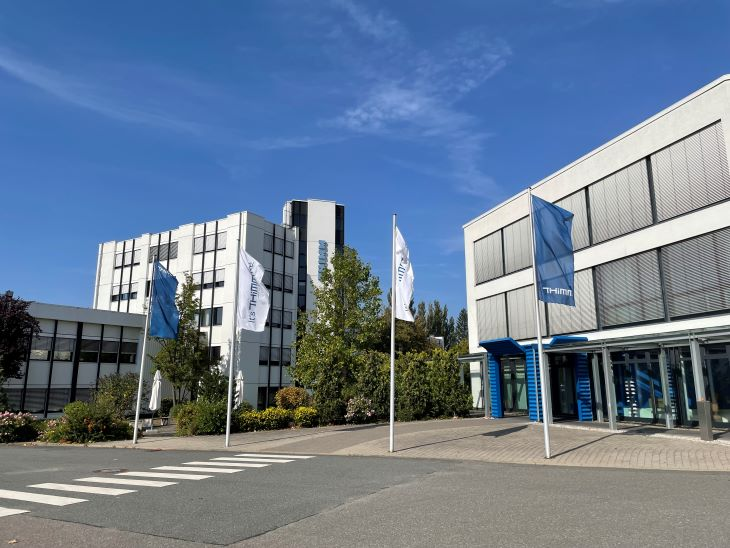
Lanitech has been formed through the combination of Poly-clip System Vertriebs- & Service GmbH and Process-Pack Deutschland GmbH, bringing food processing, packaging, flavour technology, technical service, and spare parts support into one German operation.
The business is organised around four areas: clipping, processing, packaging, and flavour and technology. Poly-clip System GmbH, which manufactures the established clipping equipment range, remains unchanged, while the merged sales and service organisation adopts the Lanitech identity.
Existing customer contacts and technical personnel are being retained, and the company has established its headquarters at Sulzbach im Taunus. Central stocking of spare parts and consumables is intended to shorten delivery times and improve service response across the installed equipment base.
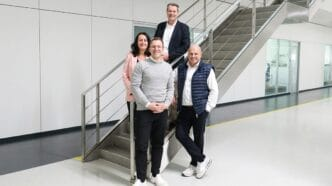
Kristian Blomqvist leads the business as managing director, supported by Mirsada Kurtanovic as head of internal services, Felix Munske as head of service, and Alfredo Lorente as head of sales. The management structure places commercial, technical, and aftermarket responsibilities within one organisation.
Lanitech’s portfolio extends from product preparation and processing through clipping and modern packaging systems to application consulting. Its markets include meat and sausage production, dairy, prepared foods, plant based products, and other categories requiring controlled portioning, filling, closure, and pack handling.
Capital equipment purchasing has gradually moved away from isolated machinery towards connected sections of production lines. Manufacturers increasingly expect suppliers to coordinate interfaces, controls, commissioning, and output across several machines rather than leaving the factory or a separate integrator to resolve every connection.
A filler, clipper, sealer, conveyor, inspection unit, and case packer may each achieve its stated speed independently, yet the line can still operate below target. Product spacing, accumulation, communication between controls, hygiene zoning, reject handling, and changeover sequences determine whether nominal capacity becomes stable production.
Service becomes part of output
Handtmann’s expanded UK processing and applications centre reflects the same movement towards machinery relationships built around trials, integration, training, parts, and lifetime support rather than the original equipment purchase alone.
Central spare parts stockholding can directly affect uptime because a specialist clipper or packaging machine may support several high volume products. Failure of a relatively inexpensive wear component can stop an entire line, leaving labour, ingredients, utilities, and downstream equipment idle until the correct part arrives.
Local availability is only one part of the service equation, since accurate diagnosis and application knowledge determine whether the first replacement resolves the fault. An engineer familiar with the product and process can often distinguish mechanical failure from a change in temperature, viscosity, particle size, casing behaviour, film tension, or upstream preparation.
Food processing equipment now combines mechanical, electrical, pneumatic, robotic, vision, software, and data systems, which makes fault finding increasingly multidisciplinary. Remote diagnostics can reduce response time, although secure access and sufficient production data are essential if a supplier is to understand conditions leading up to a stoppage.
An alarm history may show where a line stopped without revealing why. Recipe, speed, product temperature, tooling, cleaning status, operator intervention, and preceding minor stops all provide context, and integrated service teams are better placed to assemble that information when they support several connected machines.
The wider portfolio may also support more representative product trials. Reformulation often changes production behaviour even when the finished product looks familiar; lower salt, alternative proteins, increased fibre, different fats, and revised binders can alter pressure, adhesion, separation, clip integrity, seal contamination, and portion consistency.
Packaging changes add another variable because thinner films, recyclable structures, paper based alternatives, and mono material formats respond differently to heat, tension, cutting, and mechanical handling. Processing and packaging settings need to be developed together where the product itself influences sealing surfaces, fill height, pressure, or presentation.
One supplier coordinating a larger line section can shorten the chain of responsibility during installation and troubleshooting, provided the merged business genuinely connects design, controls, commissioning, and service. A broad catalogue delivers little operational value when separate teams continue to pass faults between them.
Lanitech will therefore need consistent project governance across its four business areas, with clear ownership of interfaces and performance guarantees. Common documentation, software standards, safety assessments, training, and spare parts identification will determine whether customers experience one integrated engineering operation or two familiar businesses beneath a new name.
The combination creates a stronger platform for applications where processing and packaging are inseparable, particularly in meat, dairy, prepared foods, and emerging plant based formats. Its progress will be visible through faster commissioning, shorter stoppages, more reliable changeovers, and the ability to resolve performance problems across the complete line rather than one machine at a time.