IN Brief:
- Saica has received European Commission approval to acquire nine corrugated plants and one preprint facility from Thimm.
- The transaction adds approximately 1.2 billion square metres of annual capacity and around 2,500 employees.
- Integration will broaden Saica’s Central and Eastern European network as manufacturers reassess packaging capacity, compliance, and regional supply resilience.
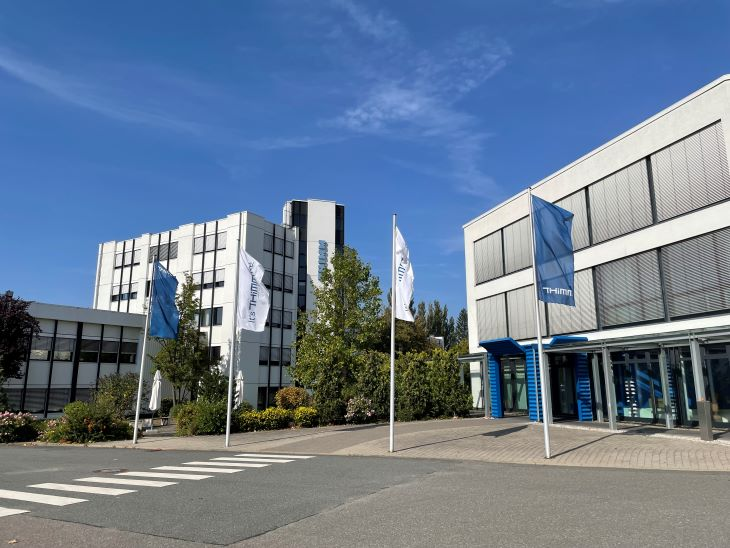
Saica Group has received European Commission approval to acquire nine corrugated board plants and one preprint facility from Thimm, substantially expanding its packaging manufacturing network across Central and Eastern Europe.
The transaction covers five German plants at Alzey, Wolnzach, Eberswalde, Castrop-Rauxel, and Northeim, together with facilities at Tychy and Skarbimierz in Poland, Všetaty in Czechia, and Sibiu in Romania. A preprint operation at Ilsenburg in Germany is also included.
Once incorporated, the sites will add approximately 1.2 billion square metres of corrugated production capacity and around 2,500 employees. Saica will employ more than 14,500 people across 13 countries, with operations spanning paper manufacture, recovered material management, corrugated packaging, and flexible packaging.
Regulatory clearance allows integration work to begin across manufacturing, procurement, commercial operations, information systems, technical support, and customer service. Connecting ten facilities across four national markets will require common controls and reporting without disrupting established specifications, production schedules, or local supply relationships.
Although primary packs receive more public attention, corrugated formats remain embedded throughout food manufacturing and distribution. Trays, cases, shelf ready packs, bulk containers, and display units protect finished goods through filling, warehousing, transport, retail handling, and export, while their dimensions and strength influence line efficiency, pallet stability, product damage, and vehicle utilisation.
Greater regional coverage should place production closer to manufacturers operating across Germany and the expanding food processing markets of Poland, Czechia, and Romania. Since empty corrugated packaging is bulky and relatively expensive to move over long distances, shorter delivery routes can reduce freight exposure and support more frequent replenishment.
The enlarged network may also provide additional options when one plant is constrained by planned maintenance, labour shortages, energy interruptions, or demand peaks. Moving work between factories, however, depends on compatible machinery, tooling, board specifications, print controls, quality systems, and digital artwork rather than spare capacity alone.
Integration reaches the packing line
European packaging consolidation has continued across both primary and secondary formats. Berlin Packaging’s acquisition of UK supplier BlueSky similarly joined a wider international network with local product, decoration, and customer service capability, as customers seek broader supply coverage without losing application support.
Scale can strengthen purchasing across paper, energy, transport, inks, adhesives, and production equipment, while spreading investment in design, laboratory testing, digital printing, compliance, and contingency planning across a larger customer base. Larger groups can also carry specialist expertise that would be difficult for every individual plant to maintain.
Food manufacturers will nevertheless expect continuity in board grades, print quality, colour control, compression strength, moisture performance, dimensional tolerances, and delivery schedules. Even where a case retains the same nominal specification, changes in raw material, tooling, print process, or producing plant can alter how it erects, seals, stacks, and moves through automated equipment.
Detailed application knowledge held at each site will therefore need to survive the integration. A corrugated format designed around a particular packing line may depend on crease depth, surface friction, flute profile, adhesive behaviour, ventilation geometry, and tolerances around robotic gripping or guide rails, none of which is fully captured by length, width, and board weight.
Standardising procurement can generate savings, but it can also introduce variation when apparently equivalent materials behave differently under production conditions. Controlled trials, agreed change procedures, and retained samples will be needed wherever specifications, suppliers, or manufacturing routes are altered.
Europe’s Packaging and Packaging Waste Regulation will generally apply from 12 August 2026, increasing pressure around material minimisation, recyclability, reuse, data, and substantiation. Corrugated packaging benefits from established collection and recycling routes, yet producers must still show that formats avoid unnecessary material while surviving the complete distribution cycle.
Lightweighting presents a familiar engineering balance because lower board use can reduce material consumption, freight weight, and producer responsibility costs, whereas insufficient compression strength can increase crushing, product loss, rejected pallets, and emergency repacking. Reliable modelling and distribution testing become more valuable as board structures are reduced and warehouses rely more heavily on automated handling.
Retailer specific case formats, promotional runs, altered pack counts, and revised pallet patterns are also shortening production campaigns. A broad plant network can absorb those changes more readily only when artwork, tooling, quality approval, and planning systems allow orders to move without a lengthy revalidation process.
Saica now has a materially larger platform in a region combining mature food manufacturing with continuing investment in new capacity. The integration will be judged through service continuity, specification control, resilience, and the ability to use scale without weakening the local technical knowledge on which stable packing operations depend.